You found a gold-colored mineral, and now you need a fast, definitive answer: is it gold or pyrite? The pyrite streak color is the single quickest test you can run. Drag the specimen across an unglazed porcelain plate, and the color of the powder left behind tells you exactly what you’re holding, no lab, no chemicals, no guesswork.
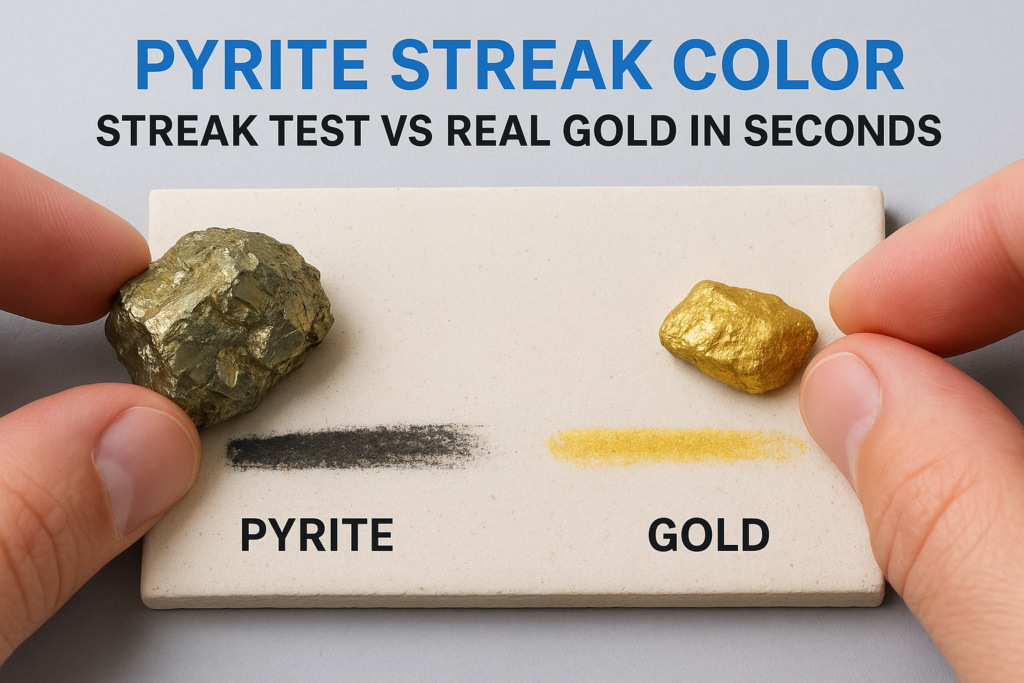
Real gold leaves a golden-yellow streak. Pyrite leaves a greenish-black to dark brown streak. That contrast is impossible to miss, and it takes about three seconds. At Natural Pyrite UAE, we work with authentic, natural pyrite every day, sourcing it, shaping it into handcrafted decor and jewelry for collectors and professionals across the Emirates. Knowing how to verify a specimen’s identity is where every serious pyrite conversation starts.
This article breaks down the streak test step by step, explains why pyrite and gold behave so differently on porcelain, and covers additional tests you can pair with the streak method for full confidence. Whether you’re evaluating a raw specimen or simply curious about the mineral behind our pieces, you’ll walk away knowing how to tell pyrite from gold in seconds.
What pyrite streak color looks like
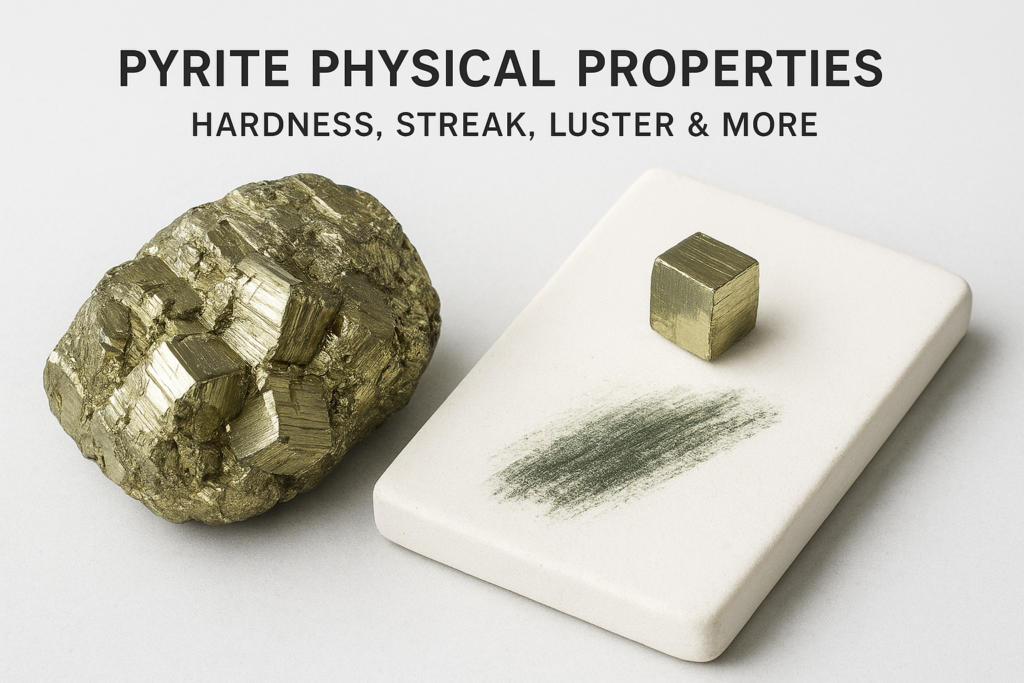
When you drag a pyrite specimen across a streak plate, the powder it leaves behind is a distinctive greenish-black to dark brown. This is the pyrite streak color, and it’s one of the most reliable visual cues in basic mineralogy. The mineral’s surface can appear bright, metallic, and almost golden in direct light, but that exterior has nothing to do with the true color of its powder. The streak strips away any surface illusion and shows you what the mineral is actually made of at a structural level.
The exact color range you’ll see
Pyrite streak color isn’t a single fixed shade. Depending on the specific sample, the powder can range from greenish-black on the cooler end to dark brownish-black on the warmer end. Both fall firmly in the dark spectrum, far from anything yellow or gold. Some samples produce a streak that looks almost charcoal-gray under neutral light, while others lean toward an olive-tinted black. Regardless of that variation, the streak will always be distinctly dark, with no trace of gold or yellow tone.
Here’s a quick reference for what you might observe:
| Streak appearance | What it indicates |
|---|---|
| Greenish-black | Typical pyrite, high iron sulfide content |
| Dark brownish-black | Pyrite with minor surface oxidation |
| Charcoal gray-black | Still pyrite, slightly weathered specimen |
| Golden-yellow | Real gold, not pyrite |
If the streak is anything other than dark, you are not looking at pyrite.
Why the surface color misleads you
Pyrite’s metallic luster and pale brass-yellow surface are what earned it the nickname "fool’s gold." That surface color comes from the way light reflects off the crystal structure, not from the actual pigmentation of the mineral. When you grind it into powder, that reflective effect disappears completely, and what remains is the iron sulfide compound itself, which absorbs most visible light and produces that dark, dull streak.
Your eyes can easily misread a whole specimen under strong light, especially when the pyrite carries cubic crystal formations that catch and scatter light across multiple facets. The moment you apply pressure and produce powder on the plate, however, the deception ends. The color you see in that streak is the mineral’s true identity, and no amount of surface shine changes it.
Why streak matters for identifying pyrite
The streak test works because it bypasses the surface and tests the mineral’s actual composition. Many properties you observe on a whole specimen, including color, luster, and reflectivity, are products of how light interacts with the crystal surface. They can shift depending on the angle of light, weathering, or nearby minerals. The streak removes all of that variation and gives you a consistent, repeatable result every time.
Surface color changes; streak color doesn’t
Pyrite can look dramatically different depending on how oxidized the surface is or how the crystals formed. A freshly broken specimen may appear bright brass-yellow, while a weathered one can look darker or even coppery. Neither appearance tells you definitively what you’re holding. The pyrite streak color, however, stays within that greenish-black to dark brownish-black range regardless of how the specimen looks on the outside. That consistency is exactly why mineralogists rely on the streak test as a primary identification tool.
Contrast that with gold, which maintains a consistent golden-yellow surface and also leaves a golden-yellow streak. When both the specimen and its powder match in color, you have convergent evidence pointing to the same answer. When the surface color and the streak contradict each other, the streak wins every time.
Why other visual tests fall short
Hardness tests require a separate reference mineral or tool to complete accurately. Luster evaluation is subjective and shifts with lighting conditions. Crystal shape takes training to interpret correctly. The streak test requires only a ceramic plate and about 30 seconds, making it the most accessible first step whenever you need a definitive answer fast.
No other basic identification method delivers that combination of speed and accuracy without specialized equipment.
How to do a streak test at home
Running a streak test requires no specialized equipment and takes less than a minute. You need one item: an unglazed porcelain tile, commonly sold as a streak plate at science supply stores or found as the unglazed underside of a standard ceramic tile. The plate must be harder than your specimen but softer than the mineral you’re testing, which makes unglazed porcelain the right match for pyrite’s hardness of 6 to 6.5 on the Mohs scale.
What you need
The unglazed side of a white ceramic floor tile works perfectly if you don’t have a dedicated streak plate. Avoid using glazed surfaces because the glaze obscures the streak color and gives you an unreliable result. Keep your plate clean and dry before you begin to ensure an accurate reading.
The step-by-step process
Hold your specimen firmly and drag it across the plate in a single controlled stroke, applying moderate downward pressure. Lift the specimen, brush away any loose powder with your finger, and examine the streak under neutral white light. The color you see in that thin line of powder is the pyrite streak color, and it will read greenish-black to dark brownish-black if you’re holding genuine pyrite.
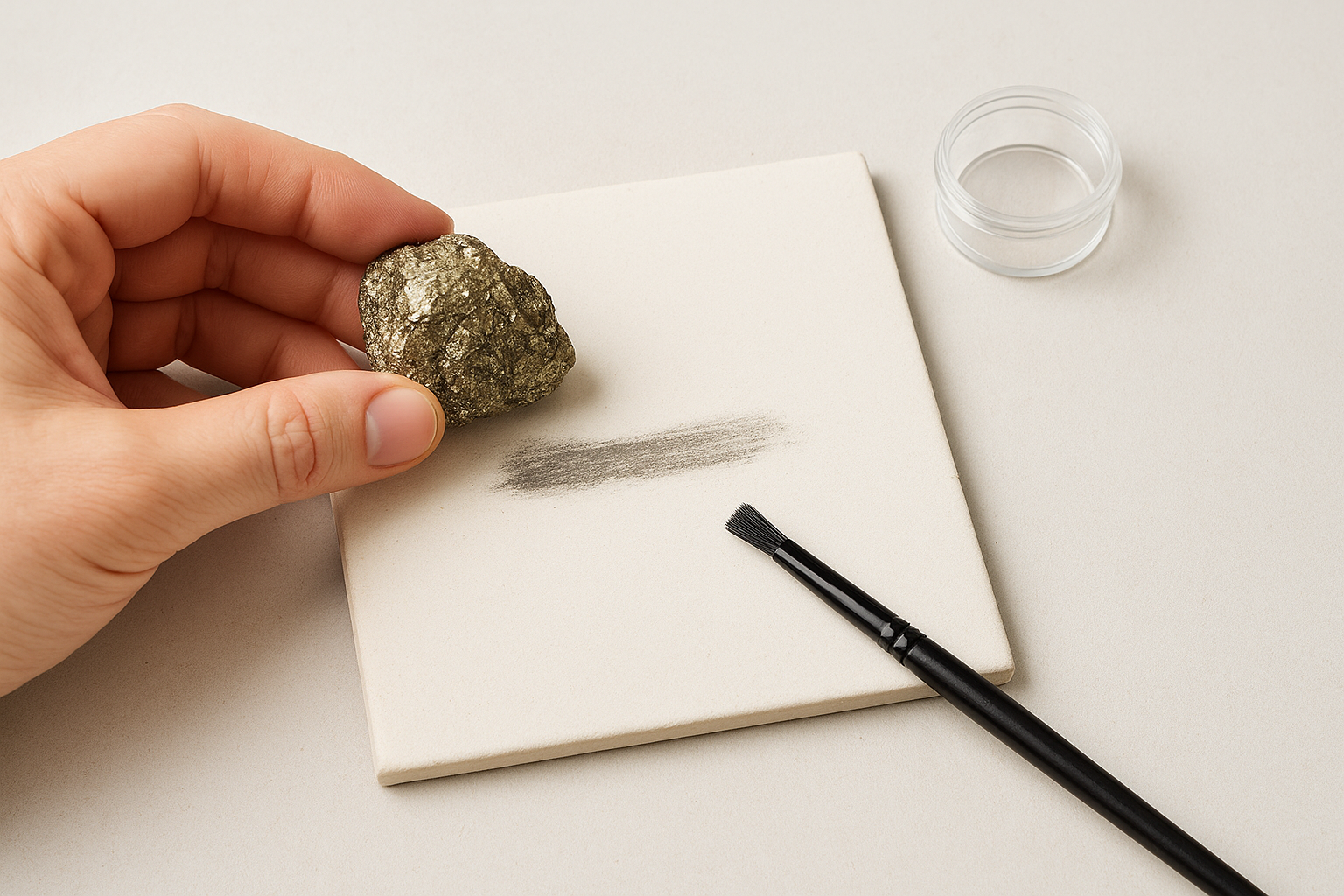
Always test on the unglazed side of the plate; the glazed side will mask the true streak and produce a misleading result.
Repeat the stroke two or three times if the first streak is faint. Thicker powder lines are easier to read accurately and eliminate any doubt about the color you’re seeing.
Pyrite vs real gold in seconds
The streak test gives you a direct, side-by-side comparison that no other basic test can match this quickly. When you drag pyrite across a streak plate, you get a greenish-black to dark brownish-black line. When you drag real gold across the same plate, you get a bright golden-yellow line. Those two results sit at opposite ends of the color spectrum, leaving no gray area and no room for misidentification. The contrast is visible to anyone, regardless of experience with minerals.
The key differences at a glance
Both minerals share a metallic, shiny surface that can fool your eyes under strong or angled light, but the streak test cuts through that immediately. The pyrite streak color lands firmly in the dark range, while gold’s streak matches its surface color precisely. This is the fundamental distinction: gold looks the same inside and out, while pyrite’s polished exterior tells you nothing accurate about its true composition.
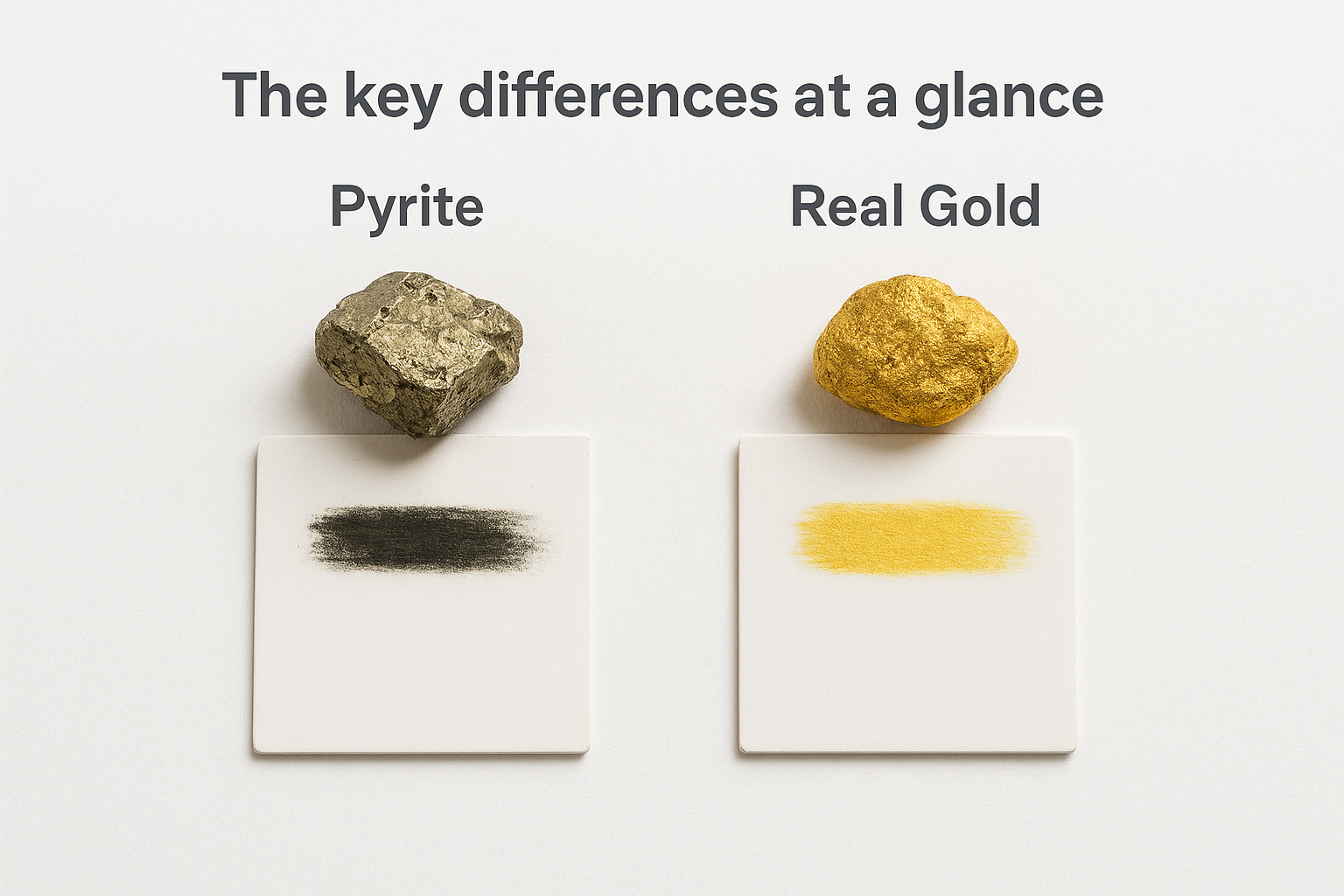
| Property | Pyrite | Real Gold |
|---|---|---|
| Surface color | Pale brass-yellow | Rich golden-yellow |
| Streak color | Greenish-black to dark brownish-black | Golden-yellow |
| Hardness (Mohs) | 6 to 6.5 | 2.5 to 3 |
The streak test resolves the pyrite-vs-gold question faster than any other field test available.
One more check: hardness
Gold is significantly softer than pyrite, which gives you a second quick confirmation if needed. You can scratch real gold with a copper coin or even your fingernail, while pyrite resists that easily and will scratch the coin instead. Run both checks back to back and you have complete certainty about what you’re holding.
Common mistakes and tricky cases
A few consistent errors produce misleading results and undermine your identification. Knowing where these errors happen ensures your pyrite streak color reading stays accurate and your final conclusion is sound.
Using the wrong surface
The most common mistake is testing on the glazed side of a tile rather than the unglazed underside. The glaze is harder than most minerals and prevents proper powder transfer, which means you get a faint or discolored line that tells you nothing reliable. Always flip the tile and use the rough, matte underside for a clean, accurate result.
A streak performed on the glazed side is not a streak test; it is a scratch test on the wrong surface.
Some people also test on paper or soft cardboard, which absorbs the powder and distorts the apparent color entirely. Stick to unglazed porcelain every time.
Chalcopyrite and marcasite
Two minerals regularly get mistaken for pyrite because they share a similar metallic surface. Chalcopyrite produces a greenish-black streak that overlaps with pyrite’s range, so hardness becomes your key secondary check. Chalcopyrite scratches at 3.5 to 4 on the Mohs scale, noticeably softer than pyrite’s 6 to 6.5.
Marcasite produces a streak nearly identical to pyrite and shares its hardness, making it the trickiest lookalike you’ll encounter. When the streak and hardness both align with pyrite, crystal habit and formation context become the deciding factors for separating the two minerals with confidence.
Quick recap
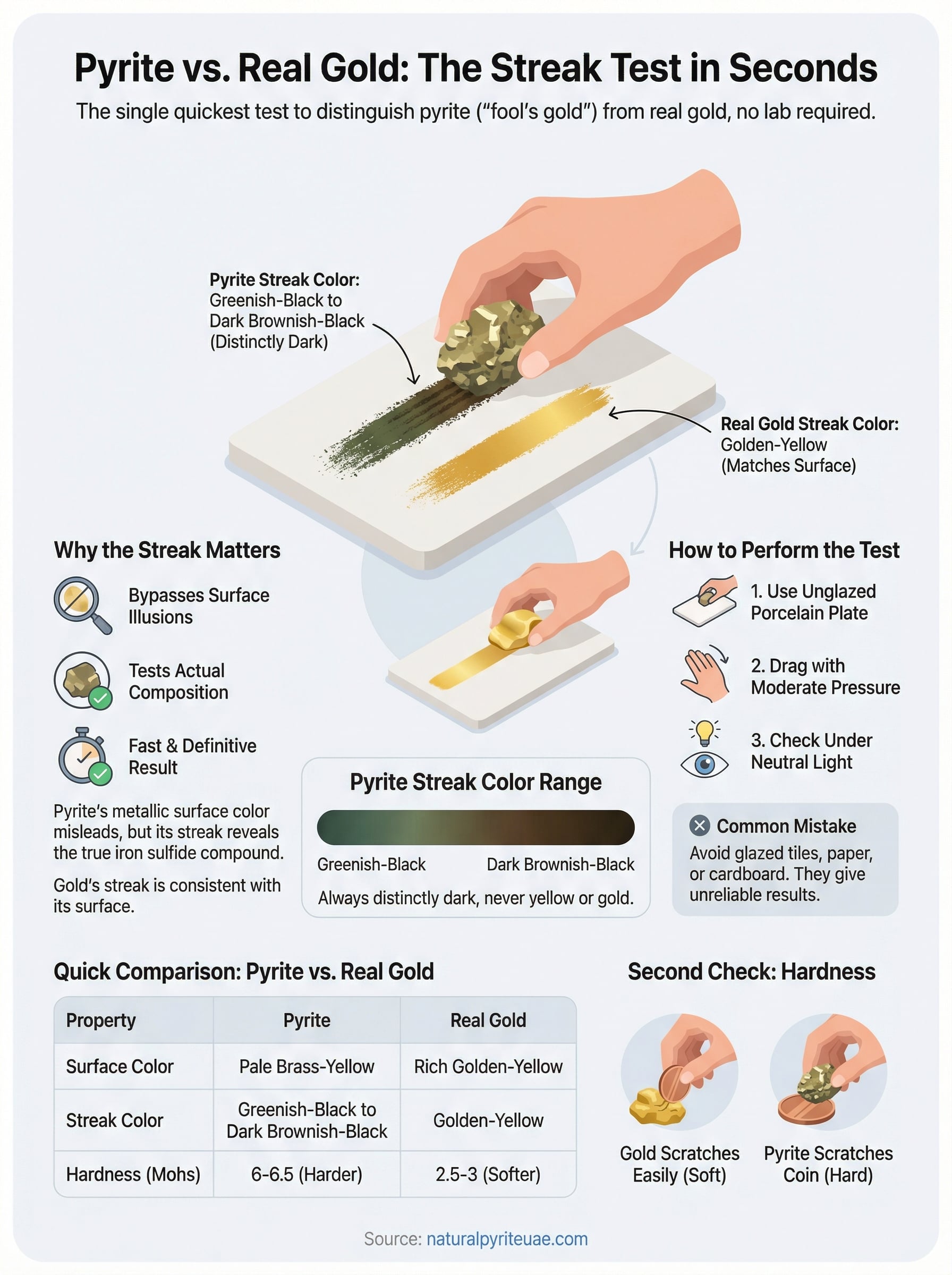
The pyrite streak color is greenish-black to dark brownish-black, and that single result separates pyrite from real gold faster than any other basic test. Gold leaves a golden-yellow streak that matches its surface. Pyrite does not. The contrast is immediate, visible, and definitive.
Running the test takes under a minute. You need an unglazed porcelain plate, moderate pressure, and neutral white light to read the result accurately. Avoid glazed surfaces, paper, and cardboard, all of which distort the powder color and give you unreliable readings.
Pairing the streak test with a hardness check gives you complete certainty. Pyrite scratches at 6 to 6.5 on the Mohs scale, while gold scratches at 2.5 to 3. Both tests together resolve any identification question in seconds, no lab required.
If you want to see authentic pyrite up close, browse our handcrafted pyrite collection and find pieces crafted specifically for UAE collectors and professionals.