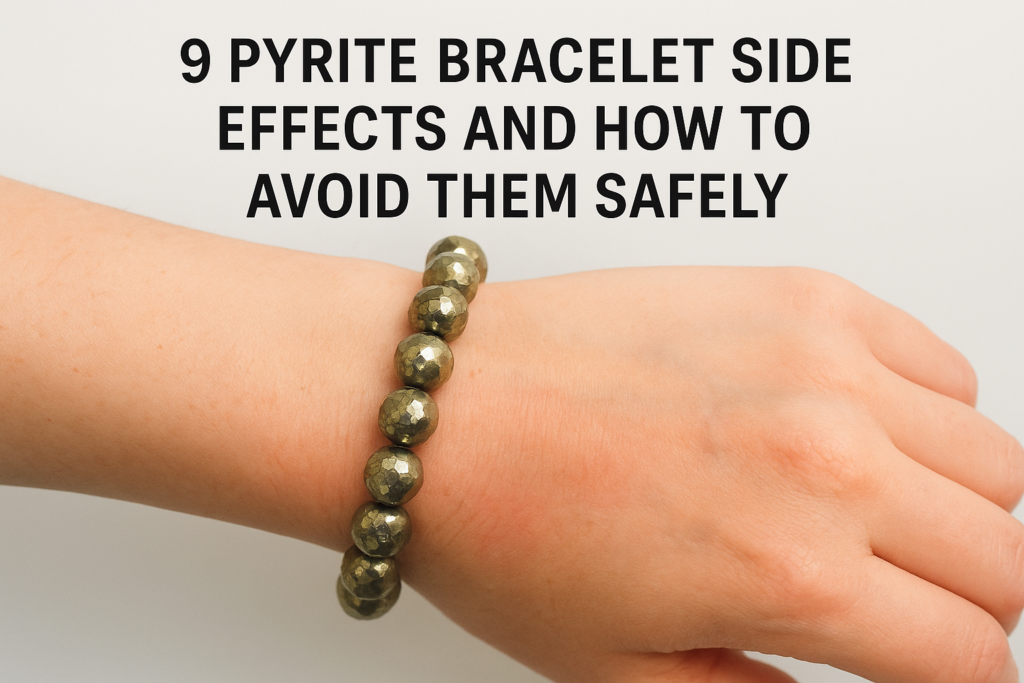
Pyrite bracelets have earned a reputation as bold, intentional accessories, symbols of ambition and focus worn by professionals who take their daily rituals seriously. But if you’ve started researching pyrite bracelet side effects, you’ve probably noticed a mix of genuine concerns and vague warnings that are hard to sort through. That’s a reasonable place to be, and it’s worth getting clear, honest answers before you wear anything against your skin every day.
At Natural Pyrite UAE, we work exclusively with authentic, natural pyrite, the real dark-gray mineral, not the synthetic gold-painted imitations flooding the market. Because we handcraft pyrite bracelets designed for daily wear across Dubai, Abu Dhabi, and the wider Emirates, we hear these questions constantly from our clients. Skin reactions, sleep disruption, spiritual overstimulation, people want to know what’s actually worth worrying about and what’s been blown out of proportion online.
So we put together this guide covering nine specific side effects associated with pyrite bracelets, from the physical (like irritation and toxicity concerns) to the emotional and energetic. More importantly, each section includes practical steps to avoid or minimize the issue entirely. Whether you already own a pyrite bracelet or you’re considering your first one, this article gives you the information you need to wear it safely and confidently.
1. Skin irritation and rashes
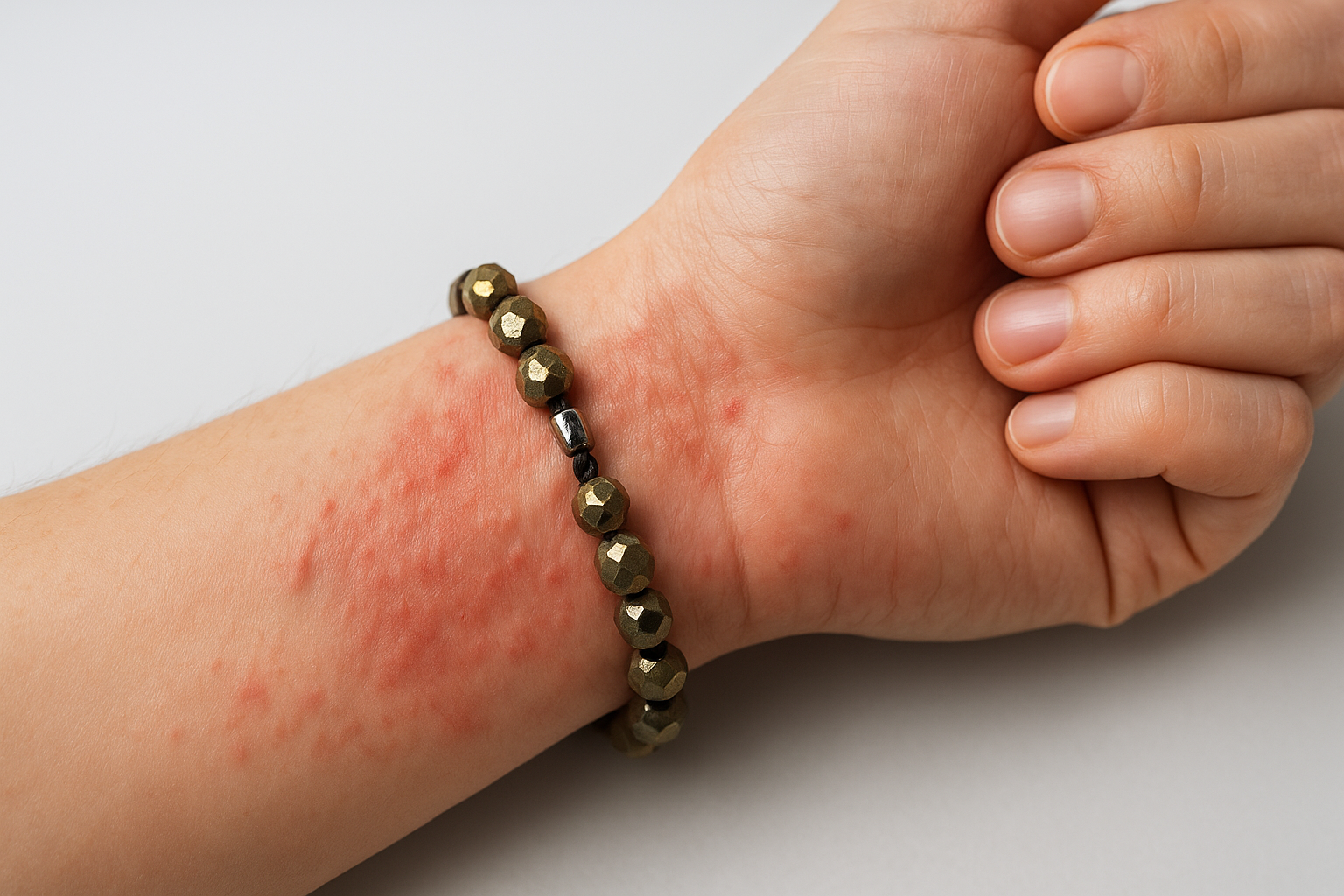
Skin irritation is the most commonly reported of all pyrite bracelet side effects, and it’s the one most people notice first. The good news is that it’s almost always preventable once you understand what’s actually causing it.
What it feels like
You might notice redness, itching, or a mild rash forming on the inner wrist where the bracelet sits directly against your skin. For some people, it starts as light prickling after a few hours of wear. For others, it escalates into small raised bumps, dry patches, or a persistent itch that lingers even after you remove the bracelet. In more sensitive cases, the skin can become inflamed and tender to the touch, making daily wear genuinely uncomfortable.
Why it happens
The reaction rarely comes from pyrite itself. Natural pyrite is iron sulfide (FeS₂), a stable mineral that does not typically irritate healthy, dry skin under normal conditions. The real culprits are usually the metal components used to string or mount the stones, such as nickel-containing clasps, copper wire, or low-quality alloys that many budget bracelets use without disclosure. Sweat accelerates the problem significantly. When moisture sits between the bracelet and your skin during a long day in the Dubai heat, it reacts with those metals and creates a mild acidic compound that breaks down your skin’s barrier. Some people also react to synthetic coatings or dyes applied to imitation pyrite stones, which is a strong reason to buy only from verified natural sources.
If your bracelet contains nickel hardware, it will almost always cause irritation over time, regardless of how resilient your skin normally is.
How to prevent it
Start by verifying the bracelet’s construction materials before you buy. Ask specifically about the string, clasps, and any metal spacers used. At Natural Pyrite UAE, our Money Magnet Pyrite Bracelet uses carefully selected components designed for direct skin contact. Beyond sourcing, remove your bracelet before workouts, showers, and swimming, since sustained moisture is the primary trigger for skin reactions. If your wrist tends to sweat, wipe the contact area dry at midday and let the bracelet air out briefly before putting it back on.
When to stop wearing it
Remove the bracelet immediately if you notice blistering, open sores, or swelling around the wrist. A mild itch that fades within 30 minutes of removal is usually a moisture issue you can manage with better habits. But if the redness spreads beyond the contact zone or the skin stays inflamed overnight, stop wearing it entirely until the area heals. Consult a dermatologist if symptoms persist beyond 48 hours.
2. Black marks, tarnish, or rust staining
One of the more visually alarming pyrite bracelet side effects is noticing a dark stain on your wrist or finding the stones themselves turning dull and discolored. This catches people off guard because pyrite looks so metallic and solid, but it reacts to its environment more than most people expect.
What it feels like
You’ll notice a grayish or black smudge on your skin where the bracelet sat, similar to what a cheap metal ring leaves behind. The stones may also develop a reddish-brown tinge or chalky film across their surface, dulling the natural metallic luster that made the bracelet worth wearing in the first place.
A second sign is visible rust-like patches forming on the stone itself, especially around any cracks or rough edges in the mineral.
Why it happens
Pyrite contains iron sulfide, and when it contacts sustained moisture or open air, it begins to oxidize. Sweat accelerates this significantly. The sulfur compounds in the mineral react with skin moisture, producing iron sulfate residue that transfers as a dark mark. Heat and humidity, both constants in the UAE climate, speed up this oxidation noticeably.
Authentic, well-finished natural pyrite resists this reaction far better than low-grade or imitation stones do.
How to prevent it
A few consistent habits will protect both your skin and the stones:
- Remove the bracelet before any activity that causes sweat, including outdoor walks, workouts, and long meetings in warm rooms
- Store it in a dry, sealed pouch away from bathroom humidity
- Wipe the stones with a dry soft cloth after each wear to clear surface moisture before it settles
When to stop wearing it
If you see active rust flaking or deep pitting forming on the stones, stop wearing the bracelet right away. Surface tarnish is cosmetic and manageable with proper care. Structural breakdown of the stone, however, means the bracelet is no longer suitable for daily skin contact and needs replacing.
3. Headaches and mental overstimulation
This particular pyrite bracelet side effect surprises people because it has nothing to do with the wrist at all. Some wearers report pressure behind the eyes, a dull frontal headache, or a buzzing mental restlessness that starts after a few hours of continuous wear.
What it feels like
The sensation typically starts as mild mental noise, a feeling that your thoughts are moving too fast or that your focus has scattered rather than sharpened. For some people it builds into a genuine tension headache concentrated around the temples or the front of the skull. You may also notice an unusual alertness that feels less like clarity and more like overstimulation.
Why it happens
From an energetic standpoint, pyrite is considered a high-frequency stone that activates the solar plexus and, for sensitive individuals, the third eye. When worn for extended periods without a break, it can push more mental and energetic input than your nervous system comfortably processes at once. This is especially common if you are already operating under high stress, which is a realistic state for many professionals working through demanding schedules in the Gulf.
First-time pyrite wearers are the most likely to experience overstimulation, since the body has not yet adjusted to the stone’s energy.
How to prevent it
Limit initial wear sessions to two or three hours and gradually increase over several days. Removing the bracelet during mentally intensive tasks like negotiations or presentations gives your system a natural reset point.
When to stop wearing it
Take the bracelet off immediately if you develop a sharp, worsening headache or feel genuinely disoriented. A mild tension headache that clears within an hour of removal is a signal to shorten your wear time, not to stop permanently.
4. Anxiety spikes and restlessness
Anxiety and restlessness sit among the more disruptive pyrite bracelet side effects that often go unnoticed until they start affecting your daily performance. Unlike headaches, this response is subtler and easier to misattribute to your schedule or workload.
What it feels like
You might notice an unsettled, low-level nervousness that wasn’t present before you put the bracelet on. It can feel like you’re waiting for something to go wrong, a background tension that makes it harder to stay calm during routine tasks. Some wearers describe a physical restlessness, like needing to move or change settings without any clear reason behind it.
This tends to escalate in high-pressure environments like client meetings or negotiations, where your base stress level is already elevated before the bracelet adds anything to the mix.
Why it happens
Pyrite is strongly associated with the solar plexus chakra, which governs willpower, action, and drive. When that energy center gets overstimulated, it pushes your nervous system into an activated state that mimics low-grade anxiety. This effect is more pronounced for individuals who already run on high cortisol throughout the day, which describes many executives and founders operating across Gulf business environments.
Pyrite amplifies what’s already present. If you wear it while under sustained pressure, it can intensify that state rather than redirect it.
How to prevent it
Limit your wear time during high-stress periods and remove the bracelet before situations you know will spike your pressure. A few consistent habits help:
- Take it off at least an hour before any high-stakes meeting or deadline
- Build in at least one bracelet-free hour per day during your first few weeks of wearing it
When to stop wearing it
Remove the bracelet if your anxiety spikes sharply and doesn’t feel manageable during the day. If it clears within 30 minutes of taking it off, you’ve identified the trigger and can adjust accordingly. Persistent anxiety that continues after removal warrants a longer break of several days before trying again.
5. Sleep disruption and vivid dreams
Among the less obvious pyrite bracelet side effects, sleep disruption tends to build gradually, making it harder to connect a rough night to what you wore during the day. Once you spot the pattern, though, it is straightforward to fix with a single habit change.

What it feels like
You may find it harder to wind down at night, with your mind still running long after you’ve turned off the lights. Some wearers report unusually vivid or intense dreams that leave them feeling unrested despite a full night in bed.
A second sign is waking up multiple times through the night without an obvious reason, or lying in bed feeling physically tired but mentally alert, as if your system simply won’t deactivate when it should.
Why it happens
Pyrite carries strong activating energy tied to the solar plexus, and wearing it close to bedtime keeps that system running when your body needs to shift into rest mode. The stone essentially keeps your nervous system primed for action at the exact hours when it should be slowing down, which is a realistic concern if you already struggle to switch off after demanding workdays in a high-pressure environment.
Wearing a high-energy stone for 12 or more consecutive hours gives it too much access to your system well into the night.
How to prevent it
Remove the bracelet at least two hours before sleep rather than leaving it on through the night. A couple of additional habits help reinforce this:
- Store it away from your bedroom entirely, not just on a nightstand
- Avoid wearing it after 8 PM if you are already sensitive to mental stimulation
When to stop wearing it
If poor sleep persists for more than three consecutive nights after making these changes, take a full break from the bracelet for several days and let your sleep baseline reset.
Once your rest stabilizes, reintroduce it with strict daytime-only hours and monitor how you feel each morning before extending wear sessions again.
6. Irritability and a short temper
Irritability is one of the pyrite bracelet side effects that tends to damage professional relationships before the wearer realizes what is happening. It builds quietly and often gets blamed on workload or stress rather than the stone sitting on your wrist.
What it feels like
You may notice that small frustrations are hitting harder than usual, that a colleague’s comment or a delayed email lands with a disproportionate edge. The feeling is less like a visible outburst and more like a low-grade impatience that tightens throughout the day, making you shorter in conversations and quicker to judge situations negatively.
Some wearers also describe a sharp internal friction, a sense that everything around them is moving too slowly or failing to meet an unspoken standard, without being able to name exactly why.
Why it happens
Pyrite drives solar plexus energy hard, activating willpower and ambition simultaneously. When that activation runs unchecked, it tips from motivation into dominance and control, two states that fuel irritability directly. High performers operating in competitive environments like the DIFC or fast-moving startup ecosystems already carry elevated drive, and pyrite can amplify that signal past a useful threshold.
Too much solar plexus activation stops feeling like confidence and starts feeling like intolerance.
How to prevent it
Pair the bracelet with grounding habits that balance its activating effect. A brief walk outside, a few minutes of slow breathing, or even a short break from screens mid-afternoon all help discharge built-up tension before it turns into irritability. Reducing continuous wear time to six or seven hours daily during high-pressure weeks creates natural room for your system to regulate itself.
When to stop wearing it
Take the bracelet off if you notice your patience dropping sharply in back-to-back interactions or if colleagues start responding to you with visible caution. A clear return to baseline within a few hours of removal confirms the stone as the trigger. Give yourself two or three bracelet-free days before trying again with shorter sessions.
7. Digestive discomfort and solar plexus pressure
Digestive discomfort is one of the more unexpected pyrite bracelet side effects, and it tends to catch people off guard because the connection between a wrist accessory and your stomach feels non-obvious. Once you understand pyrite’s direct relationship with the solar plexus, though, the link becomes much clearer.
What it feels like
You may notice a tight, pressurized feeling in the upper abdomen, just below the sternum, that shows up during long wear sessions. Some wearers describe it as a low-grade nausea or bloating that does not trace back to anything they ate, accompanied by a general sense of unease centered in the gut rather than the head.
Why it happens
Pyrite is one of the most direct solar plexus activators in crystal work. That energy center sits in the upper digestive region and governs both personal power and physical digestion. When pyrite overdrives that chakra, it creates a kind of internal pressure that your body registers as digestive tension. Wearers who are already sensitive to stress in their gut, which is a very common pattern among high-output professionals, tend to feel this effect more intensely.
The solar plexus connects ambition and digestion through the same nerve network, which is why overstimulating it affects both at once.
How to prevent it
Wear the bracelet for shorter sessions of four to five hours when you are in periods of elevated stress, and remove it before meals to give your digestive system uninterrupted room to function. Keeping the bracelet off your wrist during lunch or dinner is a simple habit that most wearers find resolves this issue quickly.
When to stop wearing it
Remove the bracelet immediately if you experience sharp stomach cramps or persistent nausea. If symptoms clear within an hour of removal, reduce your daily wear window and monitor how your body responds before building back up.
8. Astrological conflict and feeling blocked
Astrological incompatibility is one of the more nuanced pyrite bracelet side effects, and it deserves attention if you follow Vedic or Western astrology as part of your daily decision-making. Pyrite’s strong solar and fire energy can actively work against certain birth chart placements rather than support them.
What it feels like
The experience tends to show up as a general sense of stagnation, as if your usual momentum has hit an invisible wall. You may notice that decisions feel harder to make, opportunities seem to dry up without explanation, or your confidence loses its normal edge despite nothing obvious shifting in your circumstances.
A second sign is a feeling of being personally blocked rather than externally challenged, the kind of friction that does not trace back to workload, relationships, or market conditions but feels internal and directionless.
Why it happens
Pyrite carries dominant fire and solar energy, which amplifies Mars and Sun placements in a chart. For individuals with strong Saturn, Rahu, or water-heavy placements, this amplification creates an energetic conflict that produces stagnation rather than drive. The stone pushes against the natural directional flow that your planetary positions prescribe.
If your astrologer has recommended avoiding heat-generating stones, pyrite belongs on that same list.
How to prevent it
Before committing to daily wear, take two practical steps:
- Consult a Vedic astrologer to check whether your chart is compatible with fire and solar energy stones
- Wear the bracelet on favorable planetary days only, such as Sundays for sun-aligned charts, rather than every day
When to stop wearing it
Remove the bracelet if you observe a sustained pattern of blocked decisions or stalled opportunities that started when you began wearing it. Take a break of at least one full lunar cycle and track whether your forward momentum returns before reintroducing the stone into your daily practice.
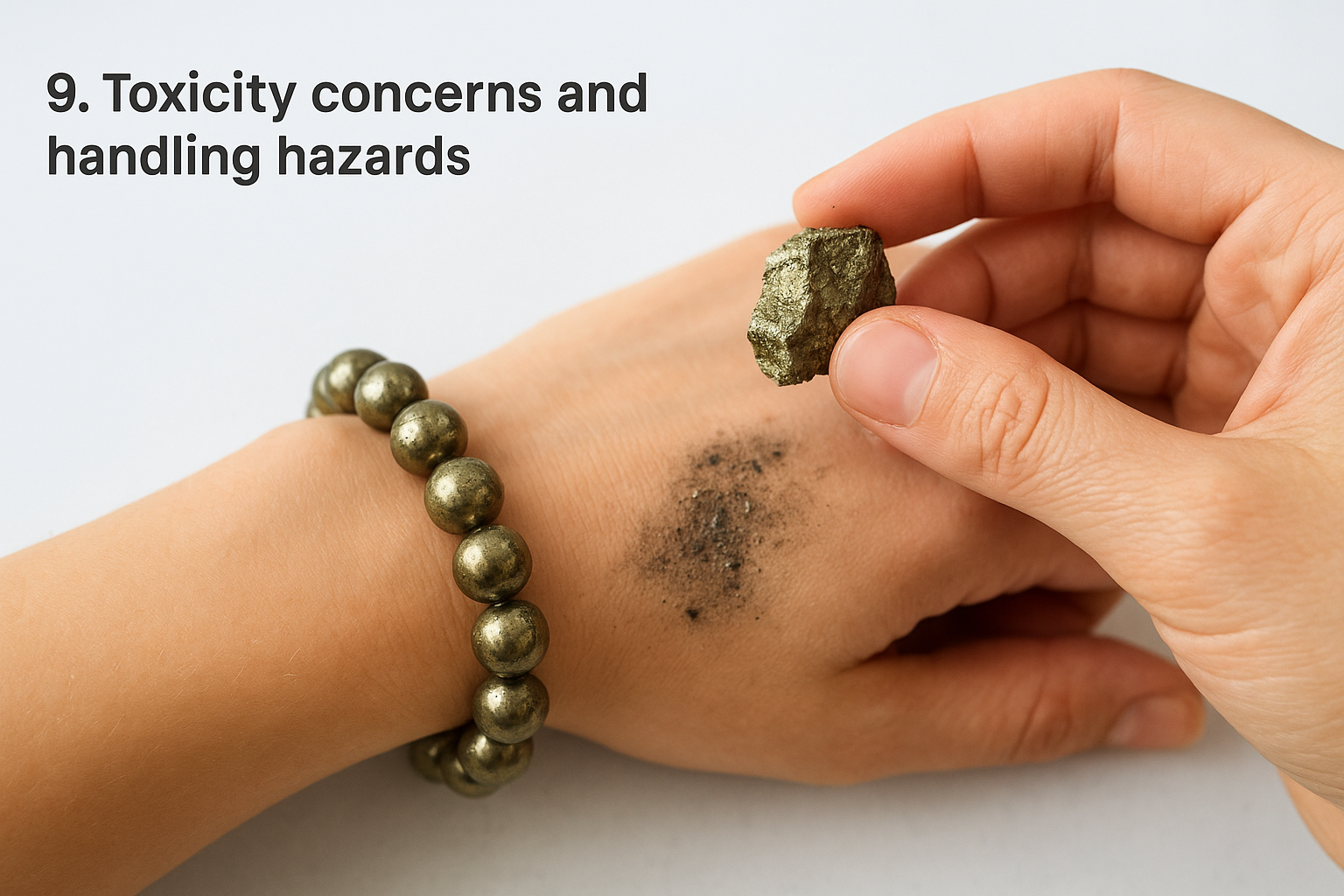
9. Toxicity concerns and handling hazards
Toxicity is the pyrite bracelet side effect that generates the most dramatic warnings online, and most of them overstate the actual risk for a polished, intact bracelet worn on the wrist. That said, there are specific handling situations where real caution is warranted, and you should know what they are.
What it feels like
The risk from toxicity is not something you feel while wearing a smooth, finished bracelet under normal conditions. The concern becomes relevant if a stone chips or crumbles and you handle the broken fragments directly, especially if you then touch your eyes or mouth without washing your hands first. In that case, you might notice mild irritation to the eyes or mucous membranes from sulfur compounds on the stone’s surface.
Why it happens
Pyrite is iron sulfide (FeS₂), and when it oxidizes or breaks down physically, it can release sulfur compounds that act as irritants. The risk is concentrated in broken or deteriorating stones, not intact, well-finished ones. Pyrite dust is the primary concern, which is why industrial handling of raw pyrite ore carries strict safety protocols. A quality polished bracelet sitting on your wrist does not produce dust or release compounds at levels that pose a health threat.
The toxicity risk from a polished pyrite bracelet is genuinely low, but broken stones should always be handled carefully and kept away from children.
How to prevent it
Inspect your bracelet regularly for chips, cracks, or crumbling edges. If you notice a stone beginning to deteriorate, replace the bracelet rather than continuing to wear it against your skin. Always wash your hands after handling any raw or broken pyrite, and store bracelets out of reach of young children.
When to stop wearing it
Stop wearing the bracelet immediately if any stone shows visible crumbling or sharp fracture points. A deteriorating stone is no longer safe for direct skin contact and should be replaced promptly.
A simple way to wear pyrite safely
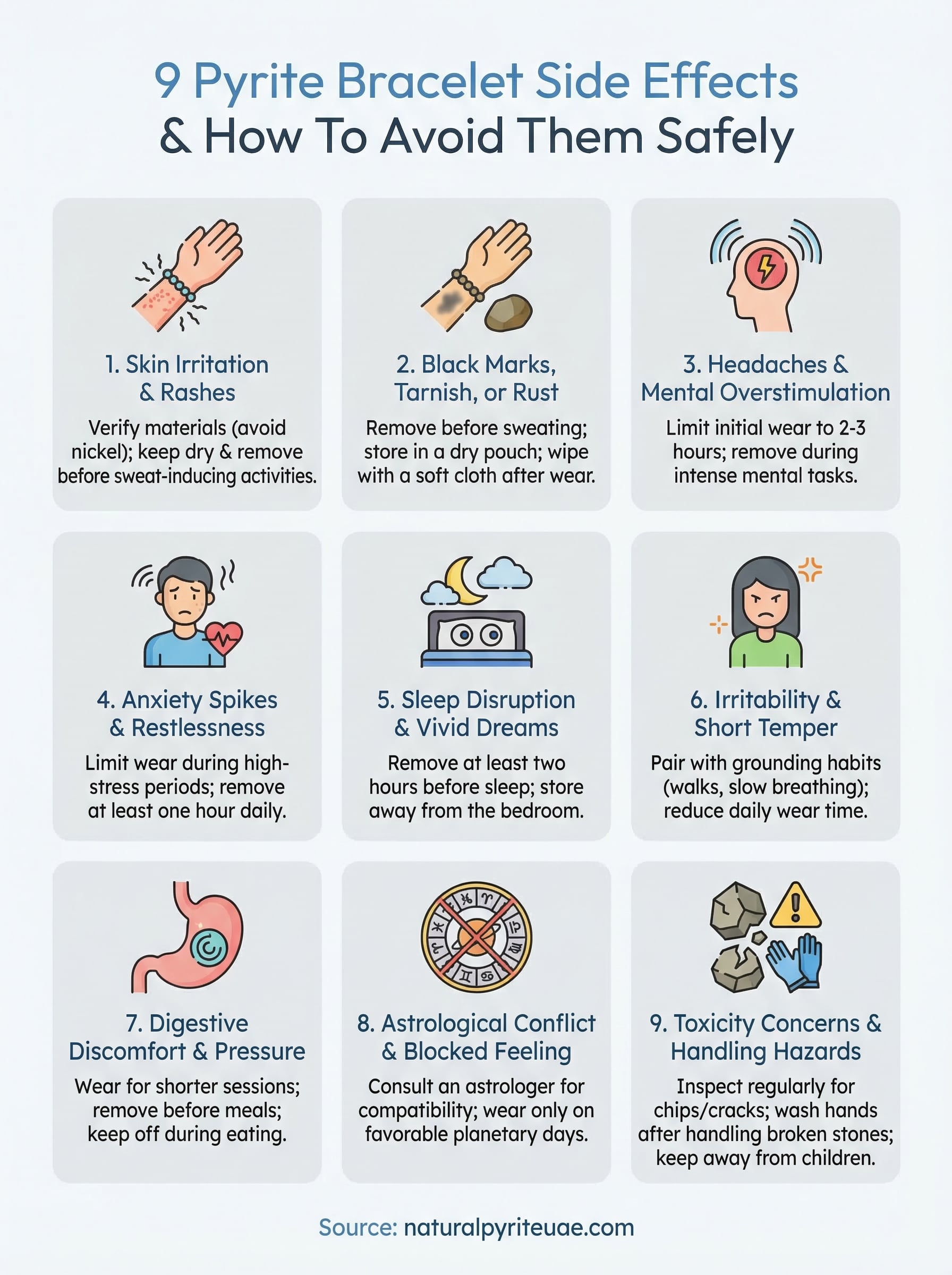
Most pyrite bracelet side effects come down to two things: wearing the bracelet too long without a break and buying from sources that cannot verify what is actually in the stone or its hardware. Both problems are entirely avoidable with the right source and a few consistent habits. Remove the bracelet before sleep, keep it dry, inspect it regularly for damage, and build up your wear time gradually rather than going straight to all-day sessions.
Natural pyrite, well-sourced and properly finished, is a genuinely remarkable stone for anyone who takes their focus, drive, and daily environment seriously. The goal is wearing it in a way that supports your energy rather than straining it. If you want a bracelet built for exactly that kind of intentional, daily use, browse the handcrafted pyrite bracelets available at Natural Pyrite UAE and find the piece that fits your practice.