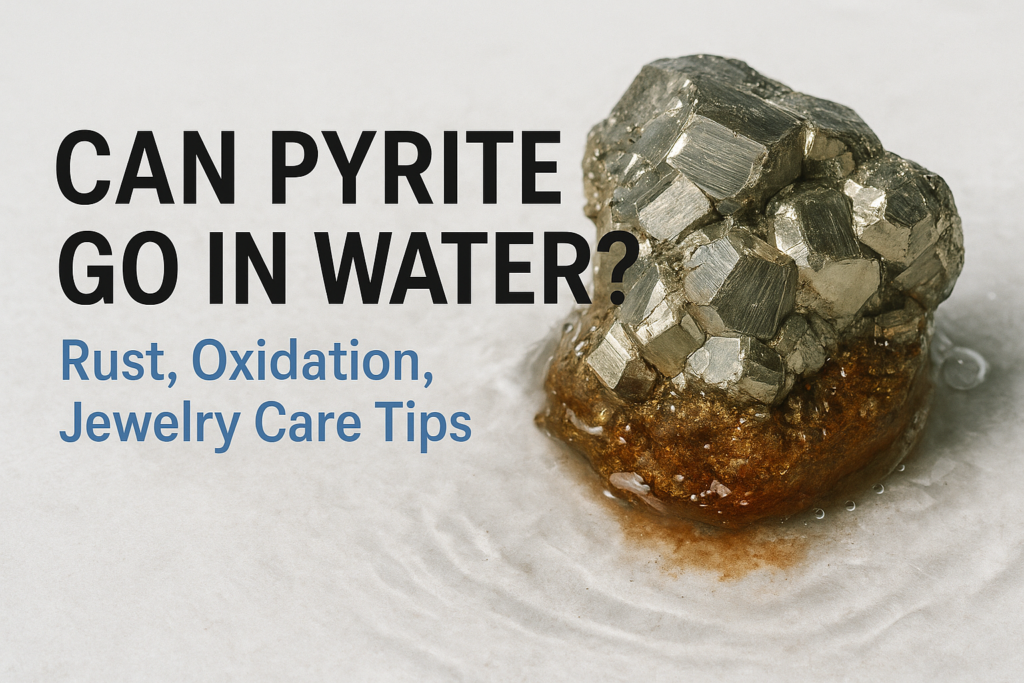
You just invested in a piece of natural pyrite, maybe a bracelet you wear daily or a statement frame sitting on your executive desk, and water gets on it. Now you’re wondering: can pyrite go in water, or did you just damage something valuable? It’s a fair concern, and the answer matters more than most people realize. Pyrite reacts with moisture in ways that can permanently alter its surface, and the stakes go up when you’re dealing with premium, high-luster pieces.
Pyrite is iron sulfide. When it meets water, especially for prolonged periods, oxidation kicks in. That dark, metallic sheen you paid for? It can turn dull, flaky, or develop rust-colored patches that no amount of polishing will reverse. For anyone in the UAE, where humidity levels fluctuate and daily routines often involve water exposure, this is practical knowledge, not trivia.
At Natural Pyrite UAE, we handcraft every piece from 100 percent authentic, natural pyrite, and we want each one to last. This guide breaks down exactly what water does to pyrite, which scenarios are safe, which aren’t, and how to protect your pieces from avoidable damage.
Quick answer: can pyrite go in water?
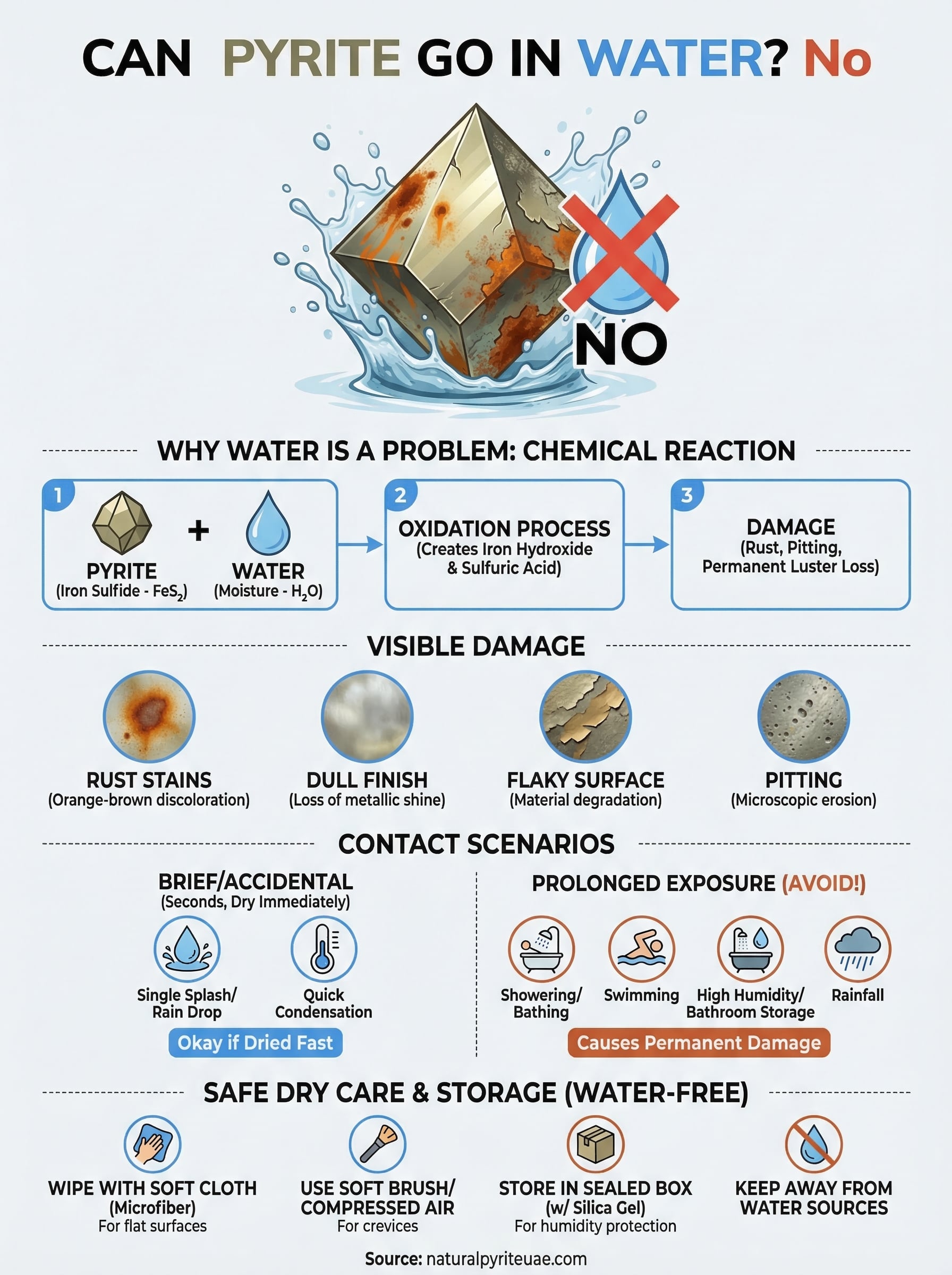
No, pyrite should not go in water. While brief accidental contact won’t destroy a piece instantly, repeated or prolonged moisture exposure will trigger oxidation and surface rust that permanently degrades the finish. This matters most for polished, high-luster pieces where the visual quality of the stone is the primary reason you invested in it.
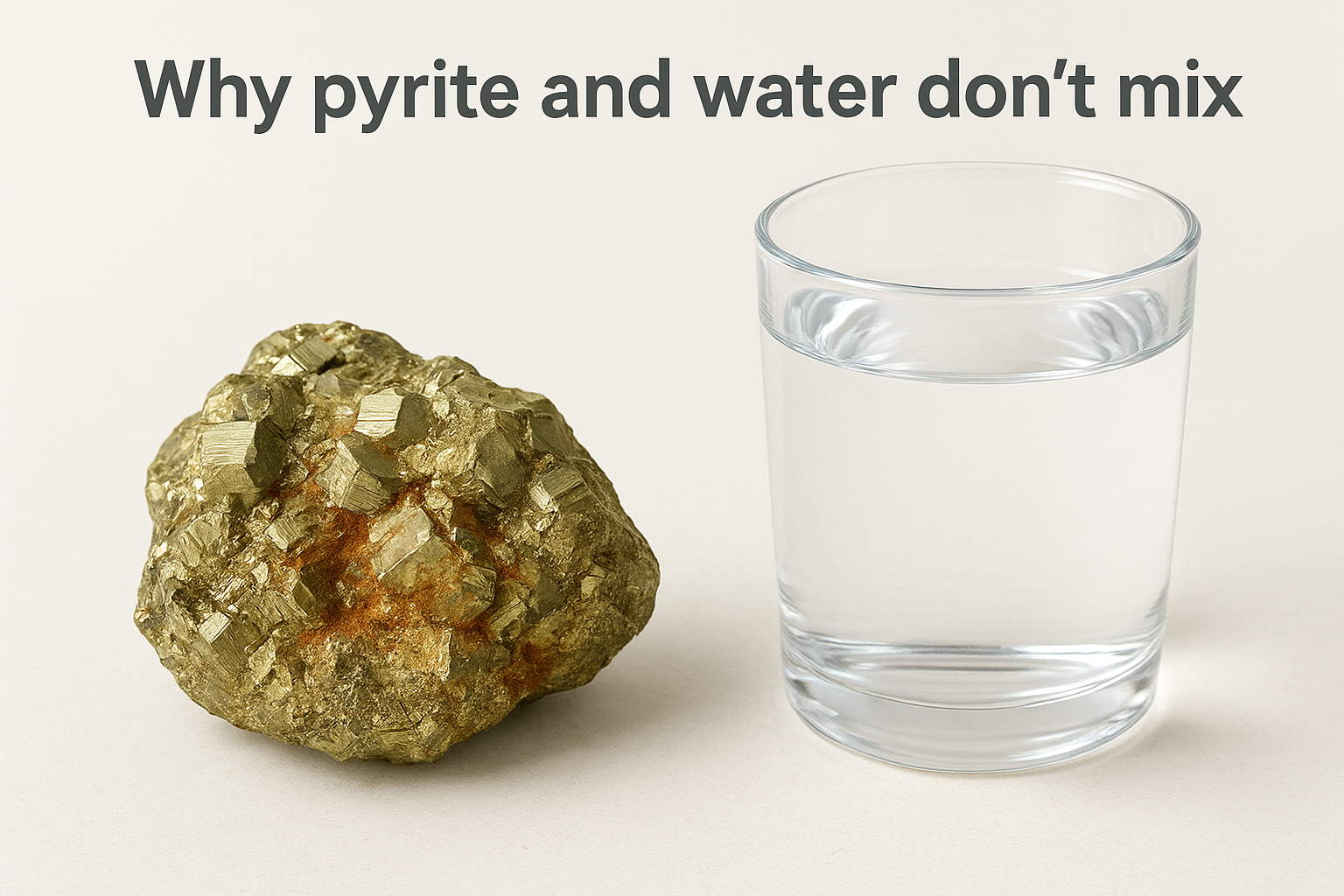
Why pyrite and water don’t mix
Pyrite is iron sulfide (FeS₂). When water reaches the surface, it initiates a chemical reaction that produces iron hydroxide and sulfuric acid. Both attack the metallic finish and leave behind rust-orange discoloration that no amount of dry polishing will reverse. The reaction doesn’t need a full soak to start. Consistent ambient humidity, common in UAE coastal cities like Dubai during summer months, can accelerate surface damage over weeks without a single drop of direct water contact.
The core chemical byproducts and what they do to your stone:
- Iron hydroxide: produces the orange-brown rust stains that develop on the surface
- Sulfuric acid: etches and strips the metallic sheen, leaving a dull, flaky finish
- Surface pitting: microscopic erosion that scatters light and kills natural luster permanently
By the time rust stains become visible on your pyrite, the oxidation process is already well advanced underneath the surface.
The hardness rating doesn’t protect you
Sitting at 6 to 6.5 on the Mohs hardness scale, pyrite resists physical scratches from most everyday surfaces. Many people assume that because a stone is hard, it’s also chemically stable in water. That assumption is wrong. Hardness measures scratch resistance, not chemical resistance, and the two properties are completely separate. A material can be physically tough but chemically vulnerable, and pyrite is a clear example of exactly that.
Some people also confuse pyrite with gold based on visual similarity, then assume the two behave the same way in water. Gold is chemically inert and unaffected by water exposure. Pyrite behaves nothing like gold in that respect. Knowing this distinction helps you apply the right care practices rather than treating a reactive mineral like an inert one.
What this means for your pieces
For anyone asking can pyrite go in water in the context of cleaning, daily wear, or decorative display, the answer depends on how much water is involved and for how long. A quick wipe with a barely damp cloth is very different from soaking a bracelet in the shower or misting a decorative frame near a fountain feature.
Your environment matters too. High ambient humidity in coastal UAE locations adds passive moisture exposure that many people overlook entirely. Even a pyrite bracelet left on a bathroom shelf collects enough moisture over time to start the oxidation process. Recognizing these subtle exposure points helps you make smarter placement and care decisions from the start.
What happens when pyrite gets wet
When water contacts pyrite, it doesn’t just sit on the surface and evaporate. The iron sulfide compound begins reacting immediately, pulling oxygen from the water molecules and starting a chain reaction that changes the mineral’s chemistry from the outside in. The visible damage you see weeks later actually starts at the molecular level within hours of first exposure.
The oxidation timeline
The reaction moves in stages. Initially, surface moisture triggers iron oxidation, producing iron hydroxide as a byproduct. This is the material responsible for the rust-orange staining that spreads across the surface. Simultaneously, the sulfur component reacts with water to form sulfuric acid, which etches the metallic finish and begins breaking down the crystalline surface structure.
By the time you notice visible changes, the process has already worked its way below the surface layer. Repeated exposure accelerates this dramatically. A pyrite bracelet worn through a single shower session, then dried, looks undamaged at first. But that initial moisture event seeds the oxidation cycle, and the damage compounds with each subsequent exposure.
Pyrite doesn’t fail all at once. It deteriorates gradually, which makes early prevention far more effective than trying to reverse visible damage once it appears.
The final stage of water damage is surface pitting and luster loss. Once sulfuric acid etches the crystalline face of the stone, the light-scattering properties that give pyrite its signature metallic flash break down permanently. No polishing compound restores that once the surface structure is compromised. This is exactly why understanding can pyrite go in water matters before damage occurs, not after.
When brief contact is usually okay
Not every encounter with moisture means your pyrite is ruined. Brief, accidental contact with water is unlikely to cause immediate visible damage if you act fast. The key is that the oxidation reaction requires sustained moisture to progress to a stage where it becomes visible and irreversible, so quick response genuinely makes a difference.
Accidental splashes and quick exposure
If your pyrite gets a small splash, the priority is immediate and complete drying. Use a soft, dry cloth to absorb the moisture, then let the piece air dry in a low-humidity space away from bathrooms or kitchens. One quick exposure handled correctly is very different from repeated contact, and understanding this difference helps answer the practical side of can pyrite go in water without unnecessary alarm.
Speed matters: the faster you remove moisture from the surface, the less opportunity the oxidation reaction has to take hold.
Scenarios that generally fall within a manageable range:
- A single rain droplet hitting a decorative frame, wiped off within seconds
- An accidental splash during handwashing, dried immediately with a soft cloth
- Light condensation from a cold glass, removed before it sits on the surface
Understanding where the line is
Brief means seconds, not minutes. Wearing your pyrite bracelet while washing dishes, showering, or swimming falls well outside this safe range, even if you dry it afterward. Each of those situations keeps the stone wet long enough to seed the oxidation cycle, and the damage compounds with repetition.
For UAE residents in coastal areas like Dubai, passive humidity is also a factor. A piece stored in a bathroom or near an outdoor water feature collects ambient moisture consistently, which pushes even stationary decor past the brief-contact threshold over time.
How to clean pyrite without water
Since the answer to can pyrite go in water is a firm no, keeping your pieces clean requires a completely dry approach. The good news is that natural pyrite doesn’t need water to stay looking sharp. Dust, skin oils, and light residue all respond well to dry methods that protect the metallic finish rather than attack it.
The dry cloth method
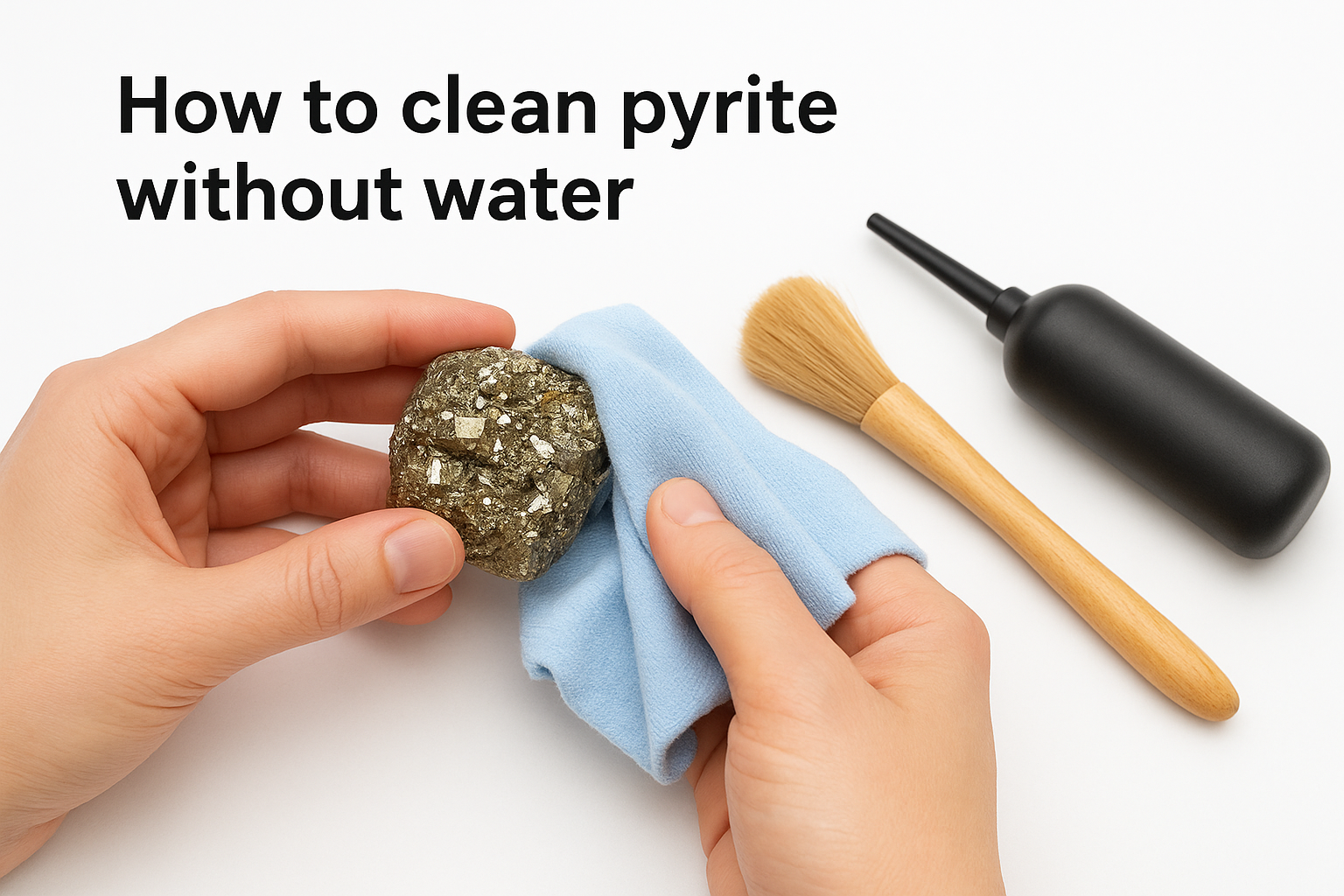
Start with a soft, lint-free cloth, ideally microfiber, and work in short, gentle strokes across the surface of the stone. Avoid circular scrubbing motions, which can grind fine debris into the surface and cause micro-scratches that dull the finish over time. For pyrite jewelry like a bracelet, wipe after each wear to remove skin oils before they build up and create a grimy film.
Consistent, light maintenance after each use prevents buildup that would otherwise tempt you to reach for water.
Tools that actually work
For pieces with textured or uneven surfaces, a soft-bristle brush, such as a clean, dry makeup brush or a natural-hair paintbrush, lets you reach crevices without introducing any moisture. These tools dislodge dust and dry particles from carved or faceted areas where a cloth can’t reach. For decorative frames and architectural pieces displayed in your home or office, a compressed air canister works well for removing surface dust without any physical contact at all.
Practical dry-cleaning tools worth keeping on hand:
- Microfiber cloth for flat and polished surfaces
- Soft-bristle brush for crevices and textured areas
- Compressed air for large decorative pieces and display items
How to protect pyrite jewelry and decor in the UAE
Living in the UAE means your pyrite faces specific environmental pressures that buyers in cooler, drier climates simply don’t deal with. Coastal humidity in Dubai and Abu Dhabi, especially between June and September, creates passive moisture exposure that accumulates on surfaces over time. Since the core question of can pyrite go in water extends beyond direct splashes to include ambient moisture, protection starts with where and how you store your pieces.
Storage and display placement
Keep your pyrite jewelry in a sealed box or airtight pouch when you’re not wearing it. Silica gel packets inside the storage container absorb ambient humidity and extend the life of the metallic finish significantly. For decorative pieces like large frames, avoid placing them near windows, outdoor-facing walls, or anywhere close to water features in your home or office.
Bathrooms and kitchen countertops are the two highest-risk locations in any UAE residence, keep your pyrite away from both.
Practical placement rules to follow:
- Display frames in climate-controlled interior spaces, not in areas with direct airflow from AC vents, which carry condensation
- Store bracelets in airtight cases away from bathroom shelves
- Keep pieces out of direct sunlight near glass, which amplifies heat and accelerates surface reactions
Daily wear habits
Remove your pyrite bracelet before washing hands, showering, or entering the pool. These are non-negotiable steps, not optional precautions. After wearing it, give the surface a quick wipe with a dry microfiber cloth to remove skin oils and any light sweat before placing it back in storage. This simple habit prevents buildup and keeps the finish looking sharp long-term.
Final takeaways
The short answer to can pyrite go in water is no, and now you know exactly why. Iron sulfide reacts with moisture to produce rust stains and sulfuric acid, both of which permanently damage the metallic finish you invested in. Brief accidental contact won’t ruin a piece if you dry it immediately, but repeated exposure, passive humidity, and anything beyond a quick splash will degrade your pyrite over time.
Keeping your pieces in top condition comes down to three habits: dry cleaning only, smart storage away from moisture-heavy rooms, and removing your bracelet before any water exposure. These steps take seconds and protect a finish that no polishing can restore once the oxidation cycle takes hold.
If you’re ready to invest in authentic, handcrafted pyrite built to last, browse the full Natural Pyrite UAE collection and find the right piece for your space or daily wear.