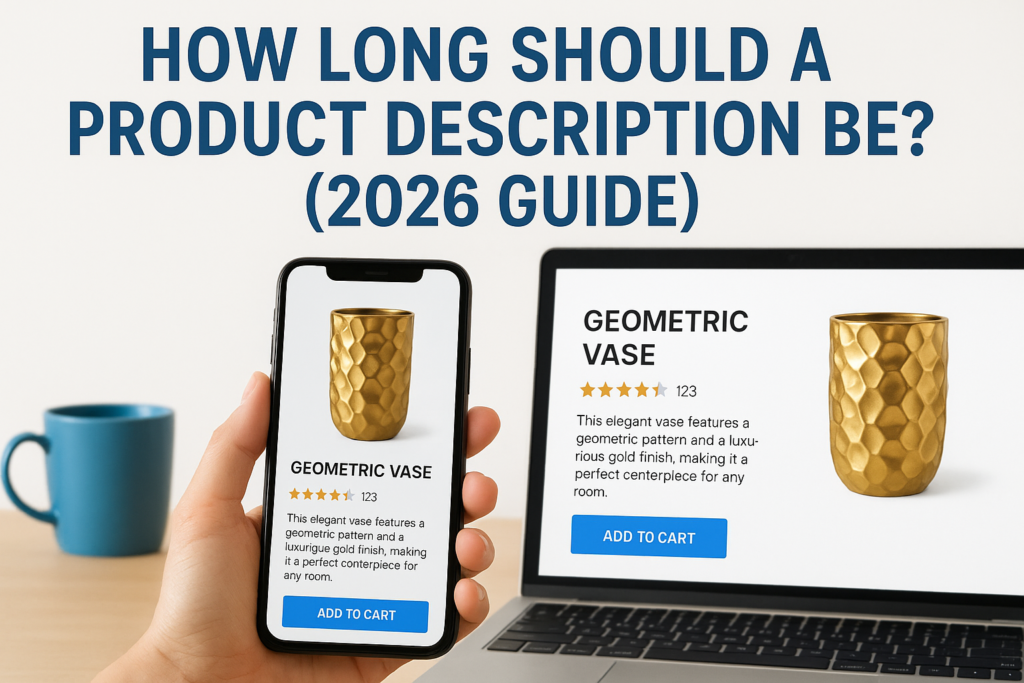
When we first started writing product descriptions for Natural Pyrite UAE, we made the same mistake most retailers make, we guessed. Some descriptions were two sentences long, others stretched into mini-essays. Neither approach moved product off the shelf. That trial-and-error process taught us something worth sharing: how long should a product description be depends on far more than a simple word count, and getting it wrong costs you sales.
Think about it from the buyer’s side. Someone shopping for a handcrafted pyrite bracelet or a large-scale decorative frame needs enough detail to feel confident spending premium money, but not so much text that their eyes glaze over. The right length removes doubt without creating friction. Too short, and the customer has unanswered questions. Too long, and they bounce before reaching the "Add to Cart" button.
This guide breaks down the ideal product description length for 2026, backed by what actually works across different product types and price points. We’ll cover recommended word count ranges, how product complexity affects length, and how to balance detail with readability so your descriptions do what they’re supposed to do, convert browsers into buyers.
What counts as a product description in 2026
A product description is the written content that tells a potential buyer what they’re looking at, why they need it, and what they get when they purchase it. In 2026, that definition has expanded well beyond a single block of text on a product page. Most product listings now combine multiple content layers: a short summary, a detailed body, a bullet list of specifications, and sometimes an editorial section. Understanding each of these layers helps you figure out how long should a product description be before you write a single word.
The short-form description
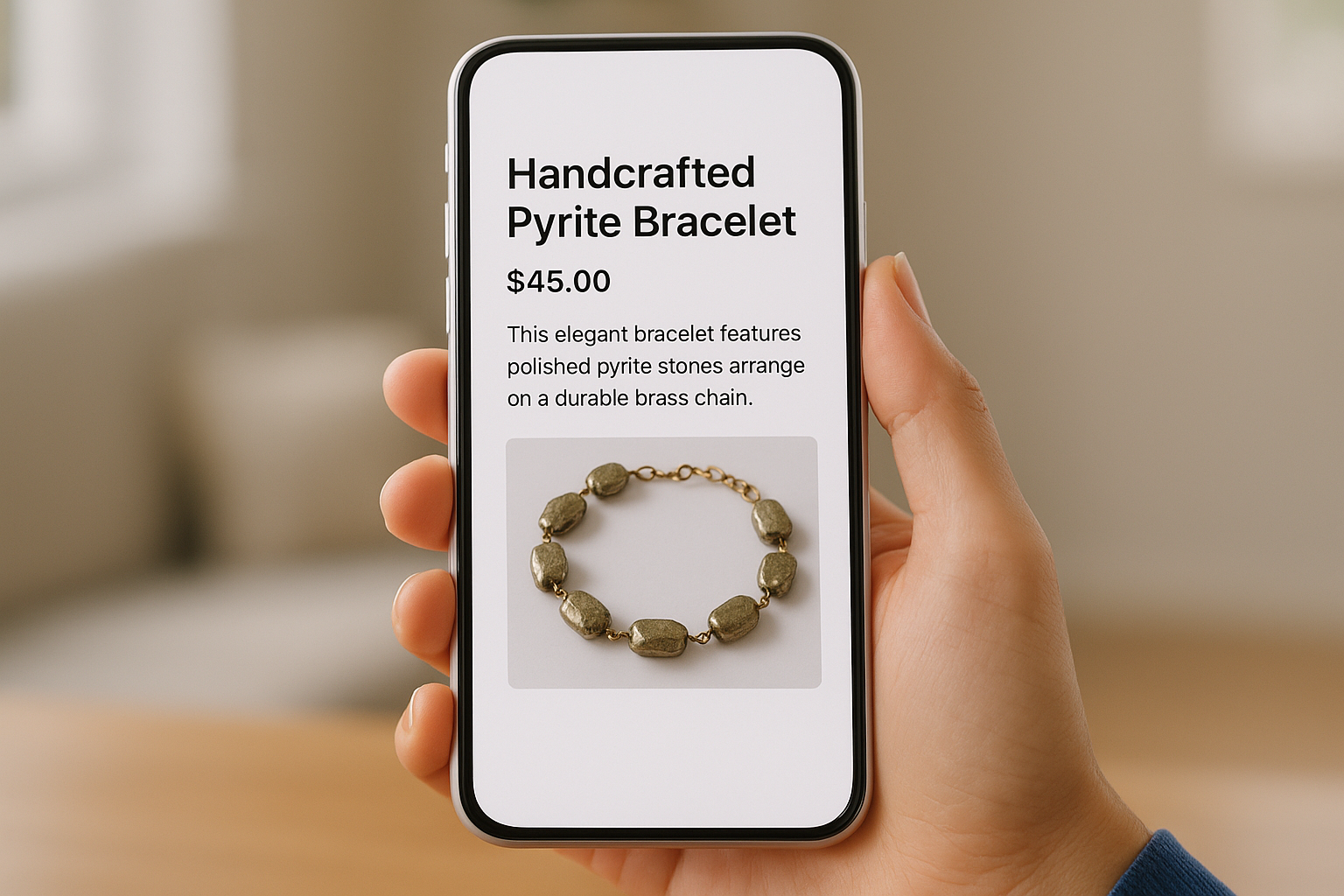
The short-form description sits near the top of your product page, usually right below the title and price. Its job is immediate clarity: give the buyer enough in two to four sentences to decide if this product matches what they’re looking for. For a handcrafted pyrite bracelet, that means stating the material, the design intent, and the key differentiator in under 60 words. This layer confirms relevance so the buyer keeps reading, not builds desire.
Most e-commerce platforms like Amazon place this summary prominently because attention drops sharply within the first few seconds of a page load. Keep yours tight, factual, and specific to the product you’re selling.
The long-form description
The long-form section is where most of the word count lives, and where buyers who are genuinely interested look for reassurance. This is your persuasion layer. It expands on material quality, craftsmanship, intended use, dimensions, and the story behind the product. For high-value items or luxury accessories, this section typically runs between 150 and 300 words and answers the questions a buyer would ask a knowledgeable salesperson face-to-face.
Your long-form copy should not repeat the bullet points sitting above it. It adds context, narrative, and confidence that a short summary and a spec list cannot carry on their own.
Think of the long-form description as a conversation between your product and a buyer who is 80% convinced but still needs one clear reason to click "Add to Cart."
What has changed in 2026
Search engines now read product pages more like editorial content than simple listings. Google’s systems evaluate whether your description provides original, substantive information that genuinely helps a buyer make a decision, rather than keyword-stuffed sentences that say nothing of value. Thin descriptions that repeat the product title three times and call it done no longer perform well in rankings or conversions.
Mobile-first browsing has also reshaped buyer expectations. Most shoppers in the UAE access product pages on their phones, so long unbroken paragraphs lose readers fast. In 2026, a product description is a structured content system with distinct layers, and your job is to manage every layer of it with intention.
Why length affects conversions and SEO
Product description length directly influences two outcomes: whether a buyer completes a purchase and whether Google ranks your page in front of the right audience. If you’re asking how long should a product description be, the honest answer is that both your conversion rate and your search visibility depend on getting it right.
How description length drives purchase decisions
Buyers scan product pages; they don’t read them like a book. A description that’s too short leaves critical questions unanswered, and an unanswered question is a reason to leave the page without buying. For a high-value item like a luxury pyrite frame or a handcrafted bracelet, buyers need material details, dimensions, and context before they commit to spending real money.
At the other extreme, descriptions that run too long without structure exhaust your reader before they reach your call to action. The buyer’s patience has a limit, and your job is to give them exactly enough to feel confident, and nothing more.
The product description that converts is the one that answers every objection a serious buyer would raise, in the shortest space possible.
How length signals content quality to search engines
Google’s systems are designed to reward content that genuinely helps a buyer make a decision, not content padded to hit an arbitrary word count. According to Google’s content guidelines, helpful content provides a complete and substantive description of the topic. A three-sentence product description rarely achieves that standard, especially for complex or premium products.
Thin descriptions also tend to rank poorly because they give search engines very little to evaluate for relevance. When your description contains specific material details, intended use cases, and contextual information, search engines can match your page to the exact queries your buyers type.
Recommended word counts by product type
No single answer fits every product when you’re figuring out how long should a product description be. Product complexity and purchase risk are the two factors that determine how much detail a buyer actually needs. The higher the price and the more decisions involved, the more your description needs to do before someone feels ready to buy.
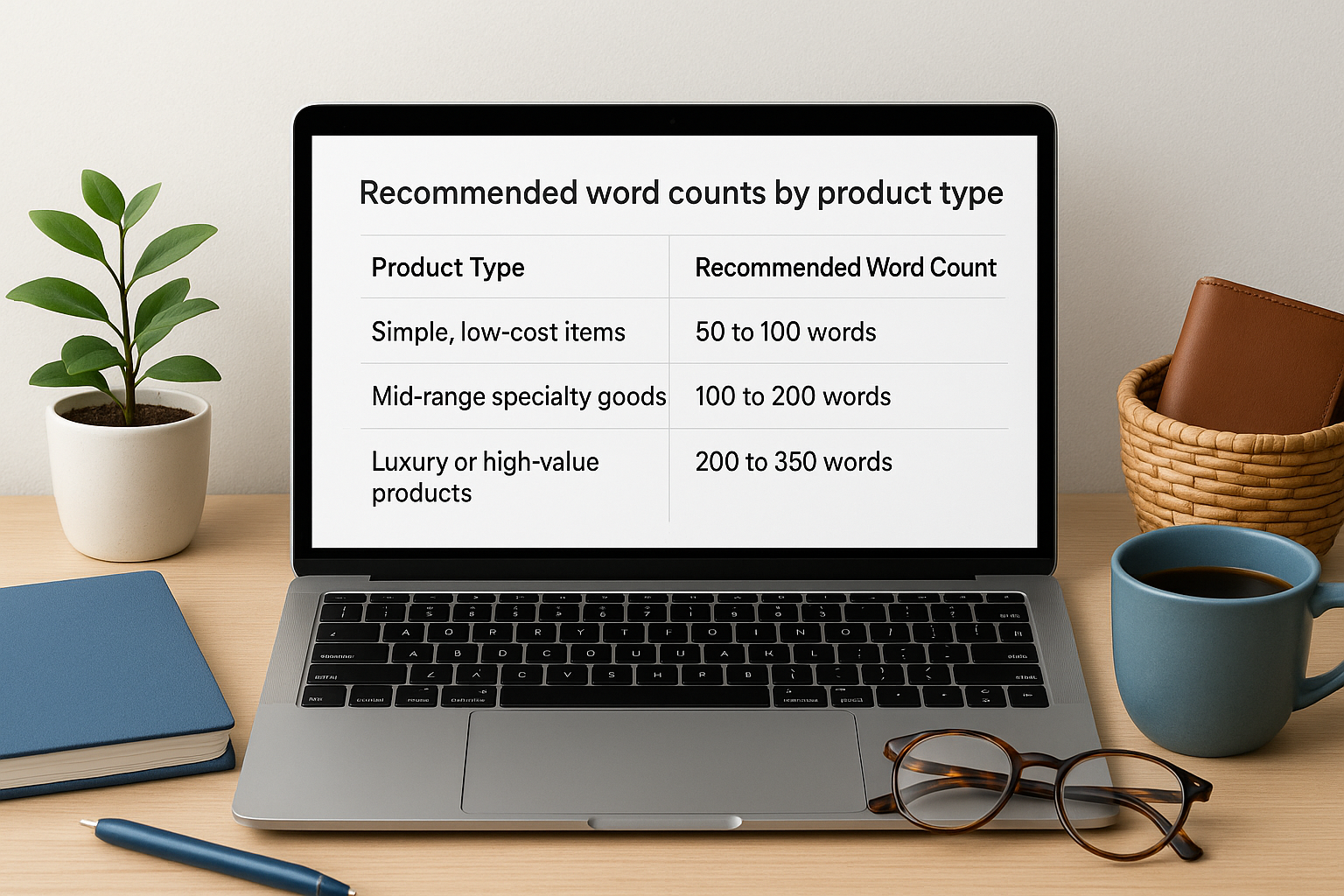
Match your word count to the amount of reassurance a reasonable buyer needs, not to what feels thorough to you as the seller.
Simple, low-cost products
If you’re selling a straightforward, low-price item, 50 to 100 words is typically enough. Buyers at this price point make fast decisions, so clarity matters far more than detail. Cover these three elements and stop:
- The primary material or composition
- The main function or use case
- One concrete differentiator from similar products
Mid-range specialty products
For products that carry a moderate price tag or require real consideration, 100 to 200 words gives you room to cover material quality, dimensions, and intended use. This range suits most handcrafted accessories and artisan goods where the buyer has done some research but still needs a clear reason to choose your product over a similar alternative.
Your goal at this word count is to answer the two or three questions a buyer would ask a sales associate in person, without expanding into territory that delays the decision.
Luxury and high-value products
Premium products demand the most detail. 200 to 350 words is the right range for luxury decor, fine jewelry, and any item where the buyer is committing significant money. At this level, your description should address craftsmanship, sourcing, dimensions, and the specific setting where the product belongs.
| Product Type | Recommended Word Count |
|---|---|
| Simple, low-cost items | 50 to 100 words |
| Mid-range specialty goods | 100 to 200 words |
| Luxury or high-value products | 200 to 350 words |
How to choose the right length for any product
Figuring out how long should a product description be for your specific product comes down to two practical questions: how much money is the buyer spending, and how much information do they need to feel confident spending it? Answer both honestly before you write a single word, and your ideal length becomes clear.
Consider the buyer’s decision risk
Every purchase carries a level of risk for the buyer, and your description needs to reduce that risk completely before they commit. A buyer spending AED 50 on a small decorative piece needs basic reassurance. A buyer spending AED 2,000 on a handcrafted pyrite frame for their executive office needs material specifics, dimensions, provenance, and a clear sense of how the piece fits their space.
The higher the price, the more words you need, because more words mean more answered questions, and more answered questions mean fewer reasons to leave without buying.
Match your description length to the buyer’s emotional investment, not to your own enthusiasm for the product. That discipline keeps your copy tight and purposeful, and it protects you from writing descriptions that overwhelm rather than convert.
Use your product’s complexity as a guide
Simple products with one primary function need short descriptions because there is very little to explain. Complex products with multiple components, specific care requirements, or custom sizing demand more detail because buyers face more variables before they decide.
Ask yourself how many legitimate questions a new buyer would bring to your product page. Each honest question deserves a direct answer in your copy, and the total number of those answers shapes your final word count. If you can answer every question in 80 words, stop at 80. If it takes 300 words, use 300. Never pad to reach a target, and never cut detail that actually matters to a buyer making a real decision.
How to format and write for scannability
Once you’ve settled on how long should a product description be, formatting determines whether buyers actually read it. A 250-word description written as one dense paragraph will lose most mobile shoppers before they reach the second sentence. Structure converts length into readability, and readability is what moves buyers from browsing to purchasing.
The best product description answers every question a buyer brings to your page, but only if the buyer stays long enough to read it.
Break your copy into digestible pieces
Bullet points belong in your spec list, not scattered through your narrative copy. Use them to list specific attributes like dimensions, material origin, and care instructions, but keep your main description in short paragraphs of two to three sentences each. Short paragraphs create natural stopping points that keep mobile readers engaged instead of overwhelmed.
Consider adding a single bolded phrase at the start of a key sentence to signal a shift in topic. This acts as a visual anchor and lets buyers jump directly to the detail they care about most without losing the surrounding context that builds confidence in the purchase.
Write the first sentence like it carries the sale
Your opening sentence does the most work in any product description. Buyers who are skimming will read it, and buyers who are seriously considering a purchase will read it twice. Lead with the one specific detail that separates your product from every alternative sitting in the same search results.
Never open with the product name repeated verbatim from your page title, because that wastes the most-read position on your entire listing. Instead, state the single most compelling fact about the product: the material, the craftsmanship, or the precise result it delivers. Every sentence after that supports the decision your buyer is already beginning to make.
Quick recap and next step
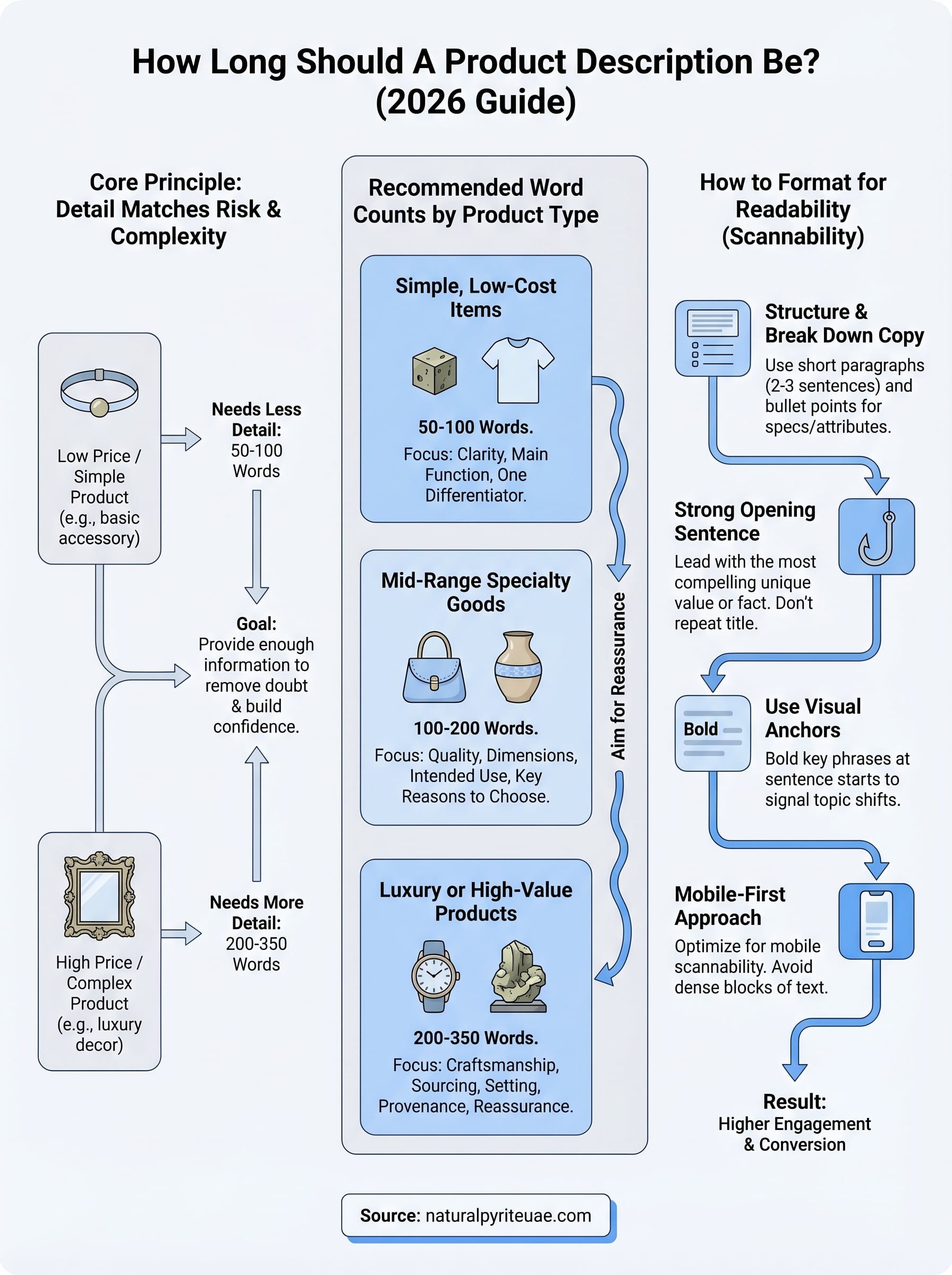
The question of how long should a product description be has a practical answer: write exactly as many words as your buyer needs to feel confident, and stop there. Simple products need 50 to 100 words, mid-range items need 100 to 200, and premium or luxury products need 200 to 350. Price point and purchase complexity set your target, not gut feeling or guesswork.
Format matters just as much as length. Short paragraphs, a strong opening sentence, and selective bolding keep buyers reading on mobile, and buyers who keep reading are buyers who convert. Every word in your description should answer a real question or remove a real doubt. Cut anything that does neither.
If you want to see these principles applied to genuine handcrafted products, browse the natural pyrite collection available in the UAE and study how material detail and purposeful copy combine to support a confident buying decision.