That pyrite bracelet on your wrist, is it the real thing? If you’ve ever wondered how to identify real pyrite bracelet from a cheap knockoff, you’re asking the right question. The UAE market is flooded with synthetic and plastic imitations sold as "natural pyrite," and telling them apart isn’t always obvious at first glance. A genuine pyrite bracelet has a specific weight, a distinct metallic smell, and physical properties that fakes simply can’t replicate.
At Natural Pyrite UAE, we work exclusively with 100% authentic, natural pyrite, the real dark-gray mineral, not the gold-painted plastic you’ll find in tourist shops. Because we handle and inspect pyrite daily, we know exactly what separates a genuine stone from an imitation. That hands-on experience is what this guide is built on: practical knowledge, not theory.
Below, you’ll find seven straightforward tests you can run at home with items you probably already own. No lab equipment, no gemologist appointment. Each test targets a specific physical property of real pyrite, from its weight and hardness to its streak color and thermal response. By the end, you’ll know with confidence whether your bracelet is authentic pyrite or something else entirely.
What real pyrite looks like in a bracelet
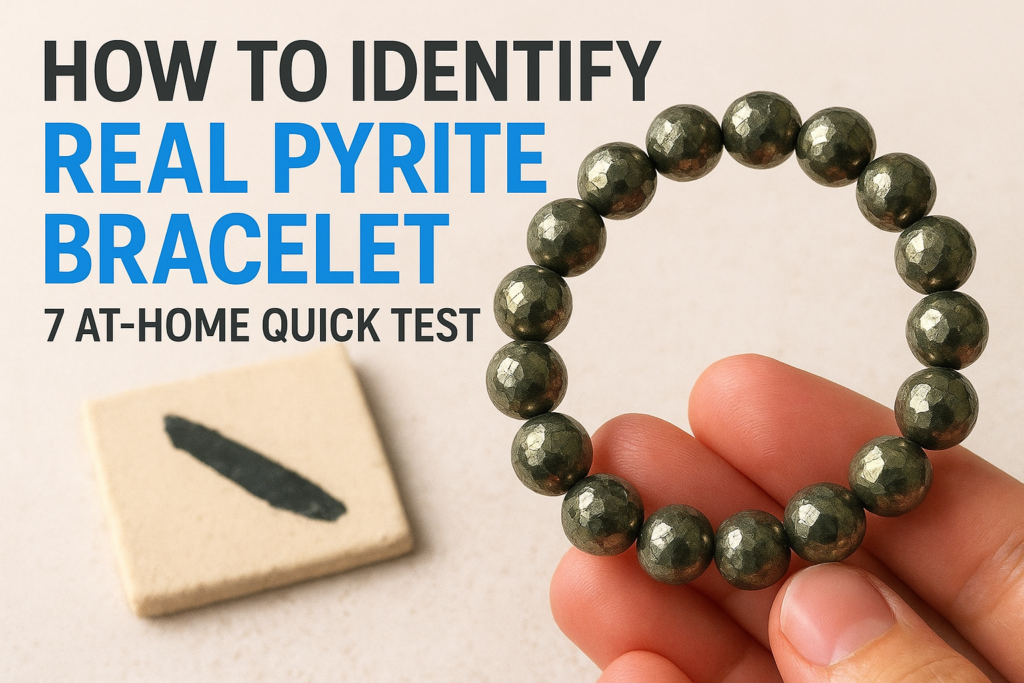
Real pyrite has a look that’s instantly different from imitations once you know what to search for. The mineral forms naturally as iron sulfide (FeS₂), which gives it a metallic, opaque surface that reflects light like polished steel rather than glass. When you learn how to identify real pyrite bracelet quality, this visual baseline is your first and fastest reference point before you even pick the bracelet up.
Genuine pyrite reflects light in a way that shifts across the surface as you move it, similar to how polished steel catches light differently at each angle.
Color and surface texture
Natural pyrite is dark gray with bright, brassy metallic highlights, not gold. If the beads on your bracelet look uniformly golden, bright yellow, or shiny like a new coin, you’re likely looking at dyed material, pyrite-coated plastic, or a completely different mineral. Authentic pyrite beads shift between dark charcoal and silvery brass tones depending on the angle of light, and the surface carries a natural metallic luster that’s not consistent across every bead.
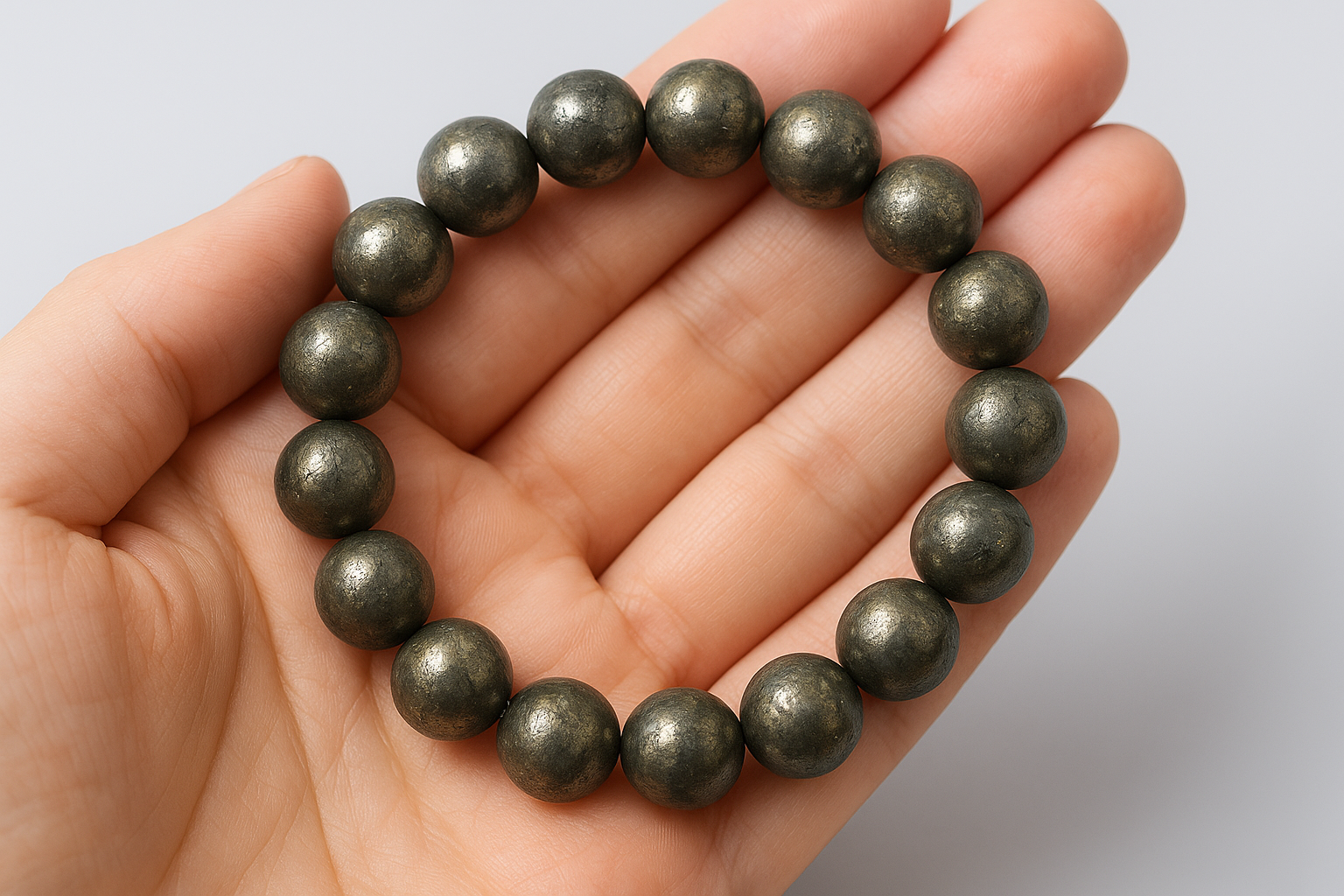
The surface texture of real pyrite is equally distinctive. You’ll often notice small natural inclusions, slight color variations, or uneven patches across individual beads. These imperfections are evidence of a genuine mineral. Factory-produced fakes typically show surfaces that are too smooth and too uniform, free of any natural variation, because they’re molded rather than cut from raw stone.
Shape and bead characteristics
Each bead in a genuine pyrite bracelet is cut and shaped from raw mineral, which means no two beads are perfectly identical. Look closely at the individual beads. If every single one has the exact same sheen, color, and surface pattern, that uniformity is a red flag. Natural variation is not a flaw in pyrite jewelry; it’s proof of authenticity.
Real pyrite beads also often retain traces of their natural crystalline structure. Pyrite forms in cubic, octahedral, or pyritohedron shapes in nature, and a craftsman working with genuine material preserves some of that character in the finished bead. You might notice flat facets, slight angular edges, or micro-variations in the bead’s roundness. These are signs the material came from the earth, not a mold.
| Feature | Real Pyrite Beads | Fake or Plastic Beads |
|---|---|---|
| Color | Dark gray with metallic highlights | Uniform gold or bright yellow |
| Surface | Natural variation, minor inclusions | Too smooth, no irregularities |
| Shape | Slight angular traces, non-identical | Perfectly round, identical |
| Luster | Metallic, shifts with light | Glassy or painted sheen |
Weight and density feel
Real pyrite has a density of approximately 5.0 g/cm³, which makes it noticeably heavier than glass, plastic, or resin imitations. When you hold a genuine pyrite bracelet, it should have a solid, substantial weight that you feel immediately in your hand. This isn’t subtle. If the bracelet feels light or hollow, that’s a serious warning sign before you run a single formal test.
Pick up the bracelet and cup it in your palm for a moment. A genuine pyrite bracelet with standard 8mm beads typically weighs between 30 and 50 grams, depending on the number of beads and the elastic or cord used. If yours weighs significantly less than that range, treat the light weight as your first alert and continue with the tests in the next section before drawing a final conclusion.
Do a 60-second visual and touch check first
Before running any formal test, do a quick visual and touch inspection that takes under a minute. This pre-check alone eliminates the most obvious fakes and helps you understand how to identify real pyrite bracelet authenticity before you move to the structured tests. You need nothing more than your eyes, your hands, and a good light source to gather your first round of reliable information.
Hold it up to natural light
Take the bracelet to a window or step outside. Hold the beads at different angles under direct natural light and watch how the surface responds. Real pyrite produces a shifting metallic reflection, similar to polished steel, where the brightness moves across the bead as you rotate it. Plastic or glass imitations tend to reflect light in a flat, uniform way, with a glassy sheen that stays constant regardless of the angle.
If the reflection does not shift as you rotate the bead, that static shine is a strong indicator the material is not genuine pyrite.
Run your eyes across every bead in sequence. Natural pyrite beads will not match perfectly from one to the next. You’ll see slight differences in tone, subtle variations in surface texture, and occasional darker patches or faint mineral lines across the face of individual beads. These inconsistencies confirm the material came from the earth, not a factory mold.
Feel the weight and surface temperature
Pick the bracelet up and hold it in your closed palm for five seconds. Two things will tell you a lot in that short moment. First, the weight: real pyrite is dense, and a standard bracelet should feel noticeably heavy for its size, not hollow or light like a plastic bead strand. Second, the temperature: genuine pyrite starts cool to the touch and takes a full 10 to 15 seconds to warm up against your skin, while plastic matches your body heat almost instantly.
After noting the temperature, run your thumbnail lightly across one bead. Real pyrite has a Mohs hardness of 6 to 6.5, so your nail will not leave a mark. If you see an immediate scratch or visible groove from that light pressure, the material is too soft to be genuine pyrite. Plastic and resin give way under a thumbnail, while real pyrite resists without any visible damage to the surface.
Run these 7 at-home tests on your bracelet
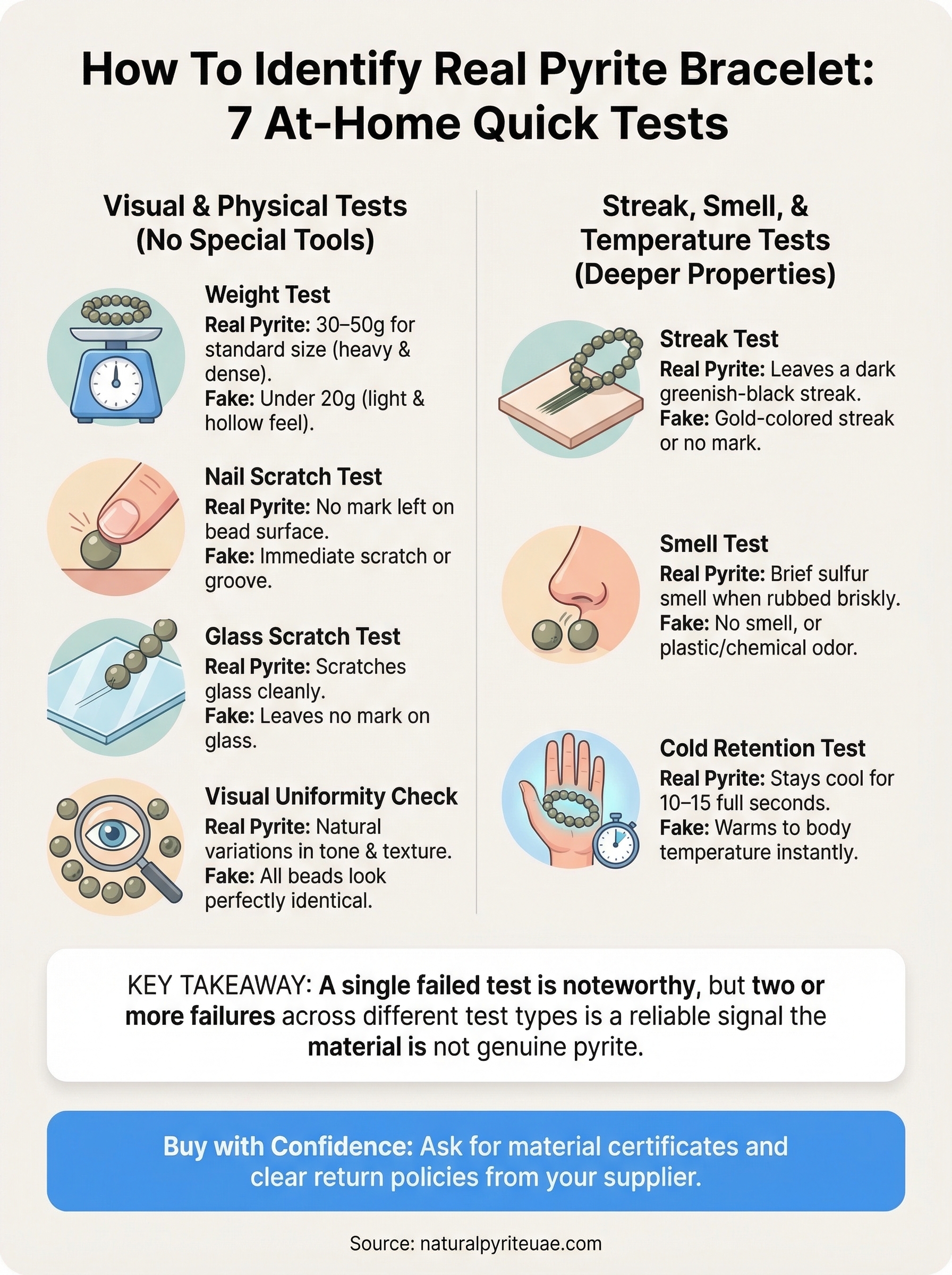
Each test below targets a specific physical property of genuine pyrite. Run them in order, since the early tests are the simplest and require nothing beyond what you already have at home. Knowing how to identify real pyrite bracelet authenticity comes down to testing properties that synthetic materials cannot replicate: density, hardness, streak color, and thermal behavior. If your bracelet fails two or more of these tests, treat that result seriously.
A single failed test is worth noting, but two or more failures across different test types is a reliable signal that the material is not genuine pyrite.
Tests 1 to 4: physical and visual properties
These first four tests use your eyes, hands, and basic household items. No specialized tools are required for any of them, and each one takes under two minutes to complete.
| Test | What you need | What real pyrite does | Fake result |
|---|---|---|---|
| 1. Weight test | Kitchen scale | 30 to 50g for a standard bracelet | Under 20g, feels hollow or light |
| 2. Nail scratch test | Your thumbnail | No mark left on the bead surface | Immediate scratch or visible groove |
| 3. Glass scratch test | A piece of glass | Scratches the glass cleanly | Leaves no mark on glass at all |
| 4. Visual uniformity check | Your eyes, natural light | Beads vary slightly in tone and texture | All beads look completely identical |
Tests 5 to 7: streak, smell, and temperature
These last three tests reveal chemical and geological properties that imitation materials cannot replicate. Each one gives you a direct, observable result within seconds of starting.
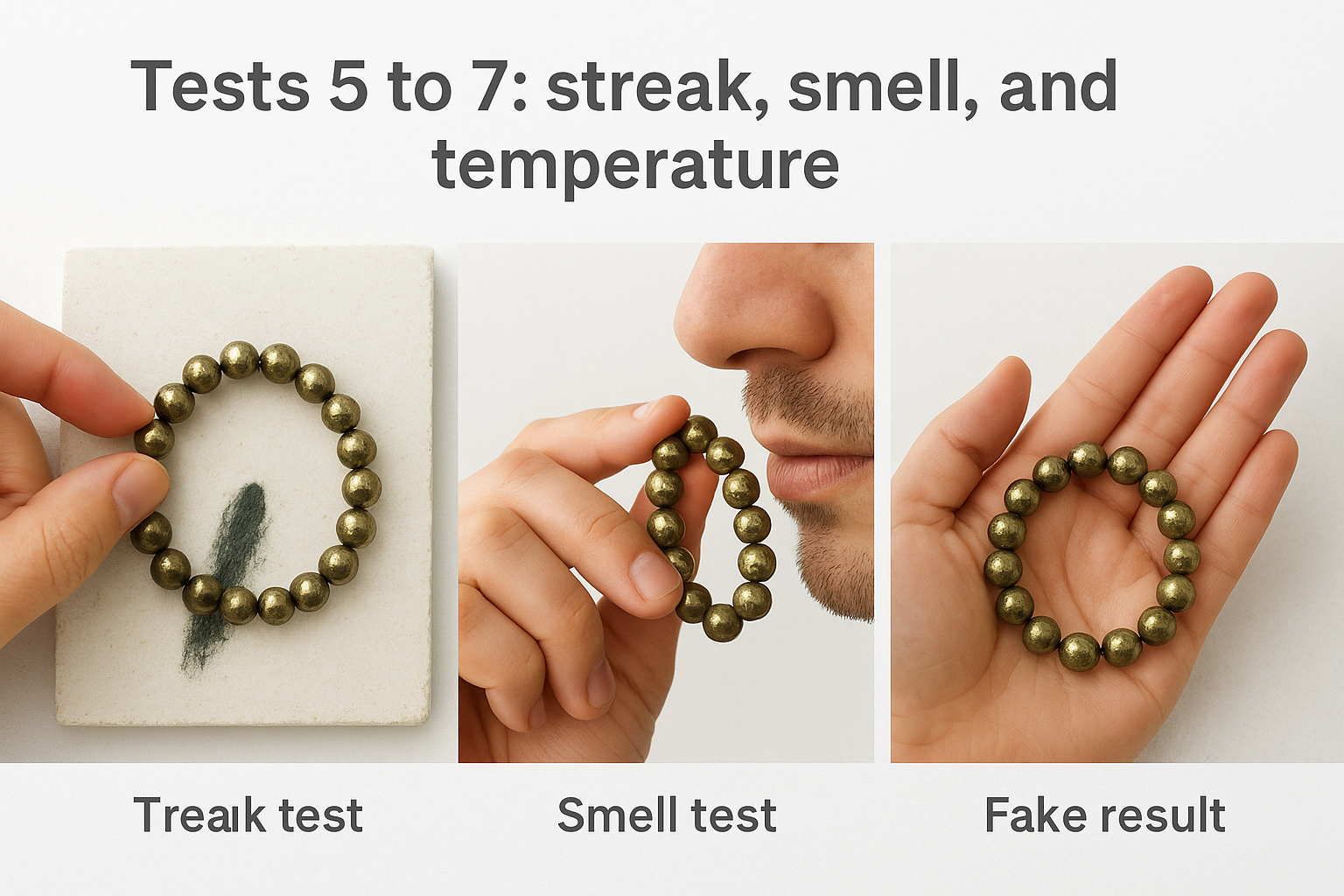
| Test | What you need | What real pyrite does | Fake result |
|---|---|---|---|
| 5. Streak test | Unglazed ceramic tile | Leaves a dark greenish-black streak | Gold-colored streak or no mark |
| 6. Smell test | Your nose and friction | Brief sulfur smell when rubbed briskly | No smell, or a plastic or chemical odor |
| 7. Cold retention test | Your palm | Stays cool for 10 to 15 full seconds | Warms to body temperature almost instantly |
For the streak test, press one bead firmly against the rough back of a ceramic tile and drag it across the surface. Real pyrite always leaves a dark greenish-black streak, never a golden one. For the smell test, rub two beads together firmly for five seconds and bring them directly to your nose.
Spot common fakes and misleading "pyrite" listings
Knowing how to identify real pyrite bracelet quality also means knowing what gets sold in its place. The three most common substitutes you’ll encounter are pyrite-coated plastic beads, golden obsidian, and iron pyrite powder compressed into resin molds. Each one is sold under vague labels like "natural pyrite," "energy stone," or "pyrite crystal bead," and none of them share the physical properties of genuine mineral pyrite. Recognizing the substitute material before you buy saves you the trouble of running tests after the product arrives.
What sellers actually substitute for pyrite
The most widespread substitute is plastic beads with a metallic vacuum coating, which mimic pyrite’s sheen at a glance but fail the weight, scratch, and smell tests immediately. A second common swap is dyed hematite, a heavy iron-oxide mineral that looks similar to pyrite under poor lighting but leaves a red-brown streak on ceramic, not the dark greenish-black that real pyrite produces. A third substitute is compressed pyrite powder bound in resin, which uses actual pyrite material but in a form that lacks the hardness and density of solid mineral beads.
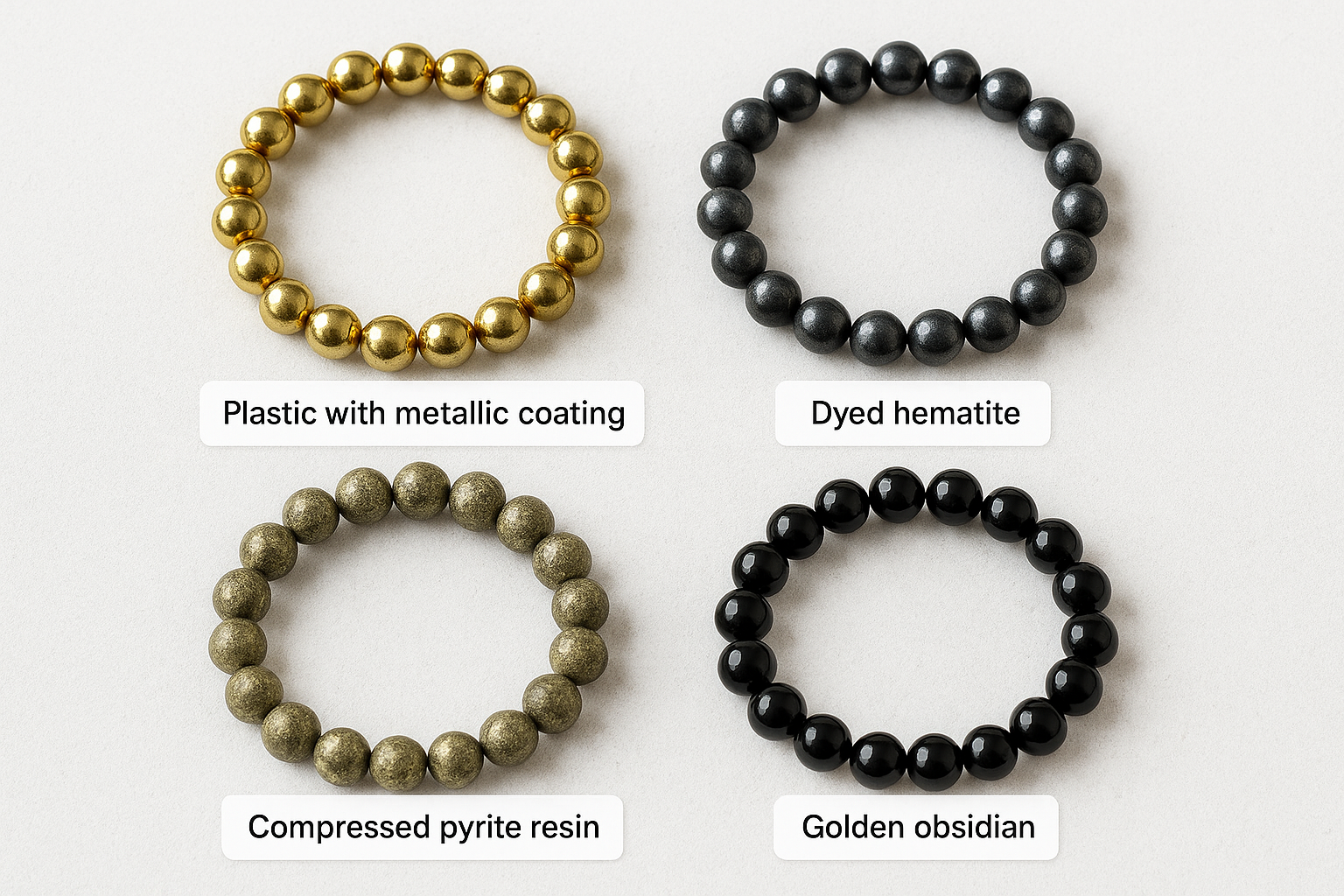
If a bracelet passes the weight test but fails the streak test, compressed pyrite resin is often the explanation.
| Substitute material | How it mimics pyrite | How to catch it |
|---|---|---|
| Plastic with metallic coating | Shiny metallic surface | Too light, warms instantly, no sulfur smell |
| Dyed hematite | Similar metallic gray tone | Red-brown streak, heavier than pyrite |
| Compressed pyrite resin | Uses real pyrite powder | Softer surface, inconsistent streak color |
| Golden obsidian | Dark stone with sheen | Glassy fracture, no sulfur smell |
Red flags in online listings
When you browse online, certain listing patterns signal a high risk of substitution before you even see the product in person. Watch for listings that describe the bracelet as "golden pyrite" or "gold pyrite," since genuine natural pyrite is dark gray, never gold. Listings that show perfectly matched, flawless beads in product photos are also a warning because real pyrite beads always carry slight natural variation from bead to bead. Price is another strong indicator: authentic pyrite bracelets with solid mineral beads cost more to source and craft than plastic substitutes, so an unusually low price warrants serious scrutiny.
Pay attention to seller descriptions that skip any mention of the mineral’s physical properties, such as hardness, density, or geographic origin. A legitimate supplier working with real pyrite will reference those details because they distinguish genuine stone from imitation. If a listing describes the bracelet only in terms of color and appearance, with no geological or sourcing information, treat that gap as a deliberate omission.
Decide what to do if your bracelet fails a test
One failed test does not automatically mean your bracelet is a fake, but it does mean you should keep testing before drawing a conclusion. Some genuine pyrite beads from low-luster batches can behave unexpectedly on a single test, especially the smell test, if the surface has been polished heavily. The number of tests your bracelet fails, and which specific tests those are, shapes the right course of action.
Two or more failed tests across different categories, particularly the streak test and the cold retention test together, is a reliable indicator that the material is not genuine pyrite.
If your bracelet fails one test
Start by repeating the failed test once more to rule out user error. For the streak test, make sure you’re using the rough, unglazed back of the ceramic tile, not the glazed front. For the scratch test, confirm you’re using your thumbnail and applying only light pressure. If the bracelet fails the same test twice under correct conditions, note which test it was and move directly to the remaining tests before deciding anything.
If your bracelet fails two or more tests
At this point, you have enough evidence to act. Here is a straightforward decision guide based on the combination of failed tests:
| Tests failed | Most likely cause | Recommended action |
|---|---|---|
| Weight + temperature | Plastic or resin bead | Contact the seller for a refund |
| Streak + smell | Non-sulfide mineral or coated bead | Request a material certificate |
| Scratch + streak | Compressed resin or soft imitation | Escalate to a formal dispute |
| All physical tests | Complete substitution | File a refund claim immediately |
How to approach the seller or supplier
Write to the seller directly and specifically, citing which tests you ran and what results you observed. Avoid vague complaints. Instead, state the exact outcome: "The bead left a gold streak on unglazed ceramic, not the dark greenish-black that genuine pyrite produces." Specific language shows you know how to identify real pyrite bracelet authenticity and makes it harder for the seller to dismiss your concern.
If the seller disputes your findings, ask for a certificate of authenticity or a geological origin document. A legitimate supplier working with real mineral pyrite will have sourcing records. A seller who cannot or will not provide that documentation is confirming, through their silence, that the material was not what they claimed.
Buy with confidence in the UAE
The UAE market for mineral jewelry has grown significantly, which means both genuine artisan suppliers and low-quality importers operate in the same space. Knowing how to identify real pyrite bracelet quality before purchase puts you in control of that transaction. Whether you’re buying in person at a boutique in Dubai or ordering online for delivery to Abu Dhabi, the same standards apply: ask the right questions, check the sourcing details, and buy from sellers who can back up their claims.
What to ask before you buy
Every legitimate pyrite supplier in the UAE should be able to answer a short set of questions without hesitation or vague responses. If a seller struggles to provide straight answers to the questions below, that hesitation tells you what you need to know before any money changes hands.
Use this checklist before committing to a purchase:
- Is the pyrite 100% natural mineral? Ask explicitly whether the beads are solid mineral pyrite or coated, compressed, or synthetic.
- What is the color of the raw material? Genuine natural pyrite is dark gray, not gold or bright yellow. Any seller describing it as golden pyrite is misrepresenting the product.
- Where is the pyrite sourced from? A credible supplier will name a specific country or region of origin.
- Does the bracelet come with any authenticity documentation? Certificates or sourcing records are standard for legitimate mineral suppliers.
- What is the return policy if the material fails a home test? A confident supplier will stand behind the product with a clear policy.
Why sourcing transparency matters in the UAE
The UAE’s position as a major import hub means products from dozens of different suppliers pass through local markets each week, and labeling is not always consistent. A bracelet labeled "natural pyrite" in a mall kiosk may have entered the country through a supply chain with no verification process at any stage. That gap between label and reality is exactly why running home tests matters, and why buying from a supplier who provides sourcing transparency gives you a measurable advantage.
A supplier who openly shares sourcing details and stands behind their product with a return policy is the clearest signal that the material is genuine.
At Natural Pyrite UAE, every bracelet ships with the specific assurance that the material is 100% authentic, dark-gray natural pyrite, sourced and handcrafted without synthetic substitutes. When you order locally within the UAE, you also get fast regional delivery directly to Dubai or Abu Dhabi, with no uncertainty about what arrives at your door.
What you know now
You now have a complete, practical system for how to identify real pyrite bracelet authenticity using nothing more than your eyes, your hands, and a few household items. Real pyrite has specific physical properties that no synthetic substitute can replicate: its weight, hardness, dark greenish-black streak, sulfur smell, and slow temperature response all point to the same conclusion. If your bracelet passes the full set of seven tests, you’re holding genuine mineral pyrite.
Fakes are everywhere in the UAE market, but they’re not hard to catch once you know what to test for. Visual uniformity, light weight, and a gold-colored streak are the three fastest signals that something is wrong. Use the tests in this guide before you buy, and ask your supplier direct questions about sourcing and material before any money changes hands.
If you want a bracelet you never have to test, browse the authentic natural pyrite bracelets at Natural Pyrite UAE and buy with full confidence.