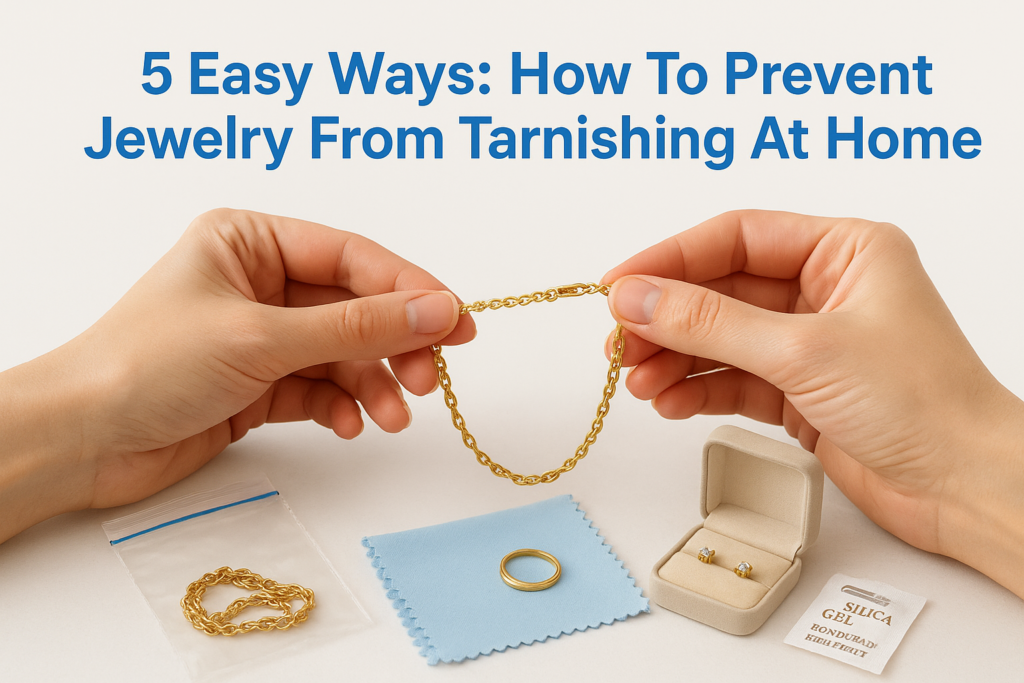
You spent good money on a piece you love, and now it’s turning dull, dark, or greenish. Whether it’s a sterling silver ring, a gold-plated chain, or a natural pyrite bracelet, tarnish happens when metal reacts with moisture, air, and the chemicals around you. The good news: learning how to prevent jewelry from tarnishing is simpler than most people think, and it starts with a few small changes at home.
At Natural Pyrite UAE, we work with natural pyrite every day, a stone that, like many metals, can lose its luster without proper care. That hands-on experience has taught us exactly what works (and what doesn’t) when it comes to keeping jewelry looking sharp over time. And living in the UAE adds another layer to the challenge, since high humidity and heat accelerate tarnishing far faster than cooler, drier climates.
Below, you’ll find five straightforward methods to protect your pieces from discoloration, covering storage, daily habits, and a few smart tricks that take less than a minute. Everything here is practical and home-friendly, so you can start today without any specialized equipment.
1. Choose tarnish-resistant jewelry from the start
Starting with the right material is the most reliable way to understand how to prevent jewelry from tarnishing before the problem even begins. No storage trick or cleaning routine will fully compensate for reactive base metals or ultra-thin plating that wears through within a few weeks of regular use.
What tarnish-resistant materials actually mean
A metal resists tarnish when it reacts slowly to oxygen, moisture, and sulfur compounds in the surrounding air. Solid gold, platinum, and titanium sit at the low-reactivity end of the spectrum and need the least maintenance. Sterling silver and brass tarnish more readily, but both are manageable with consistent care habits.
Best metal choices for daily wear in the UAE
Heat and high humidity in the UAE accelerate metal oxidation faster than most other climates. Solid 14k or 18k gold performs best in this environment and holds its appearance through daily wear. For a more budget-friendly option, surgical-grade stainless steel resists sweat and moisture reliably without discoloring skin.
The higher the karat in gold, the less reactive alloy is blended in, which directly slows how fast the piece tarnishes under heat and humidity.
How natural pyrite jewelry fits into a low-tarnish routine
Natural pyrite is an iron sulfide mineral, which means it needs slightly different care than pure metal jewelry. High-quality pyrite holds its luster far longer when you keep the surface dry and limit prolonged direct skin contact. Removing a pyrite bracelet before physical activity and wearing it on a dry wrist cuts surface oxidation noticeably over time.
What to check before you buy or wear a piece
Before investing, confirm whether a piece is solid metal or plated, and ask how thick the plating layer is. Plating below 0.5 microns will wear through in weeks with daily use, while anything above 1 micron offers more realistic durability for regular wear.
Common mistakes that make even good metals tarnish faster
Even solid gold dulls faster when you store it touching reactive metals like copper or brass in the same drawer or box. That direct contact causes galvanic corrosion, a process where one metal accelerates the oxidation of the other, and no amount of polishing fully reverses it.
2. Keep jewelry dry and away from chemicals
Moisture is one of the fastest triggers for tarnish, and in the UAE’s humid climate, daily exposure to sweat and water accelerates oxidation significantly. Keeping your pieces dry is a core part of how to prevent jewelry from tarnishing over the long term.
Why water, sweat, and humidity speed up tarnish
Water introduces oxygen and dissolved minerals directly onto metal surfaces, while sweat carries salt and acids that react with most alloys almost instantly. In humid environments, this reaction continues even when you are not actively sweating.
The put it on last, remove it first routine
Put jewelry on after you have applied all your products, including SPF and perfume, and take it off before washing your hands or going to bed. This single daily habit cuts chemical exposure more than any other routine change.
Treating jewelry as the final step in your routine cuts its contact with reactive substances by a meaningful margin.
Where lotions, SPF, sanitizer, and perfume do the most damage
Hand creams and SPF sit on skin for hours, and bracelets and rings sit directly in that residue all day. Perfume sprayed on your neck or wrists coats nearby chains with alcohol and fragrance compounds that strip surface finishes quickly.
Shower, gym, pool, and beach rules that prevent discoloration
Remove all jewelry before any water activity, including showers. Chlorine in pools and saltwater at the beach are particularly aggressive on plated metals and softer stones like pyrite.
Quick recovery steps if jewelry gets wet
Pat the piece completely dry with a soft cloth right away, then leave it on a clean, dry surface for a few minutes before storing. Never seal wet jewelry inside a pouch or box.
3. Store jewelry the right way between wears
How you store your pieces matters just as much as how you wear them. Proper storage is a core part of how to prevent jewelry from tarnishing, and getting it right takes only a few minutes to set up at home.
Why open-air storage causes dullness and darkening
Leaving jewelry on a countertop or open tray exposes every surface to airborne moisture and sulfur compounds continuously. In the UAE’s humid climate, this constant exposure dulls pieces far faster than actual wear does.
The best at-home storage setup for chains, rings, and earrings
Store each piece in an individual zip-lock bag or soft fabric pouch to limit air contact. Keeping items separated also prevents scratching and tangling between pieces. A few simple options that work well at home:
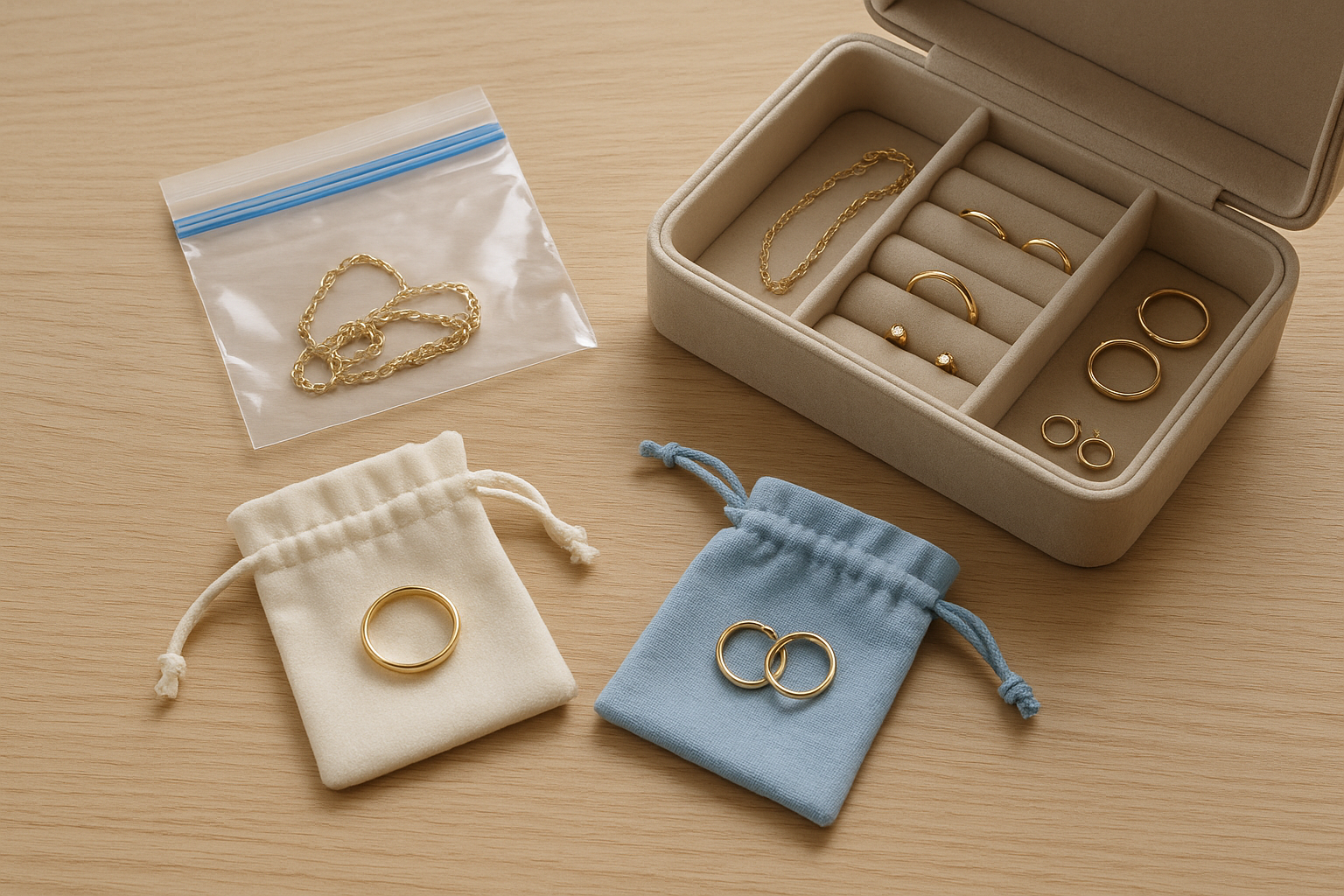
- Zip-lock bags with the air pressed out before sealing
- Small fabric drawstring pouches for rings and earrings
- A lined compartment jewelry box for pieces you access daily
Anti-tarnish strips, silica gel, and other humidity control options
Place anti-tarnish strips or silica gel packets inside your jewelry box to absorb excess moisture. Replace them every three to six months to maintain their effectiveness.
A single silica gel packet inside a sealed pouch can extend the shine of sterling silver by several weeks in the UAE’s humidity.
How to store different metals so they do not react with each other
Keep reactive metals like copper and brass away from silver and gold pieces in separate pouches or compartments. Direct contact between incompatible metals accelerates oxidation on both surfaces through galvanic reaction.
Storage mistakes that scratch plating and expose base metals
Tossing multiple pieces into one unlined drawer or box causes friction that wears through plating quickly. Always use a lined or padded container to protect surface finishes between wears.
4. Seal cheap and plated jewelry with a protective barrier
A thin protective coating gives plated and costume pieces a real defense against discoloration. This approach is one of the most affordable answers to how to prevent jewelry from tarnishing without replacing your collection.
When a barrier helps and when it makes things worse
Coatings work well on smooth, flat metal surfaces like ring bands and solid bangles. They perform poorly on textured or stone-set pieces where the layer pools unevenly and peels off quickly.
Apply the coating only when the piece is completely clean and dry. Any trapped moisture underneath speeds up tarnish rather than preventing it.
Clear nail polish, jewelry sealants, and wax coatings compared
Clear nail polish delivers a quick two-to-three-week fix on low-friction surfaces like clasps and bands. Jewelry-grade sealants bond more durably and resist the UAE’s year-round humidity far better for regular wear.
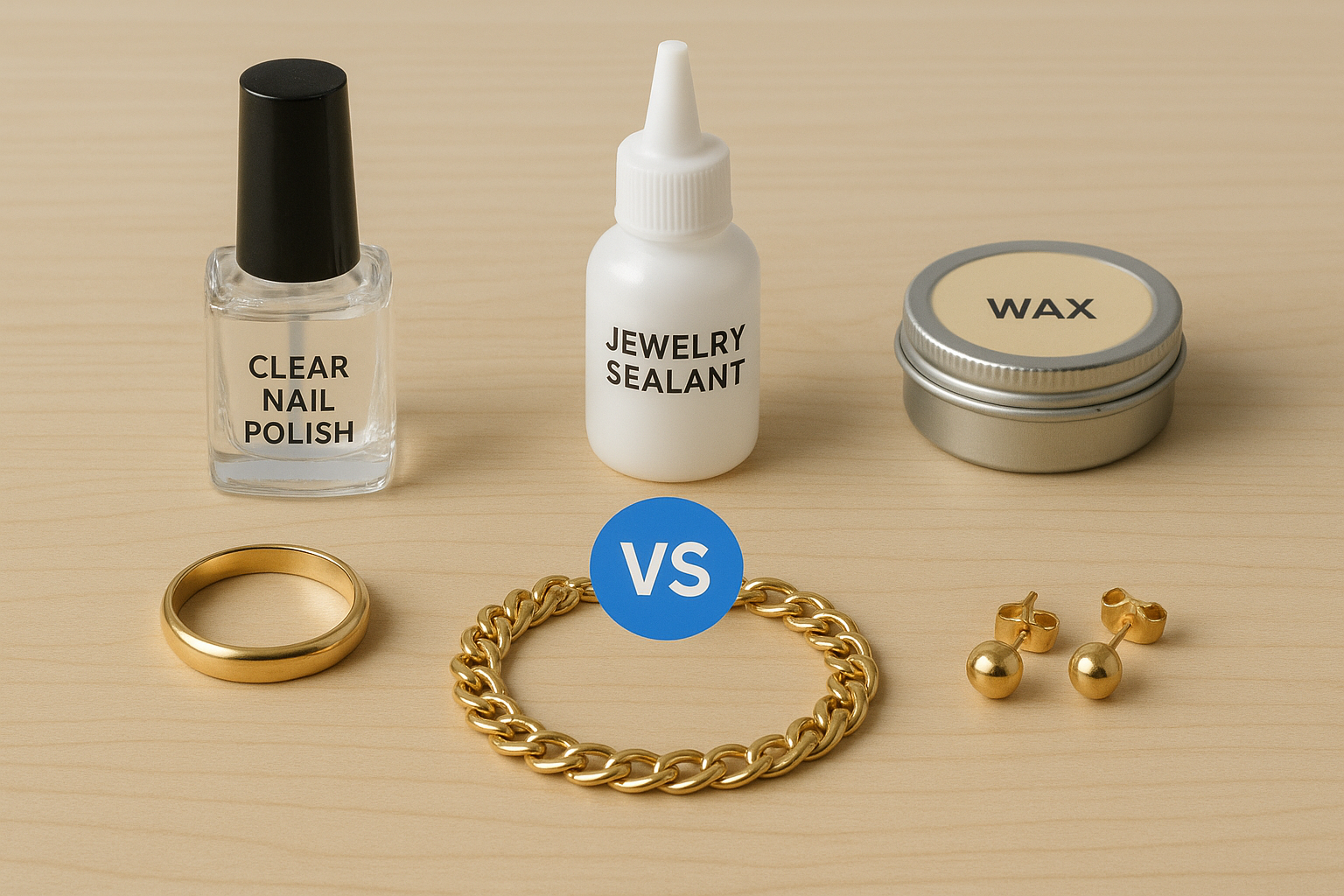
Two thin coats of a jewelry sealant outlast a single thick nail polish layer by several weeks in humid conditions.
How to prevent rings and bracelets from turning skin green
Apply two thin layers to the inner band of any copper-based ring or bracelet. This creates a barrier that stops the oxidation transfer responsible for the green marks left on your skin after a full day of wear.
How often to reapply coatings for realistic protection
Reapply every four to six weeks for pieces in daily rotation. Friction points like edges and clasps lose their coating fastest, so check those areas closely before each new application.
Red flags that mean you should not coat the piece
Some pieces are not good candidates for a barrier coating. Avoid applying sealants to:
- Porous stones like turquoise or pearl, where coatings trap moisture against the surface and accelerate damage
- Articulated or flexible chain links, where dried buildup cracks with movement and causes visible flaking
- High-end solid metal pieces that a professional jeweler should clean and polish instead
5. Clean and polish before tarnish builds up
Regular cleaning is one of the most overlooked answers to how to prevent jewelry from tarnishing over time. Catching surface buildup early stops minor dullness from becoming permanent discoloration that no polish can fix.
How to spot early tarnish vs permanent plating wear
Early tarnish appears as a slight dullness or yellowish film that lifts with a soft cloth and some light pressure. Permanent plating wear shows as patchy, darker spots where the base metal is fully exposed, and no cleaning routine reverses that damage.
Safe cleaning methods by metal type
Metal type determines the right cleaning approach, and using the wrong method strips a surface faster than tarnish would. Here are reliable options by material:
- Solid gold and stainless steel: wipe with a damp microfiber cloth, then dry immediately
- Sterling silver: use a dedicated silver polishing cloth to lift sulfur buildup gently
- Natural pyrite: dry wipe only with a soft cloth; avoid any liquid contact
What to avoid on plated jewelry, stones, and glued settings
Never use abrasive cloths or toothpaste on plated surfaces, as both strip thin platings fast. Ultrasonic cleaners and harsh chemical solutions also loosen glued stone settings and crack more fragile materials.
A simple cleaning schedule that keeps shine longer
Wipe daily-wear pieces down with a dry microfiber cloth every few days. Give silver and pyrite pieces a light polish once a month to stay ahead of buildup before it bonds to the surface.
Cleaning before tarnish fully sets means you spend less time restoring and more time wearing.
When you should stop DIY and use a professional jeweler
Take a piece to a professional when you notice deep oxidation, loose stones, or visible scratches through the plating. Attempting DIY cleaning on structurally compromised pieces risks accelerating the wear rather than reversing it.
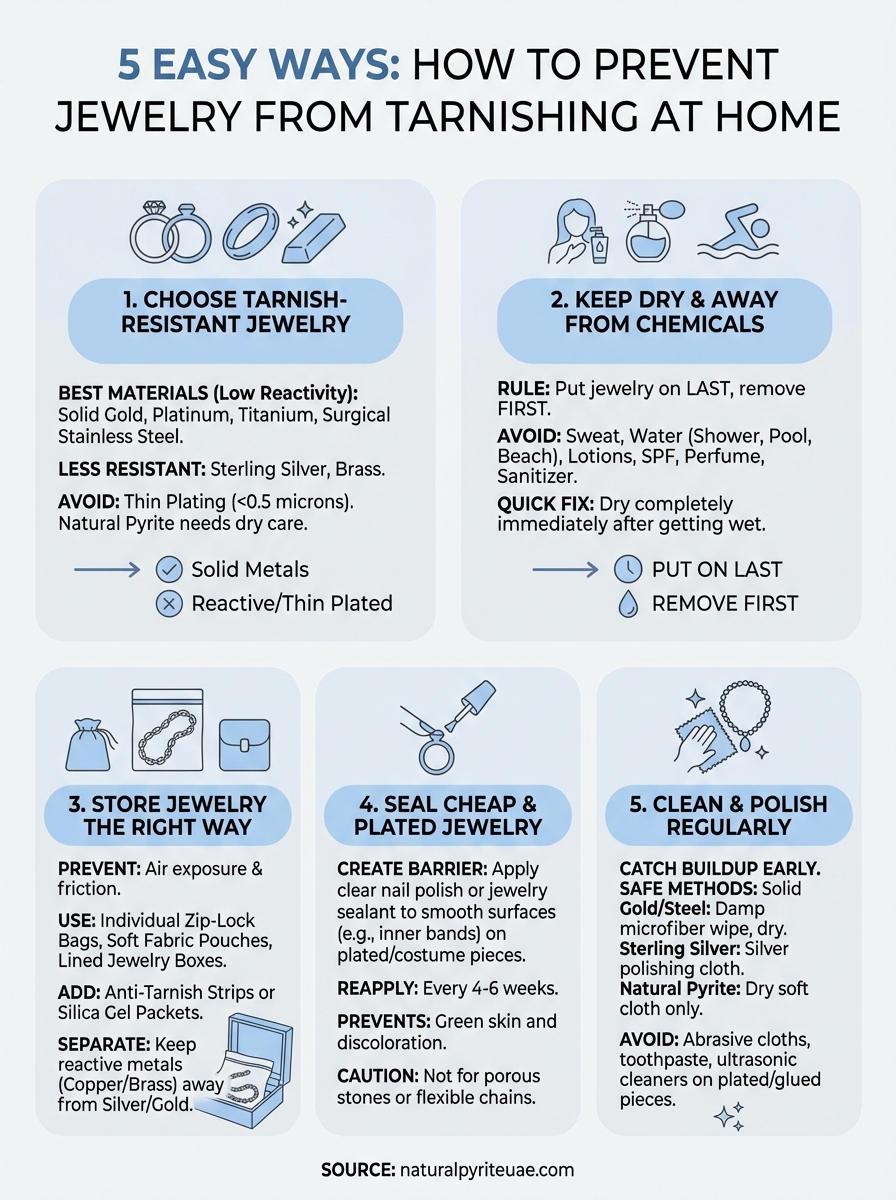
Simple wrap-up
Knowing how to prevent jewelry from tarnishing comes down to consistent small habits rather than any single expensive fix. Start with the right materials, keep your pieces dry, store them properly, seal the vulnerable ones, and clean them before buildup sets in. Each of those five steps works on its own, but combining them gives your collection a far longer lifespan.
Living in the UAE means heat and humidity are always working against your jewelry, so the routines you build matter more here than in most places. A pyrite bracelet, a silver ring, or a plated chain all respond to the same basic principles: less exposure, better storage, and regular light maintenance.
If you want a piece that holds its luster with minimal effort, natural pyrite is worth considering as a daily accessory. Browse the full natural pyrite bracelet collection in the UAE and find a piece built to last.