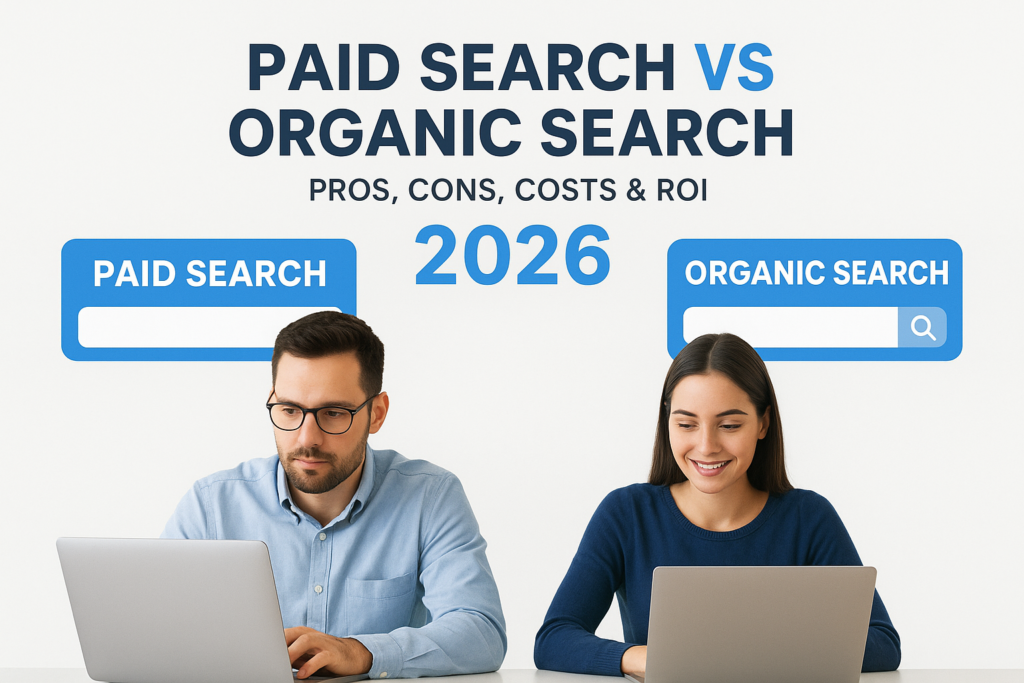
Every dirham you spend on marketing should work as hard as you do. For business owners and executives across the UAE, understanding the difference between paid search vs organic search isn’t just academic, it’s the foundation of smart digital strategy. Whether you’re launching a new venture in DIFC or scaling an established brand in Abu Dhabi, knowing where to allocate your budget can mean the difference between sustainable growth and wasted spend.
At Natural Pyrite UAE, we’ve built our presence by mastering both channels to reach discerning clients who value authenticity and craftsmanship. That experience taught us something valuable: neither paid nor organic search is universally "better." The right choice depends on your goals, timeline, and resources. Paid search delivers immediate visibility, while organic search builds lasting authority, but the real power comes from understanding how they complement each other.
This guide breaks down the pros, cons, costs, and ROI of both approaches with practical insights for 2026. You’ll learn when to invest in paid campaigns, when to prioritize organic efforts, and how to measure what’s actually working. By the end, you’ll have a clear framework for making decisions that align with your business objectives.
Why paid and organic search still matter in 2026
The digital marketing landscape shifts constantly, but search remains the primary way your customers find solutions. In 2026, both paid and organic search channels continue to dominate how businesses in the UAE connect with their audience. While social media and AI-driven recommendations grab headlines, the reality is simpler: when someone needs something specific, whether it’s executive office decor or financial services, they start with a search query. Your visibility in those moments determines whether you capture that opportunity or lose it to a competitor.
The UAE’s digital landscape keeps evolving
The Emirates has one of the world’s highest internet penetration rates, with over 99 percent of the population online and actively searching for products and services daily. This creates unprecedented opportunity but also intense competition. Your potential customers in Dubai, Abu Dhabi, and beyond are conducting research before every purchase decision, from AED 200 accessories to multi-million dirham contracts. Search behavior in the UAE remains consistent: people use Google to validate their choices, compare options, and discover new brands. Whether you operate in luxury retail, real estate, or B2B services, your absence from search results means you’re invisible during these critical decision-making moments.
Dubai’s business environment particularly rewards speed and strategic positioning. Paid search lets you appear instantly for high-value keywords, capturing demand the moment it emerges. Organic search builds the long-term authority that sustains your business through market fluctuations. Both channels work differently but serve the same goal: putting your business in front of qualified buyers when they’re actively looking.
Consumer behavior hasn’t changed fundamentally
People still type questions into search engines when they need answers. The mechanics of paid search vs organic search have matured, but the underlying human behavior remains unchanged. Your customers don’t distinguish between paid and organic results the way marketers do; they click on listings that appear relevant, trustworthy, and aligned with their needs. Research shows that 75 percent of users never scroll past the first page of search results, making top positions essential regardless of how you achieve them.
The real shift in 2026 isn’t about whether search matters, it’s about how quickly markets move and how prepared you are to compete in them.
Your competitors are already using both
Every day you delay implementing a comprehensive search strategy, your competitors gain ground. Businesses that ignore either paid or organic search leave money on the table, missing immediate sales opportunities while failing to build lasting visibility. The most successful companies in the UAE recognize that these channels complement rather than compete with each other. Paid campaigns generate immediate revenue and data while your organic efforts mature. Organic rankings reduce long-term acquisition costs and build brand authority that paid ads can’t replicate alone.
Markets in Abu Dhabi and Dubai move fast. Your competitors aren’t debating whether search matters; they’re optimizing their approach to capture maximum share of high-intent traffic. The question isn’t whether to invest in search visibility but how to allocate resources between paid and organic channels for optimal return.
What organic search is and how it works
Organic search refers to the unpaid listings that appear in search engine results based on their relevance to your query. When you type "handcrafted pyrite jewelry Dubai" into Google, the results that appear naturally, without a "Sponsored" label, are organic results. Search engines use complex algorithms to evaluate hundreds of factors and determine which pages best answer your question. Unlike paid advertisements, you can’t buy your way into these positions. You earn them through strategic content creation, technical optimization, and building authority over time.
How search engines rank organic results
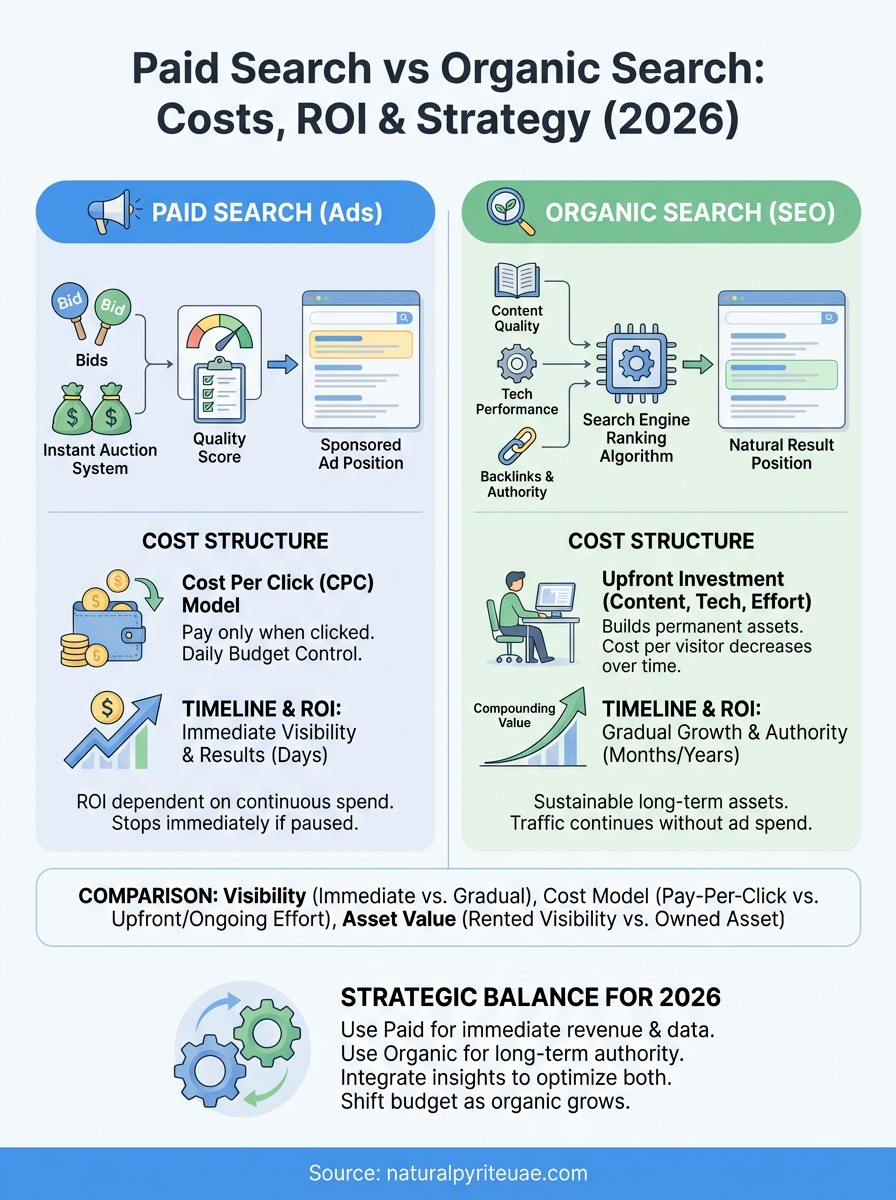
Search engines evaluate your website based on content quality, technical performance, and external validation. Google’s algorithms assess whether your pages provide comprehensive, accurate answers to user questions. Your site’s loading speed, mobile responsiveness, and security all influence where you appear in search results. Additionally, the number and quality of other websites linking to your content signals authority and trustworthiness. When comparing paid search vs organic search, the organic channel rewards sustained effort rather than immediate budget allocation.
Organic visibility builds compounding value; the work you do today continues generating traffic for months or years without ongoing ad spend.
The timeline for organic visibility
Organic search requires patience and consistent execution. New websites typically need three to six months before seeing meaningful traffic, while established sites can rank for new content faster. Your domain’s existing authority, the competitiveness of your target keywords, and the quality of your optimization all affect this timeline. Businesses in competitive UAE markets like luxury goods or real estate may need longer to break through, but once you establish rankings, they tend to persist with minimal ongoing investment. This contrasts sharply with paid campaigns that stop delivering the moment you pause spending.
The investment in organic search compounds over time. Each optimized page becomes a permanent asset that continues attracting qualified visitors without recurring costs. Your rankings improve as you publish more quality content, earn more backlinks, and demonstrate expertise in your field.
What paid search is and how it works
Paid search displays sponsored advertisements at the top and bottom of search engine results pages. When you search for "luxury office decor Dubai," the listings marked "Sponsored" or "Ad" are paid placements. Advertisers bid on specific keywords, and search engines run instant auctions to determine which ads appear and in what order. You pay only when someone clicks your ad, making this a performance-based model where you control spending and can measure exact returns. Unlike organic search that builds gradually, paid campaigns deliver immediate visibility the moment you activate them.
How paid search auction systems work
Search engines evaluate your bid amount alongside your ad quality score to determine placement. Your quality score reflects how relevant your ad and landing page are to the searcher’s query. Higher relevance can lower your cost per click while improving your position, meaning you don’t always need the highest bid to win top placement. Google Ads, the dominant platform in the UAE, runs these auctions in milliseconds every time someone searches. Your competitors bid on the same keywords, creating dynamic pricing that fluctuates based on demand, time of day, and market conditions.

The businesses that win in paid search combine strategic bidding with highly relevant ad copy and landing pages that match searcher intent.
The mechanics of paid campaigns
You create campaigns by selecting target keywords, writing ad copy, setting daily budgets, and designing landing pages where visitors arrive after clicking. Platforms like Google Ads let you control exactly how much you spend per day and pause campaigns instantly when needed. Your ads appear only when people search your chosen keywords, making this channel highly targeted compared to display advertising. When evaluating paid search vs organic search, paid campaigns offer immediate control and predictable scaling. You can test different messages quickly, identify which keywords convert best, and adjust your strategy based on real-time performance data.
Campaign success depends on continuous optimization of bids, ad copy, and landing pages. Your cost per acquisition improves as you refine targeting and eliminate underperforming keywords. Most businesses in Dubai and Abu Dhabi start seeing results within days of launching their first campaign.
Pros, cons, costs, and ROI compared
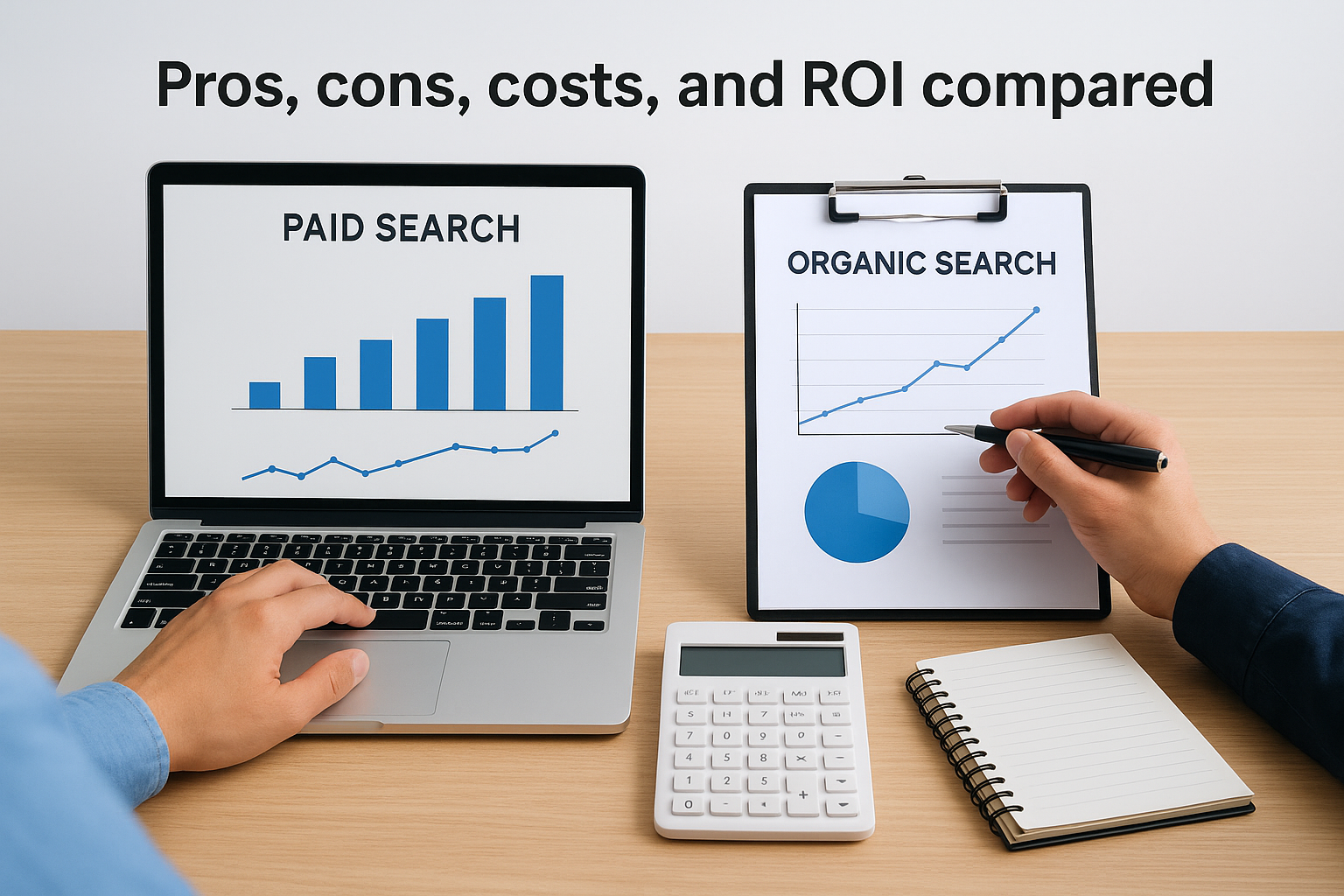
Understanding the financial and strategic differences between these channels helps you allocate budget effectively. Your choice isn’t binary; most successful businesses in the UAE use both channels strategically. The key is knowing which approach serves your specific goals at different stages of your growth. When evaluating paid search vs organic search, you’re comparing immediate visibility against compounding long-term assets.
The cost structures differ fundamentally
Paid search operates on a direct cost-per-click model where you pay each time someone clicks your ad. Your costs vary by keyword competitiveness, with commercial terms in Dubai often ranging from AED 2 to AED 50 per click depending on your industry. You control spending through daily budgets but need continuous investment to maintain visibility. Stop funding campaigns and your traffic disappears instantly.
Organic search requires upfront investment in content creation, technical optimization, and ongoing maintenance. You might spend AED 5,000 to AED 30,000 monthly on professional SEO services, but this investment builds assets that generate traffic without per-click costs. Your cost per visitor decreases over time as rankings improve and traffic compounds. A well-ranked page continues attracting visitors for months or years after you publish it.
ROI timelines and measurement
Paid campaigns deliver measurable returns within days, letting you calculate exact cost per acquisition and adjust spending based on performance. You see which keywords convert, which ads perform best, and can optimize rapidly. The tradeoff is that ROI remains dependent on continuous spending; your returns stop accumulating when you pause campaigns.
Organic search takes three to six months before showing substantial returns, but those returns continue growing without proportional cost increases.
Organic efforts compound differently, with each quality page strengthening your domain authority and attracting increasingly qualified traffic. Your initial investment might show modest returns for months, then accelerate as search engines recognize your expertise. Businesses that commit to both channels see the best overall performance, using paid search for immediate revenue while organic visibility reduces long-term customer acquisition costs.
How to balance paid and organic search in 2026
Your search strategy succeeds when you deploy both channels strategically rather than choosing one over the other. Most businesses in the UAE that dominate their markets use paid campaigns to capture immediate demand while building organic assets that reduce long-term acquisition costs. The balance between paid and organic search shifts based on your business stage, competitive landscape, and specific objectives. New brands might invest 70 percent in paid search initially, then gradually shift toward 50/50 or even favor organic as rankings improve.
Start with clear revenue and timeline goals
Define exactly what you need from search visibility before allocating budget. Your immediate sales targets determine how much you invest in paid campaigns, while your long-term positioning goals dictate organic investment. Businesses launching new products or entering competitive UAE markets typically need paid search to generate quick traction and revenue. Companies with established presence benefit more from doubling down on organic content that captures growing search volume without proportional cost increases.
The most efficient approach uses paid campaigns to test which keywords and messages convert, then builds organic content around proven winners.
Use paid data to accelerate organic results
Your paid campaigns generate valuable intelligence about which keywords drive actual conversions. Track which search terms produce sales, not just clicks, then prioritize creating comprehensive organic content targeting those exact phrases. This eliminates guesswork from your SEO strategy and focuses resources on terms with proven commercial value. Businesses that integrate insights between channels see 30 to 40 percent better overall performance than those managing them separately.
Adjust ratios as your organic presence grows
Monitor your organic traffic growth monthly and reduce paid spending on keywords where you rank in top three positions naturally. Redirect that budget toward competitive terms where you need paid visibility or toward entirely new keyword opportunities. Your goal is gradually shifting acquisition costs from paid to organic while maintaining or growing total qualified traffic. This approach builds sustainable competitive advantage that becomes harder for competitors to replicate over time.
Next steps for your search strategy
Your success in the UAE market depends on implementing both channels strategically rather than debating which one works better. Start by auditing your current visibility for the keywords your customers actually search. Run paid campaigns on your highest-value terms immediately while building organic content around those same topics. This dual approach captures revenue today while reducing acquisition costs tomorrow.
The businesses that win in paid search vs organic search aren’t the ones with the biggest budgets. They’re the ones that measure what matters, optimize relentlessly, and allocate resources based on actual performance data. Track your cost per acquisition across both channels monthly, then shift spending toward whatever delivers qualified customers most efficiently for your specific situation.
Your next move is clear: choose three to five commercial keywords that directly drive sales, launch paid campaigns this week, and start creating comprehensive organic content around them. If you want to see how strategic search visibility supports premium positioning in competitive markets, explore our curated pyrite collection where authenticity meets intentional design.