Pyrite commands attention. Its metallic gold luster earned it the nickname "fool’s gold," but those who understand this iron sulfide mineral know there’s nothing foolish about it. Pyrite uses span from large-scale industrial applications to intimate personal rituals, making it one of the most versatile minerals on Earth. For centuries, this stone has served chemists, miners, jewelers, and spiritual practitioners alike.
The mineral’s reach extends far beyond what most people realize. Sulfuric acid production, semiconductor manufacturing, decorative arts, and abundance practices all draw from pyrite’s unique properties. Whether you’re a geology enthusiast researching industrial processes or an entrepreneur seeking a tangible symbol of ambition, pyrite offers something substantial. Its dual identity, practical and symbolic, makes it particularly compelling for those who appreciate both function and meaning.
At Natural Pyrite UAE, we source and craft authentic, high-luster pyrite into statement pieces designed for the Emirates’ luxury market. Our work sits at the intersection of raw geological beauty and intentional living. This guide breaks down every major application of pyrite: its role in heavy industry, its place in fine jewelry and architectural decor, and its significance in wealth-focused rituals. By the end, you’ll understand exactly why this mineral has captivated scientists and seekers for generations, and how it might serve your own goals.
Why pyrite uses matter
Understanding pyrite’s applications changes how you evaluate minerals entirely. This isn’t about aesthetic appeal alone. Pyrite uses drive major economic sectors, from sulfuric acid production that enables fertilizer manufacturing to the semiconductor industry that powers your devices. The mineral’s iron sulfide composition makes it a reliable source material when you need consistent chemical properties at scale. Dismissing pyrite as mere decoration misses the billions of dollars it generates annually across manufacturing, mining, and metallurgy.
Economic value across sectors
Pyrite generates substantial revenue because multiple industries depend on its specific properties. Chemical manufacturers extract sulfur from pyrite to produce sulfuric acid, one of the most widely used industrial chemicals globally. You’ll find sulfuric acid in petroleum refining, metal processing, and battery production. The demand never stops, making pyrite a strategic resource rather than a curiosity.
Mining operations use pyrite as an indicator mineral during exploration. When geologists locate pyrite deposits, they often discover gold, copper, and other valuable metals nearby. This relationship between pyrite and economically significant minerals makes it a prospecting tool worth millions. Operations in the Middle East and globally rely on pyrite signatures to reduce exploration costs and increase discovery rates.
The presence of pyrite often signals the geological conditions that create mineral wealth, making it as valuable for what it indicates as for what it contains.
Material properties that drive demand
Your electronics likely contain components made possible by pyrite research. The mineral’s semiconductor potential has attracted attention from materials scientists working on next-generation technology. Iron disulfide creates photovoltaic effects under certain conditions, which means pyrite derivatives could eventually reduce solar panel costs significantly. Labs across Dubai, Silicon Valley, and research centers worldwide study these properties because the implications for energy technology are profound.
Architects and designers value pyrite for properties beyond its appearance. The mineral’s metallic luster maintains its integrity over time without the oxidation issues that affect many other naturally lustrous materials. High-end commercial spaces in the UAE increasingly feature pyrite accents because the material provides lasting visual impact without constant maintenance. This durability matters when you’re investing in statement pieces meant to endure decades of exposure to desert heat and humidity.
Cultural and personal significance
Pyrite carries symbolic weight across multiple traditions. Your interest in abundance practices connects you to centuries of human relationship with this stone. Ancient civilizations associated pyrite with fire and light, recognizing something powerful in its spark-producing properties. Modern practitioners use pyrite in wealth rituals and intentional living spaces because its appearance creates a constant visual reminder of goals and aspirations. This isn’t superstition; it’s environmental psychology applied through deliberate material choices.
Business leaders in Dubai and Abu Dhabi display pyrite in executive suites because the mineral communicates specific qualities. Ambition, precision, and raw power all register when someone encounters authentic, high-quality pyrite properly lit and positioned. The stone functions as both conversation starter and personal talisman, bridging aesthetic design with psychological reinforcement. Your choice to incorporate pyrite into your environment sends signals to yourself and visitors about the values you prioritize.
What pyrite is and why it looks like gold
Pyrite consists of iron and sulfur atoms bonded in a precise ratio: one iron atom to two sulfur atoms, forming the chemical compound FeS₂. This mineral crystallizes in the cubic crystal system, creating geometric shapes that range from perfect cubes to octahedrons. Your eyes perceive these crystals as metallic gold because pyrite’s atomic structure reflects light in ways that mimic precious metals. The confusion between pyrite and gold has persisted for millennia, not because people were foolish, but because the visual similarity runs deep at a physical level.
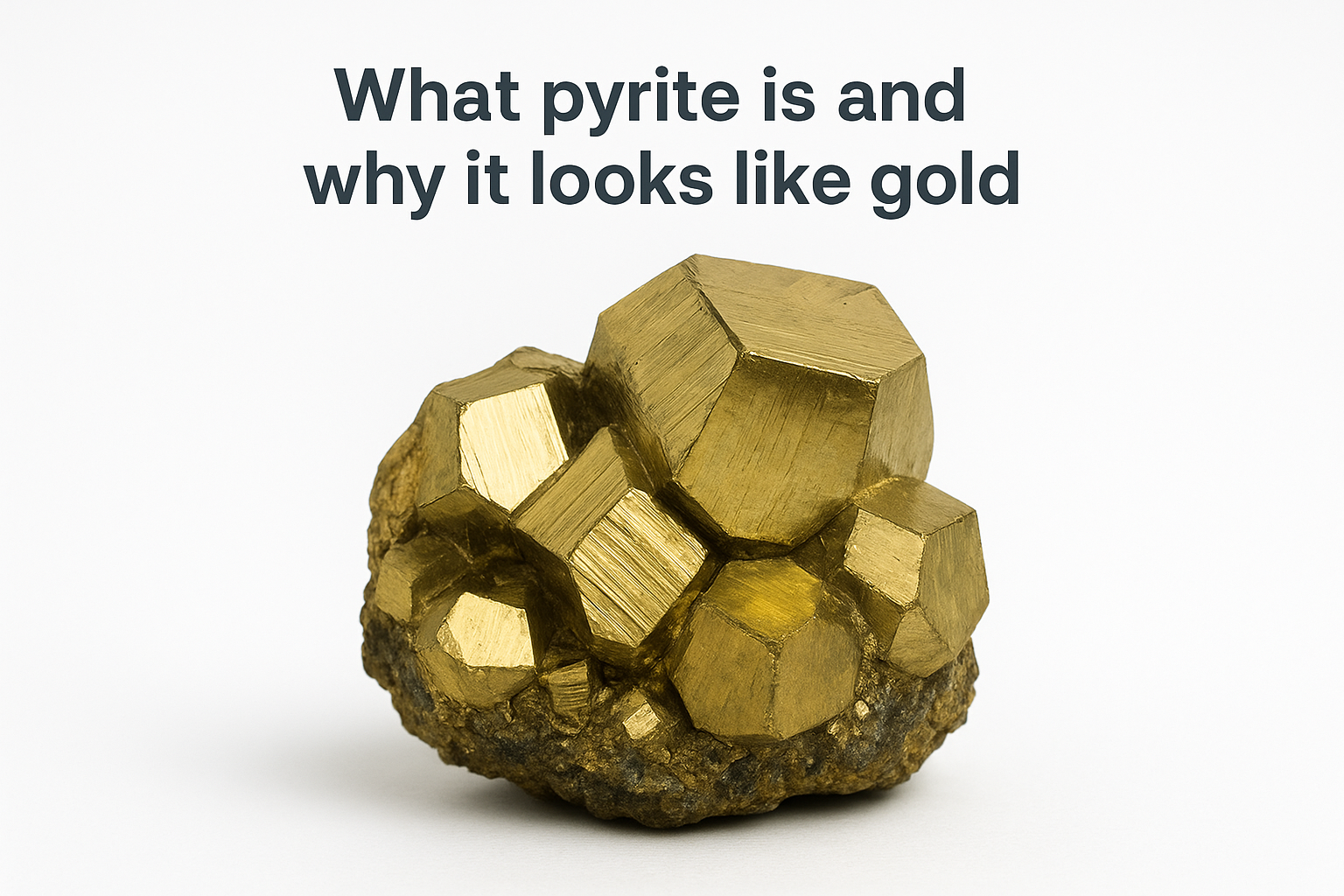
Crystal structure creates the golden appearance
The cubic arrangement of iron and sulfur atoms in pyrite produces a metallic bond structure that reflects light intensely. When photons strike the mineral’s surface, the loosely held electrons in the metallic bonds absorb and re-emit specific wavelengths, creating that characteristic brass-yellow sheen. You’re seeing the same optical phenomenon that makes actual gold sparkle, just with different elements producing the effect.
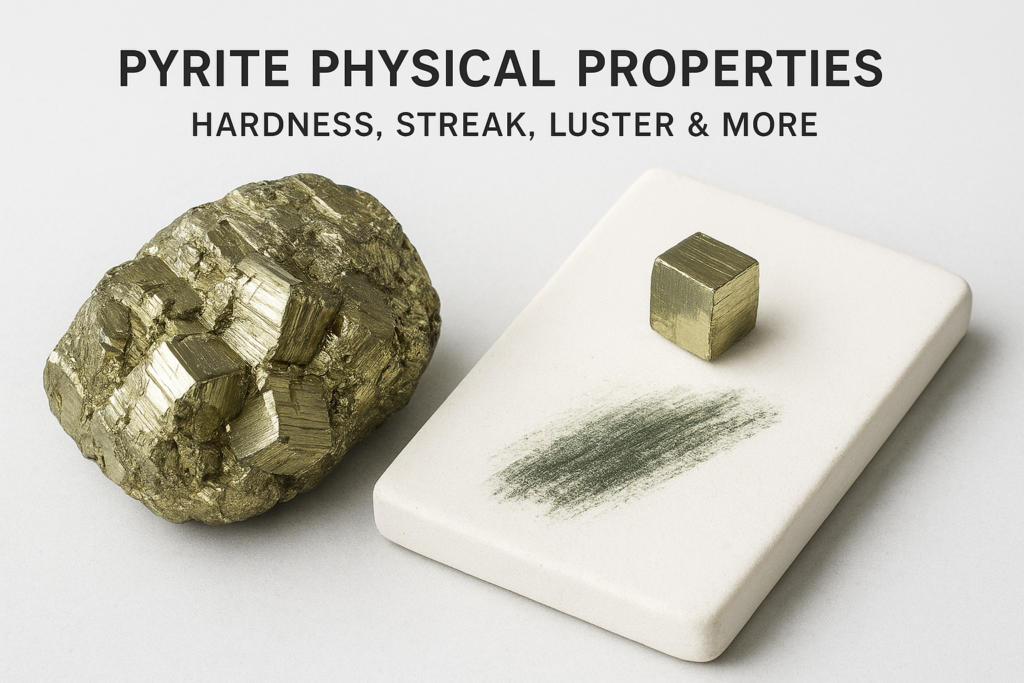
Pyrite’s crystalline faces form at sharp, well-defined angles because of its isometric crystal system. This geometric precision means your pyrite specimens will display flat, reflective surfaces that catch light dramatically. The striated faces often visible on natural pyrite cubes result from repeated crystal twinning during formation, adding texture that enhances the play of light across the surface.
Physical properties that distinguish it from gold
You can separate pyrite from gold through straightforward tests based on hardness and density. Pyrite registers 6 to 6.5 on the Mohs scale, making it harder than actual gold, which sits at 2.5 to 3. If you scratch pyrite with a steel blade, it resists marking, while gold yields easily. This hardness makes pyrite uses in decorative applications particularly practical, as the material withstands handling and environmental exposure better than softer metals.
Pyrite’s hardness and durability make it superior to gold for applications where the piece needs to maintain its appearance under regular contact and use.
Density provides another clear distinction. Gold weighs approximately 19.3 grams per cubic centimeter, while pyrite comes in at around 5 grams per cubic centimeter. When you hold identically sized pieces, the weight difference proves unmistakable. This lower density actually benefits jewelry and decor applications, as you can create larger statement pieces without the excessive weight that would make gold versions impractical for daily wear or wall mounting.
Pyrite uses in industry and manufacturing
Industrial sectors consume massive quantities of pyrite every year because the mineral delivers specific chemical properties at commercial scale. Your smartphone, the fertilizer feeding global agriculture, and the batteries powering electric vehicles all trace back to processes that depend on pyrite-derived materials. This isn’t decorative application. Manufacturing facilities process millions of tons of pyrite annually to extract sulfur and create the building blocks of modern chemistry. Understanding these industrial pyrite uses reveals why this mineral maintains strategic importance across continents.
Sulfuric acid production from pyrite
Chemical plants extract sulfur from pyrite through controlled combustion processes called roasting. When you heat iron sulfide in the presence of oxygen, you produce sulfur dioxide gas, which manufacturers then convert to sulfuric acid through the contact process. This acid serves as the foundational chemical for producing fertilizers, petroleum products, and industrial batteries. Your region’s agricultural output depends on fertilizers made possible by this exact sequence of reactions.
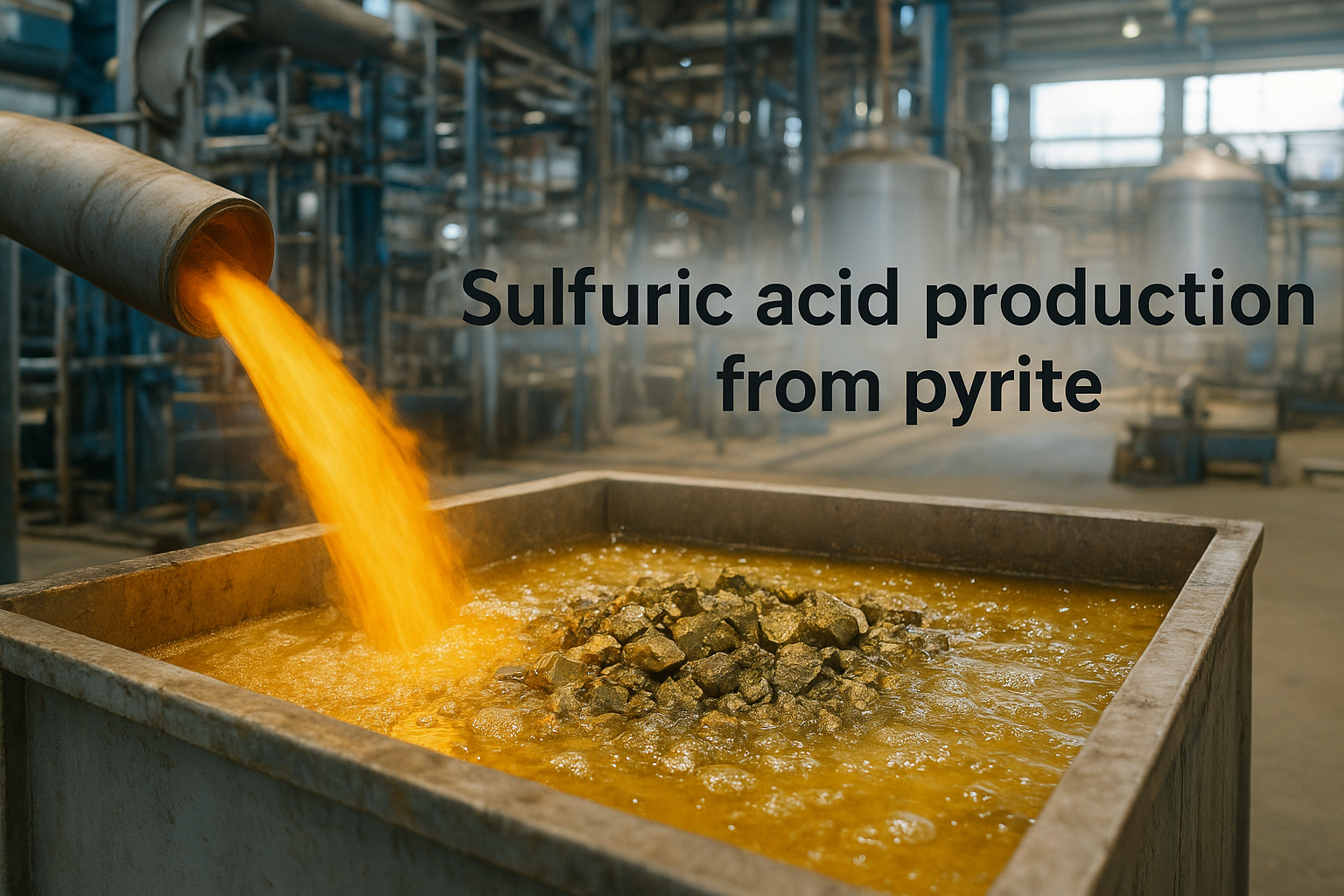
Sulfuric acid derived from pyrite enables the production of phosphate fertilizers that feed over half the world’s population.
The economics favor pyrite because the mineral provides predictable sulfur content without the variability that complicates other sulfur sources. Production facilities calculate yields precisely based on pyrite’s consistent FeS₂ composition. You get reliable output when your raw material maintains the same chemical formula batch after batch, which matters when you’re operating plants worth hundreds of millions of dollars.
Semiconductor and photovoltaic research
Materials scientists study pyrite as a potential semiconductor material because iron disulfide exhibits photovoltaic properties under specific conditions. Your future solar panels might incorporate pyrite-derived compounds if research teams solve the current efficiency challenges. Labs focus on this mineral because iron and sulfur remain far more abundant than the rare earth elements currently required for high-efficiency solar cells. Reducing panel costs by even 20 percent would accelerate renewable energy adoption globally.
Electronics manufacturers already use pyrite nanoparticles in specialized applications where their unique electrical properties provide advantages over conventional materials. The mineral’s behavior at nanoscale opens possibilities for energy storage and catalysis that didn’t exist with bulk pyrite. Research continues because the potential applications span from battery technology to hydrogen production, all built on understanding how iron sulfide behaves at molecular level.
Pyrite uses in mining and metallurgy
Geologists and mining engineers rely on pyrite as a pathfinder mineral because it forms under the same conditions that create economically valuable metal deposits. When your exploration team locates significant pyrite concentrations, you’ve often found the geological environment where gold, copper, silver, and zinc accumulate. This relationship isn’t coincidental. Hydrothermal fluids that transport precious metals through rock formations also deposit iron sulfide along their paths, creating a readable map for experienced prospectors. Mining operations in the UAE region and globally use pyrite signatures to reduce exploration costs by targeting areas with the highest probability of containing payable ore.
Pyrite as an indicator mineral in exploration
Your drilling program gains efficiency when you understand how pyrite distribution patterns signal nearby mineralization. Geochemists analyze pyrite samples for trace elements that indicate proximity to primary ore bodies. When pyrite contains elevated levels of gold, arsenic, or antimony, you’re likely within the alteration halo surrounding a significant deposit. This detective work prevents wasting resources on barren ground.
Exploration companies train field teams to recognize pyrite’s crystal habits and textures because these characteristics reveal formation conditions. Cubic pyrite suggests different geological processes than pyrite that formed as framboidal aggregates or replacement textures. Reading these clues helps you reconstruct the hydrothermal history of a prospect area, which directly informs your drilling strategy and targeting decisions.
Pyrite’s presence and characteristics tell the geological story that leads exploration teams from surface indications to buried treasure.
Metallurgical applications and metal recovery
Smelting operations process pyrite-bearing ores to recover multiple metals simultaneously. Your refinery captures not just the target metal but also iron and sulfur from associated pyrite, turning what could be waste material into additional revenue streams. Modern metallurgical plants design flowsheets specifically to extract maximum value from complex ores where pyrite occurs alongside copper or nickel sulfides.
Pyrometallurgical processes use pyrite’s exothermic oxidation to provide heat for smelting operations. When you roast pyrite-containing concentrates, the mineral releases energy as it breaks down, reducing fuel costs significantly. This self-heating property makes pyrite uses in metallurgy particularly economical compared to processing minerals that require constant external heat input. Facilities that handle sulfide ores engineer their systems to capture sulfur dioxide emissions for acid production, extracting value from every component of the mineral feed.
How to use pyrite in jewelry and accessories
Pyrite transforms into striking personal accessories when cut and set properly. Your choice to wear pyrite jewelry connects you to a material that combines geological authenticity with metallic visual impact. The mineral’s natural hardness (6 to 6.5 on the Mohs scale) makes it practical for daily wear, resisting scratches that would damage softer gemstones. Jewelers working with pyrite create pieces that maintain their appearance through regular contact with skin, clothing, and environmental exposure. This durability separates authentic pyrite uses in accessories from decorative materials that degrade quickly under typical wearing conditions.
Pyrite jewelry styles and settings
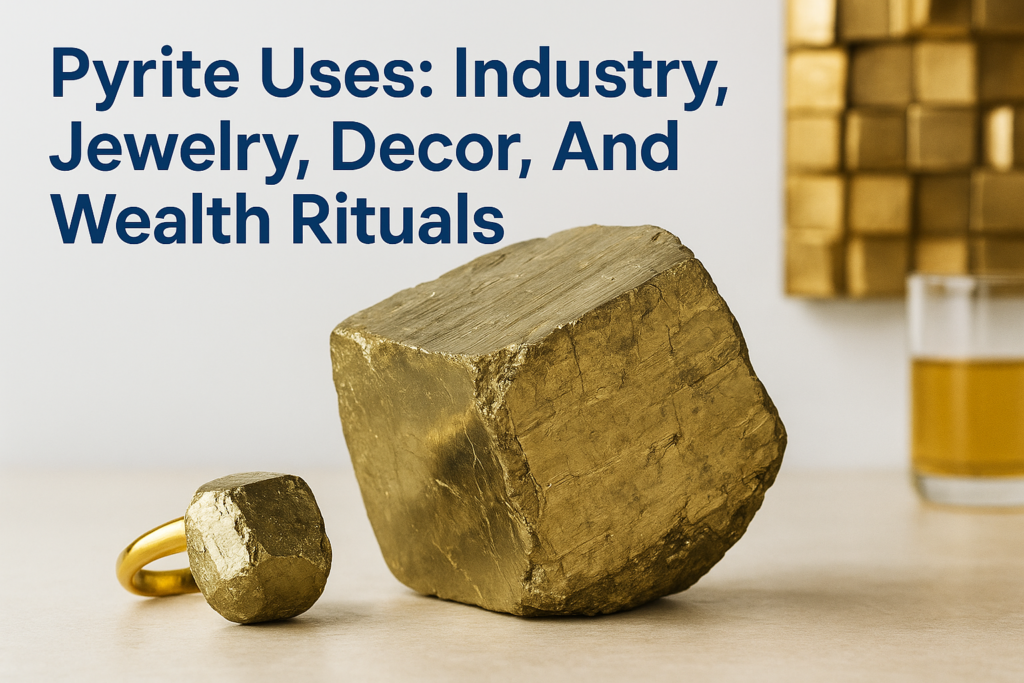
Designers set pyrite in sterling silver and gold bezels that protect the stone’s edges while showcasing its metallic luster. Your pendant or ring benefits from settings that allow light to reach the pyrite’s striated faces, creating the dramatic reflections that make the mineral visually compelling. Bezel settings work particularly well because they secure the stone without drilling through it, preserving the natural crystal structure that gives pyrite its distinctive appearance.
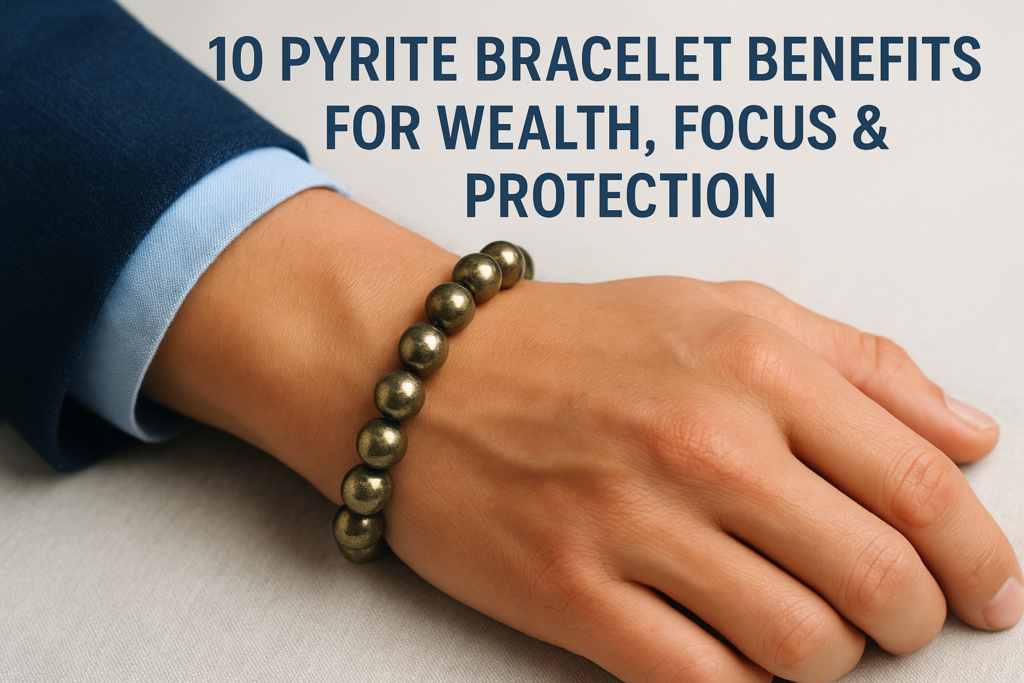
Bracelet designs featuring polished pyrite beads deliver maximum surface contact with your skin, which matters if you’re incorporating the piece into abundance practices. The Money Magnet Pyrite Bracelet style uses 8mm to 10mm beads strung on elastic cord, creating accessories you can wear during business meetings and formal events without compromising professional appearance. Your wrist becomes a display surface for the mineral’s characteristic golden sheen throughout your workday.
Pyrite jewelry serves dual functions: it provides visual impact while creating tactile connection to a material that humans have valued for centuries.
Wearing pyrite accessories in professional settings
Your business environment determines how you style pyrite pieces for maximum effect. Executive settings in Dubai’s financial districts pair well with understated pyrite cufflinks or a single statement ring. The mineral’s metallic appearance reads as intentional and powerful without the ostentation that actual gold sometimes carries in professional contexts. You communicate precision and ambition through material choice alone.
Layering pyrite accessories requires restraint because the mineral’s reflective properties create strong visual presence. Your outfit benefits from treating pyrite as the focal point rather than combining it with competing metallic elements. A pyrite bracelet worn alone on your wrist draws attention effectively, while pairing it with multiple gold chains or watches dilutes the specific statement that authentic mineral jewelry makes. Professional styling means letting the pyrite’s natural geometry and luster carry the visual weight without excessive surrounding decoration.
How to use pyrite in home and office decor
Pyrite elevates interior spaces through its metallic presence and geological authenticity. Your choice to display this mineral transforms rooms into environments that communicate specific values about precision, ambition, and natural power. Unlike mass-produced metal decor, authentic pyrite carries the visual weight of millions of years of formation pressure, creating statement pieces that command attention without relying on artificial finishes or coatings. Architects and interior designers in the UAE increasingly specify pyrite for executive suites and luxury residences because the material delivers lasting impact that synthetic alternatives cannot replicate.
Selecting pyrite pieces for architectural impact
Large-format pyrite installations create focal points in commercial and residential spaces. Your lobby or conference room benefits from cube clusters mounted on custom bases that allow the mineral’s natural geometry to define the visual experience. These pieces work particularly well against neutral backgrounds where the pyrite’s golden luster contrasts sharply with white walls or dark stone. Size matters when you’re creating architectural presence, so specimens measuring 30 centimeters or larger typically deliver the impact that justifies their placement in high-traffic areas.
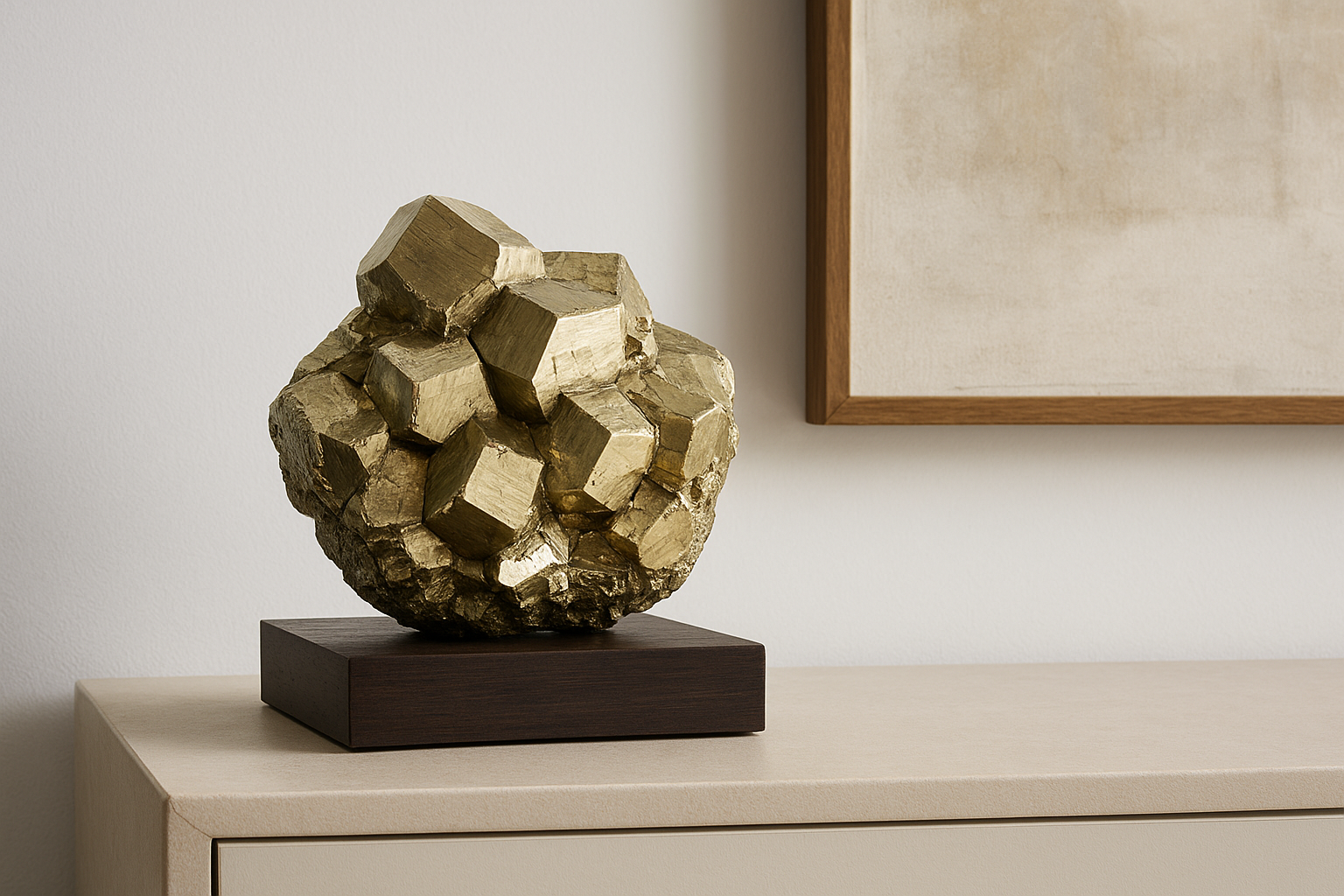
Framed pyrite compositions offer versatility for walls where you cannot mount raw specimens directly. The Seven Running Horses Pyrite Frame style integrates symbolic imagery with mineral authenticity, creating layered meaning that resonates with viewers familiar with both artistic and geological references. Your office gains depth when decor choices carry multiple interpretations beyond pure aesthetics.
Pyrite decor functions as conversation architecture, giving visitors tangible entry points into discussions about geology, design philosophy, and intentional space creation.
Lighting and display considerations for maximum effect
Your pyrite installation requires directional lighting to activate its reflective properties fully. Position spotlights at 45-degree angles to the specimen’s primary faces, creating highlights that emphasize the striated crystal surfaces characteristic of quality pyrite. Track lighting systems give you flexibility to adjust as natural light conditions change throughout the day, maintaining visual drama regardless of external illumination.
Display cases with dark interiors amplify pyrite’s golden appearance through contrast. Your specimen becomes a light source within the case, drawing the eye immediately upon room entry. Museum-grade acrylic enclosures protect the mineral from handling while maintaining optical clarity that doesn’t diminish the viewing experience. Climate-controlled environments prevent humidity fluctuations that could affect the pyrite’s surface over decades of display.
Spiritual and wealth ritual uses of pyrite
Practitioners position pyrite in strategic locations throughout living and working spaces to create environments that reinforce abundance mindset. Your placement of this mineral stems from centuries of human association between pyrite’s golden appearance and material prosperity. The practice doesn’t claim supernatural properties. Instead, it leverages environmental psychology: surrounding yourself with tangible symbols of wealth creates constant visual reinforcement of financial goals. Business leaders in Dubai and Abu Dhabi incorporate these pyrite uses into their offices because the mineral serves as both aesthetic element and psychological anchor for maintaining focus on expansion and success.
Pyrite placement for wealth-focused environments
Your desk becomes a power center when you position a pyrite cube or cluster in the far-left corner, an area that Feng Shui principles associate with prosperity and financial flow. The mineral’s reflective surfaces catch light throughout your workday, creating repeated visual contact that reinforces your relationship with abundance concepts. This placement works particularly well in home offices where you control the entire environment design without corporate restrictions.

Reception areas and entryways benefit from statement-sized pyrite specimens that visitors encounter immediately upon arrival. Your choice to display raw geological material rather than processed decor communicates authenticity and substance to clients and partners. The mineral’s weight and density register subconsciously as solid and permanent, qualities that translate metaphorically into perceptions about your business operations.
Physical materials in your environment create psychological patterns through repeated exposure, making intentional placement a form of environmental programming.
Incorporating pyrite into daily rituals
Morning routines gain structure when you include brief pyrite contact as part of your preparation sequence. Holding a polished pyrite specimen while reviewing daily goals creates a tactile anchor that links the physical sensation to your mental state of focused intention. This practice takes seconds but establishes consistency that compounds over months of repetition.
Jewelry serves ritual function when worn specifically during high-stakes meetings or negotiations. Your pyrite bracelet or ring becomes a physical reminder of preparation and capability during moments when confidence matters most. The mineral doesn’t grant luck or magic, but the deliberate choice to wear it activates your awareness of the mindset you’ve cultivated through consistent practice.
Meditation spaces designed around pyrite centerpieces provide focal points for visualization exercises. Your eyes naturally return to the mineral’s reflective surfaces during contemplation, creating a grounding reference point that prevents mental drift. Practitioners report that this external anchor makes abundance-focused meditation more concrete and less abstract compared to purely mental visualization techniques.
How to choose and care for real pyrite in the UAE
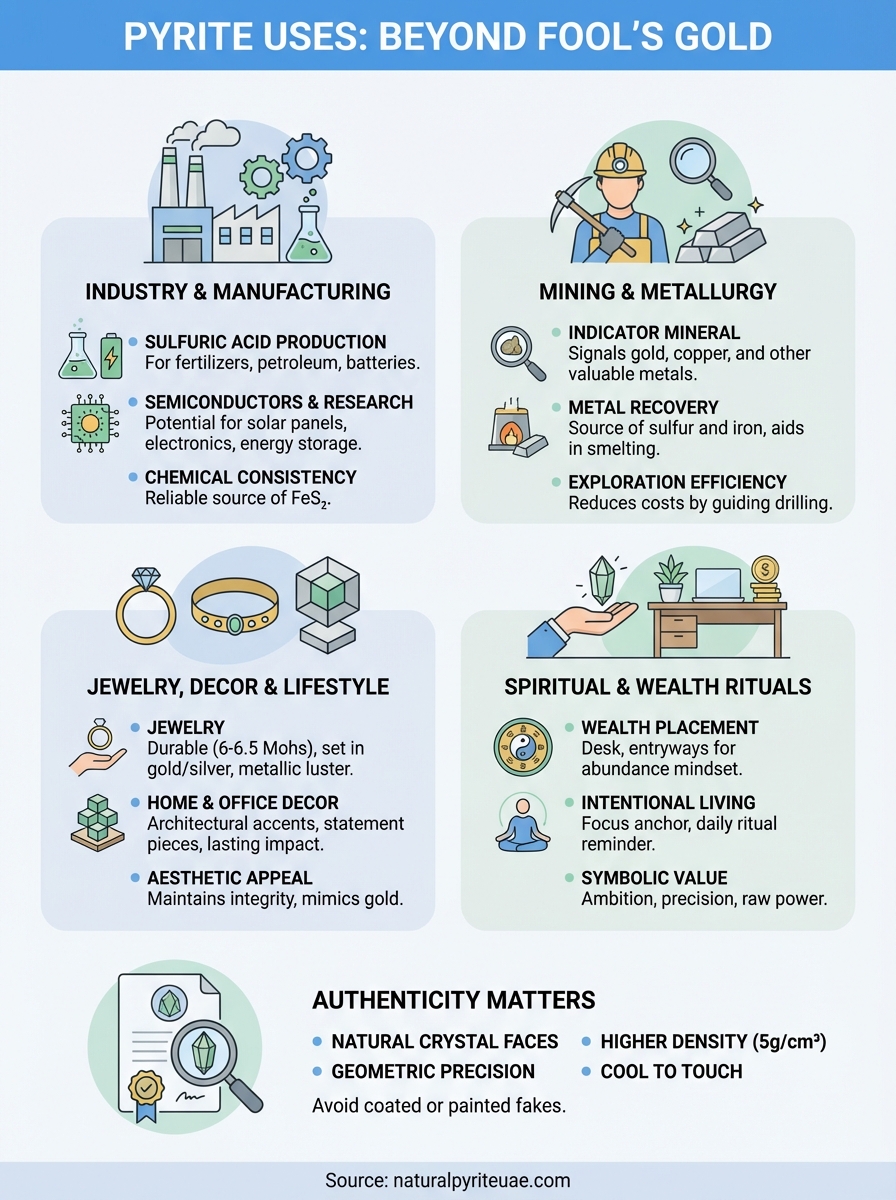
Your pyrite purchase requires scrutiny because synthetic alternatives and treated specimens flood markets across the Emirates. Authentic pyrite displays natural crystal faces with characteristic striations and geometric precision that laboratory-grown versions struggle to replicate perfectly. The mineral’s weight provides your first authentication check: real pyrite registers around 5 grams per cubic centimeter, creating substantial heft in your hand relative to its size. Painted rocks or resin imitations feel noticeably lighter when you compare specimens of equal dimensions. Reputable dealers in Dubai and Abu Dhabi provide certificates of authenticity that document the specimen’s origin and treatment history, protecting your investment in genuine geological material.
Identifying authentic pyrite from treated alternatives
Market vendors sometimes coat lower-quality pyrite with metallic sprays or lacquers to enhance luster artificially. Your inspection reveals these treatments when you examine the specimen under bright light, looking for coating buildup in crevices or an unnaturally uniform surface appearance. Natural pyrite shows variation in reflectivity across different crystal faces because each surface formed under slightly different conditions. The mineral should display visible crystal structure rather than appearing as formless metallic mass.
Authentic pyrite rewards close inspection with details that treated specimens cannot reproduce: natural edge sharpness, consistent density, and crystallographic precision.
Temperature testing helps distinguish real pyrite from substitutes. Your authentic specimen remains cool to the touch initially because iron sulfide conducts heat differently than plastic or resin alternatives. Hold the piece in your closed hand for 30 seconds, then release it. Real pyrite warms slowly and returns to room temperature quickly, while synthetic materials retain body heat longer or feel artificially warm from the start.
Quality indicators for collectors and decorators
Premium pyrite specimens display well-formed crystal faces without significant chipping or fracturing along edges. Your investment in decorative or jewelry-grade material should show minimal surface damage that would detract from the mineral’s visual impact. Check for consistent color across the specimen, avoiding pieces with brown or black oxidation staining that indicates exposure to weathering or poor storage conditions. High-quality pyrite maintains its brassy-gold appearance uniformly.
Size matters when evaluating pyrite uses in decor applications. Specimens intended for architectural display should measure at least 15 centimeters on their longest dimension to create presence in commercial or residential spaces. Your jewelry-grade material requires tight crystal structure without internal fractures that could compromise durability during setting or wearing. Inspect potential purchases under magnification to identify structural weaknesses before committing to pieces meant for daily contact.
Maintaining pyrite in UAE climate conditions
Your pyrite collection requires protection from humidity because the Emirates’ coastal air accelerates surface oxidation when moisture contacts iron sulfide. Store specimens in climate-controlled environments maintaining 40 to 50 percent relative humidity, preventing the tarnishing that occurs at higher moisture levels. Display cases with sealed glass protect valuable pieces from airborne moisture while maintaining visibility for viewing and appreciation.
Clean your pyrite using dry microfiber cloths only, avoiding water or chemical cleaners that react with the mineral’s surface. Household cleaning products containing acids or ammonia create surface etching that dulls the natural luster permanently. Your maintenance routine should focus on removing dust through gentle dry wiping rather than attempting deep cleaning that risks chemical damage. Annual inspection reveals any oxidation beginning at crystal edges, allowing you to address storage conditions before tarnishing spreads across the specimen’s primary faces.
Key takeaways
Pyrite uses extend far beyond its nickname as fool’s gold. Your understanding of this mineral now spans from sulfuric acid production in chemical plants to the deliberate placement of specimens in executive offices across Dubai. The mineral delivers practical value through its role in mining exploration, semiconductor research, and metallurgical processes. Its hardness and luster make it superior to many alternatives for jewelry and architectural decor applications.
Authenticity matters when you invest in pyrite for personal or professional spaces. Real specimens display natural crystal structure, consistent density, and require minimal maintenance in climate-controlled environments. Whether you wear pyrite accessories during negotiations or position large clusters in your reception area, the material creates tangible connections to geological power and intentional living.
Natural Pyrite UAE sources and crafts authentic, high-luster pyrite specifically for the Emirates market. Our pieces transform raw mineral beauty into statement decor and personal accessories designed for ambition-focused environments. Explore our handcrafted pyrite collection to find specimens that align with your professional goals and aesthetic standards.